The frosty atmosphere at the Australian Open semi-final between Aryna Sabalenka and Elina Svitolina on Thursday extended beyond the court, ensnaring a young mascot in a politically charged photo row that has left her parents furious.
Awkward Situation for Young Tennis Fan
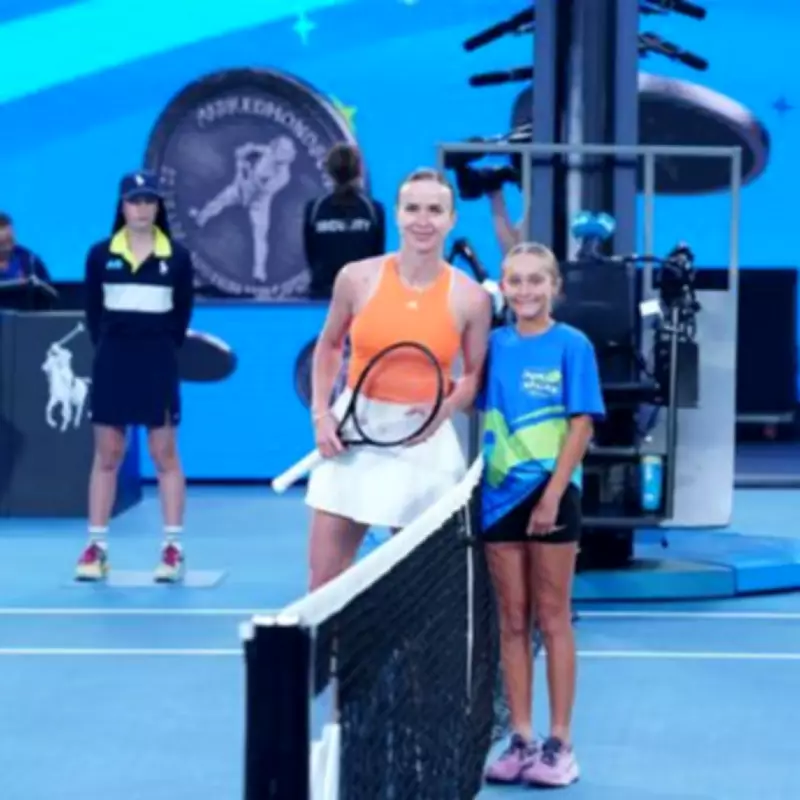
Ten-year-old budding tennis talent Ava Sultana had been selected for the honour of participating in the pre-match coin toss for the highly anticipated semi-final showdown at Melbourne Park. Following the toss, the customary procedure involves a photograph at the net with both competitors and the mascot together. However, this tradition was abruptly disrupted due to the ongoing geopolitical tensions stemming from Russia's invasion of Ukraine.
Political Stance Disrupts Tradition
Ukrainian star Elina Svitolina, maintaining her consistent stance since the conflict began, opted not to be photographed alongside Belarusian opponent Aryna Sabalenka. Belarus has been a key ally to Russia during the invasion, leading Svitolina and many Ukrainian athletes to avoid public interactions with competitors from these nations. Consequently, young Ava found herself posing for two separate photographs—one with each tennis star—rather than the usual joint image.
Christina Sultana, Ava's mother, has since spoken out about what she described as an "awkward situation" that unfairly placed her daughter at the centre of international politics. Speaking to Wide World of Sports, she expressed her dismay that a child's special moment had been overshadowed by diplomatic strife.
Parental Concerns Over Child's Experience
"For her this is a special moment," Christina Sultana explained. "She was totally excited to walk out there with her idols. She's obviously none the wiser this morning because she wouldn't have seen the media. But for us as parents, we've seen some of the stuff and gone 'Well, what about the little kid who's out there living her dream, and she's been put in the middle of politics?'"
The mother emphasised that the political context was completely separate from tennis and questioned why children needed to be involved in such situations. "That's not even an on-court political thing, it's something totally separate to tennis. I think the fact they put kids in the middle of it, they should probably address these things so it's not an awkward situation on court and then it turns into something."
She detailed the observable awkwardness during the photo sessions, noting: "The kids don't understand the background of it. They go, 'Why didn't they want to have a photo together? Why did she quickly walk away?' Sabalenka took the time and put her arm around her and took a moment, then Svitolina kind of just quickly put her arm around and then walked off. It was quite awkward."
Broader Context of Sporting Boycotts
This incident occurred within a broader pattern of sporting boycotts related to the Ukraine conflict. Svitolina has consistently refused to shake hands with competitors from Russia or Belarus since the war began, a position tournament officials had confirmed would continue. True to form, no handshake occurred following Sabalenka's 6-2, 6-3 victory in the semi-final.
When questioned about her rival's decision to decline both a photograph and the traditional post-match handshake, Sabalenka responded diplomatically. "I'm not focusing on that," she stated. "They have been doing it for so long. It's their decision, and I respect that. I think she knows that I respect her as a player. I know that she respects me as a player. That's all I care [about]. About no handshake, it's their decision. I respect that."
Sabalenka did take a moment to praise Svitolina's performance, adding: "About Elina, I felt like I didn't have opportunity to even say, great job. I have it now, so great job, great match, great player, amazing tournament. Yeah, she played incredible."
Looking Ahead to the Final
Following her victory, Aryna Sabalenka now advances to the Australian Open final where she will face Elena Rybakina. Their championship clash is scheduled for 8.30am UK time on Saturday at Melbourne's iconic Rod Laver Arena.
The incident has sparked wider conversations about the intersection of politics and sport, particularly concerning the involvement of children in ceremonial roles during events affected by international tensions. Tournament organisers and tennis governing bodies may face increased pressure to establish clearer protocols to protect young participants from becoming unintended symbols in geopolitical disputes.