Paul Robinson's Unforgettable Role in Newcastle's 1999 Derby Drama
Former Newcastle United forward Paul Robinson has opened up about one of the most controversial moments in the club's history – being selected ahead of Alan Shearer for the critical Tyne-Wear derby in 1999. Now reflecting from the Sir Bobby Robson Centre in Durham, Robinson reveals the extraordinary circumstances surrounding that fateful decision by manager Ruud Gullit.
The Selection That Shook Tyneside
With tensions between Gullit and Shearer simmering since the Dutchman's appointment in August 1998, everything came to a head just short of the anniversary. Newcastle, winless in their first four Premier League matches and languishing in the bottom three, faced their bitter rivals Sunderland without their talismanic England captain in the starting lineup.
Robinson, then just 20 years old and a Sunderland-born striker who had joined Newcastle from fourth-tier Darlington, found himself at the centre of the storm. "I started the game before, against Wimbledon, and got man of the match," Robinson recalls. "I thought: 'Well, yeah, why shouldn't I start?' In hindsight you don't think you should be taking the place of the England captain, but I was young and full of myself."

Robinson reveals he wasn't formally told about his selection until the team announcement. "It was a day or two before and I was in one team in training, Alan and Dunc [Duncan Ferguson] were in the other. It didn't even click. When the team was announced, there were no nerves. It was a derby and I was playing in it. I was ready."
The decision created immediate fury among supporters. Robinson's Sunderland allegiance – he had admitted in a matchday programme interview that he wouldn't celebrate if he scored against his hometown club – added fuel to the fire. "My name got read out and people say some Newcastle fans booed me. The Sunderland fans booed me, my mates were giving me the finger."
Shearer's Professional Response
Despite the obvious tension, Robinson remembers Shearer's professional approach. "Alan came into the dressing room before the game and said: 'Robbo, we need to beat these.' Not once did he look down at me or have a go at me. He was psyching me up to go out there and do a job."
The Game That Changed EverythingPlayed in torrential rain that Robinson believes would cause a modern match to be postponed, the derby started well for Newcastle. Robinson fed Kieron Dyer for the opening goal, prompting an emotional celebration despite his earlier promise. "I went nuts. I didn't keep my promise about not celebrating. A few people didn't speak to me for a bit."
Second-half goals from Niall Quinn and Kevin Phillips turned the match around, with Sunderland winning 2-1. The aftermath proved even more dramatic than the match itself.
The Fallout and Gullit's DepartureGullit's post-match comments proved incendiary. "Ruud basically said when he brought me off and put Alan and Dunc on, he should have kept me on. Basically, he was digging them out," Robinson explains. "That was the first time I went: 'Woah, that isn't clever.'"
The Dutch manager resigned three days later, leaving Robinson to ponder his role in the saga. "Obviously, he bigged me up. But was that my downfall? Was I a scapegoat? It was easy to put a young kid in and, if he got sacked or if he'd won and Alan would have left, say: 'It was all Paul Robinson's fault.'"
Life After the Spotlight
Sir Bobby Robson replaced Gullit and Robinson departed for Wimbledon the following summer. His career took him through several lower-league clubs including Hartlepool and Torquay, plus numerous non-league teams until his retirement in 2016. He faced personal challenges too, being declared bankrupt in 2007 and working as a delivery driver.
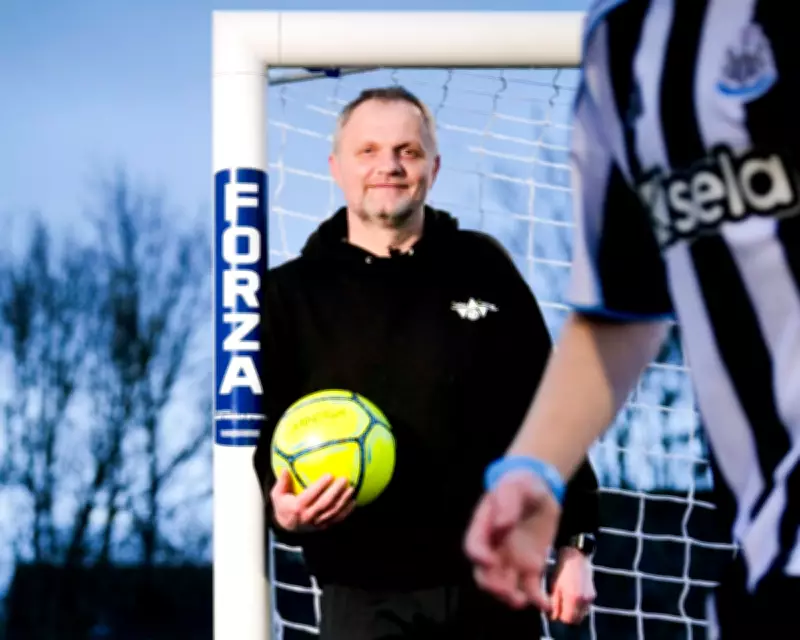
In 2020, Robinson established Strikes Coaching, a company dedicated to helping children in the Durham area rediscover joy in football. "The ethos is every kid should be allowed to play," he says. "I'll coach the way I want to. I've had my bit, but if I can give something back and make children love football, then great."

Robinson maintains no regrets about his career, despite its unconventional trajectory. He still gets recognized, often with humorous results. "I was doing a delivery and this guy was staring at me. He said: 'Excuse me, didn't you used to be Paul Robinson?' I said: 'No mate, I still am. I haven't changed my name!'"
Reflecting on his achievements, Robinson concludes: "I wanted to play for England and to play in the Premier League. One out of two isn't bad. I can say I kept Alan Shearer on the bench. Not many people can say that." His story remains a compelling chapter in one of English football's most intense rivalries, a moment when a young striker found himself at the centre of a managerial power struggle that would define Newcastle United's season.