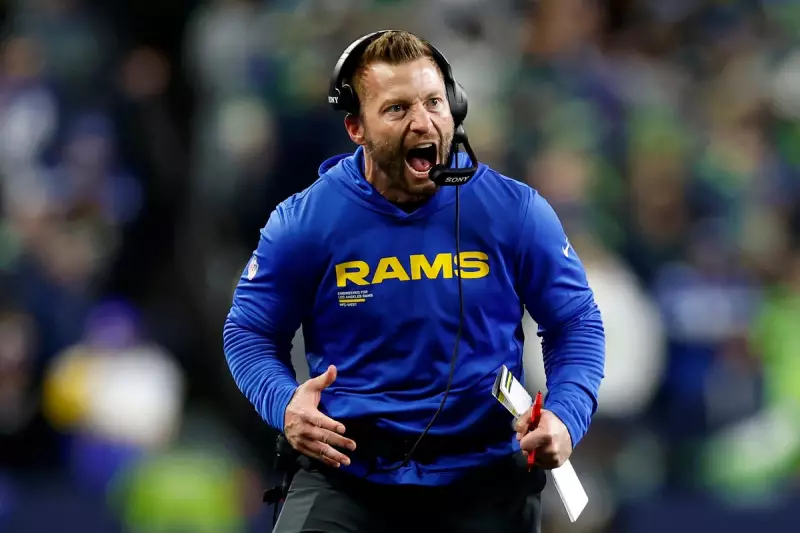
The Los Angeles Rams' quest for a third Super Bowl title under head coach Sean McVay came to a devastating halt on Sunday, as they suffered a narrow 31-27 defeat to the Seattle Seahawks in the NFC championship game. This loss, which denied the franchise a chance at glory for the second time in five years, left McVay and his players grappling with the pain of missed opportunities.
A Coach Lost for Words After Crushing Defeat
In a rare moment of reflection, Sean McVay admitted that the outcome had left him struggling to articulate his feelings. "I'm never really short on words, and I am right now," McVay confessed in the aftermath. "It's tough, but this is sports, and you got to be able to deal with it." The defeat marked the second consecutive loss for the Rams at Seattle's Lumen Field in just two months, following a 38-37 thriller back in December.
The Pivotal Fourth-Down Decision That Backfired
With under five minutes remaining and trailing by four points, McVay faced a critical decision on fourth-and-four at the Seattle six-yard line. Opting to go for it rather than attempt a field goal, he allowed the play to proceed without calling a timeout. The result was a broken-up pass from Matthew Stafford in the end zone, courtesy of Seahawks defender Devon Witherspoon.
"I thought about it, and didn't decide to do it," McVay explained regarding the potential timeout. "Obviously it didn't work out for us. But I thought our guys played well. There were a lot of things that we got a lot of what we wanted today. Felt really good about the way that our guys executed, specifically on the offensive side. And you know, that was a situation where we just kind of came up short."
Offensive Brilliance Overshadowed by Costly Errors
Despite the loss, the Rams' offence delivered a commanding performance, amassing 479 total yards compared to Seattle's 396. Quarterback Matthew Stafford, an MVP finalist, completed 22 of 35 passes for 374 yards and three touchdowns. However, the team's efforts were undermined by significant special teams blunders.
The most damaging error occurred in the third quarter when Xavier Smith muffed a punt, which Seattle recovered and converted into a 17-yard touchdown, extending their lead to 24-13. Smith had previously fumbled another punt earlier in the match, compounding the issue. "That one, it was costly," McVay said of the muffed punt. "I love him. He's done a great job... but that was a tough one."
Stafford's Resilience and Missed Opportunity
Displaying remarkable resilience, the Rams fought back each time Seattle established a double-digit lead. After Smith's error, Stafford orchestrated consecutive touchdown drives, connecting with receivers Davante Adams and Puka Nacua to keep the game within reach. "It was a battle," Stafford reflected. "The whole game wasn't like we were all just waiting for one play here or there. There's a million plays in a football game that can turn the tide, and we had our opportunity and didn't make it."
Had Stafford completed that crucial fourth-down pass, it would have marked his sixth game-winning drive in the playoffs and third this postseason alone. He had previously led Los Angeles to victories over the Carolina Panthers and set up a game-winning field goal against the Chicago Bears. Despite outplaying the NFL's top-ranked scoring defence for much of the contest, the Seahawks ultimately made the decisive plays when it mattered most.
Uncertain Future for Stafford and the Rams
As the dust settles on a heartbreaking defeat, questions loom over the future of 38-year-old quarterback Matthew Stafford. McVay remained tight-lipped about whether Stafford would return for the Rams next season, adding another layer of uncertainty to the franchise's off-season plans. "Great football team we just played," Stafford concluded. "Feel like it's a great effort, really good football game, obviously we didn't come out on top. Tough pill to swallow at the moment."
The Rams now face a period of reflection as they analyse what might have been in a game where offensive prowess was ultimately undone by critical mistakes at pivotal moments.