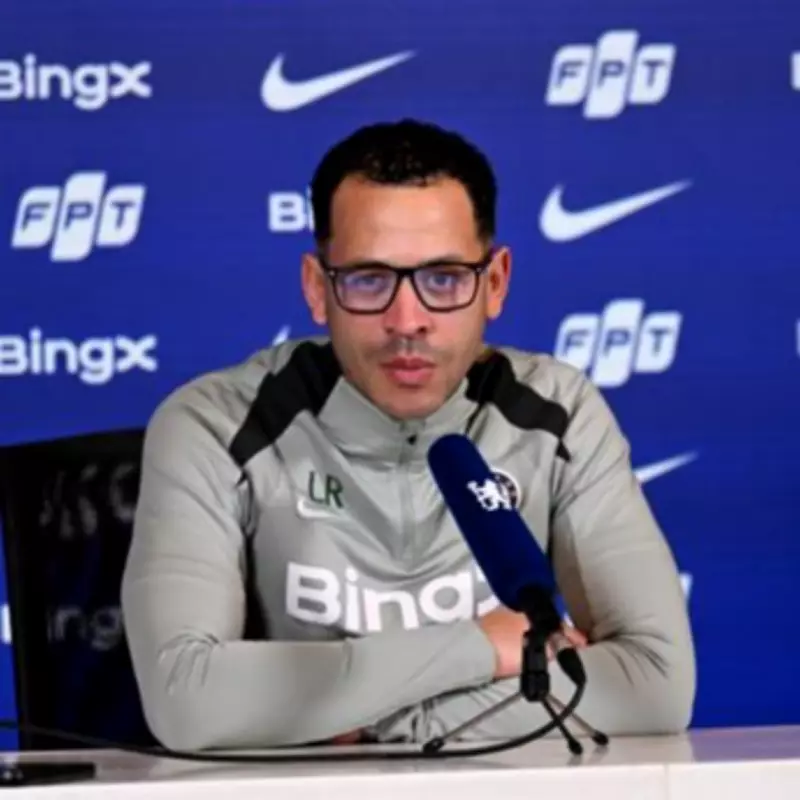
Chelsea's newly appointed head coach Liam Rosenior has made insightful comments about the club's transfer operations, revealing his appreciation for a structure that allows him to concentrate purely on football matters. This perspective emerges following the departure of his predecessor Enzo Maresca, who reportedly experienced tensions with the recruitment model at Stamford Bridge.
Rosenior Embraces Modern Coaching Role
The former Hull City manager, who took charge at Chelsea earlier this month after Maresca's New Year's Day dismissal, has expressed genuine enthusiasm for the club's distinctive approach to player recruitment. Despite the January transfer window offering opportunities to strengthen his inherited squad, Rosenior has presided over no major new arrivals, instead focusing his energies on training and team development.
"That's the beauty of being a head coach within a structure," Rosenior explained during recent media discussions. "I'm not an old-school manager that's got out the phone and is making calls. I've got the best people, I think, in world football working on those things."

Collaborative Transfer Model in Operation
Chelsea's transfer operations are managed through a sophisticated five-person sporting director team led by Paul Winstanley and Laurence Stewart, with additional input from Joe Shields, Sam Jewell and Dave Fallows. This collaborative framework represents an increasingly prevalent model in contemporary football management, separating coaching responsibilities from recruitment duties.
Rosenior elaborated on how this division of labour benefits his work: "I probably see the last two per cent of the work they do, which allows me to focus on what I need to focus on: the team and the performance." The coach emphasized his preference for this arrangement, stating he "wants to be on the training pitch" rather than negotiating transfers.
Contrast with Maresca's Experience
This positive assessment stands in notable contrast to the experience of former Chelsea manager Enzo Maresca, whose departure from the club reportedly stemmed partly from disagreements about transfer influence and control. While Maresca understood Chelsea's recruitment philosophy when joining from Leicester City - which focuses on acquiring promising young talents from emerging leagues - points of friction emerged during his tenure.
One significant disagreement became public when Maresca expressed dissatisfaction with the club's decision not to sign a central defender following Levi Colwill's anterior cruciate ligament injury during pre-season. Club hierarchy explained their reluctance stemmed from concerns about academy prospect Josh Acheampong potentially requesting a transfer, ultimately leading Maresca to acquiesce to the decision.
Structural Familiarity Benefits Rosenior
Rosenior's previous position at Strasbourg, which operates under the same BlueCo ownership structure as Chelsea, provided him with valuable familiarity regarding the club's operational model. This prior experience has seemingly smoothed his transition into the Stamford Bridge role, allowing him to appreciate rather than challenge the established framework.
The Chelsea model clearly delineates responsibilities, with head coaches primarily focused on football development and team performance, while transfer decisions remain predominantly within the sporting directors' domain. This doesn't guarantee coaches receive all their requested signings, as Maresca discovered, but creates a specialized environment where each professional concentrates on their area of expertise.
As the January transfer window approaches its conclusion, Rosenior appears genuinely content to leave recruitment matters to the club's specialists, contrasting markedly with the frustrations that contributed to his predecessor's departure. This difference in perspective highlights the evolving nature of football management roles and the importance of alignment between coaching staff and club structure in modern football organizations.