The Collapse of Liam Rosenior's Chelsea Reign
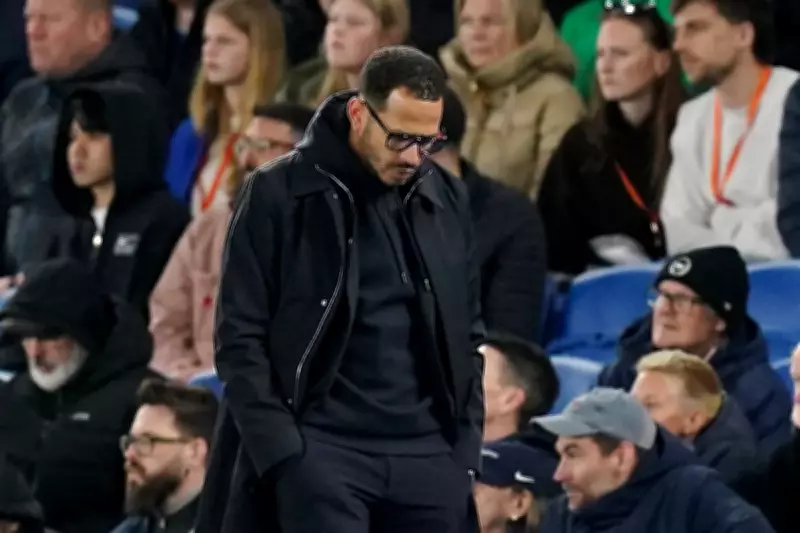
Liam Rosenior's tenure as Chelsea manager has reached a dismal conclusion, marking another chapter in the turbulent BlueCo era at Stamford Bridge. The 41-year-old's departure after just 23 games in charge represents the shortest reign of any permanent head coach in the club's history, a stark indicator of the dysfunction plaguing the West London outfit.
A Managerial Appointment Doomed from the Start
Rosenior, who had shown genuine promise during his spells at Derby County, Hull City, and Strasbourg, was presented with an offer that seemed impossible to refuse. However, the move quickly revealed itself as a catastrophic mismatch. Plunged into a role for which he was evidently unprepared, Rosenior struggled to command respect from a dressing room filled with high-profile players who may have been unfamiliar with his credentials until his appointment.
The tactical incoherence displayed during Chelsea's surrender at Brighton, where Rosenior switched to a 3-5-2 formation with disastrous results, became a public advertisement for change. His own assessment of the performance as "indefensible" and "unacceptable" highlighted his inability to extract meaningful performances from his squad. The statistics painted a grim picture: Chelsea failed to make a single tackle in the first half-hour against Brighton, extended their goalless streak to five consecutive league matches, and plummeted from Champions League contention to potential bottom-half obscurity.

BlueCo's Flawed Philosophy and Its Consequences
Rosenior's appointment followed a pattern established by Chelsea's ownership group, BlueCo, who have consistently sought managers of lesser pedigree to avoid challenges to their authority. This approach mirrors their previous selection of Enzo Maresca, who ultimately proved unwilling to serve as a mere "yes man." Rosenior similarly faced suggestions that he was appointed to be compliant, allegations he had to publicly reject.
The fundamental flaw in BlueCo's strategy lies in their own track record of failure. Their much-criticized transfer business has been both prohibitively expensive and largely unsuccessful, undermining any claim to superior football knowledge. Yet they persist in diminishing the manager's role, despite overwhelming evidence that results still depend significantly on tactical leadership and man-management.
Rosenior's record against elite managers was particularly telling: he maintained a perfect losing streak against Mikel Arteta, Luis Enrique, and Pep Guardiola. While he secured victories over Oliver Glasner, Antonio Conte, and Unai Emery, wins against Crystal Palace, Napoli, and Aston Villa stood as his only genuinely commendable achievements.
The Human Cost of Chelsea's Chaos
The danger for Rosenior is that his Chelsea misadventure may define his career trajectory. He risks joining a growing list of managers whose reputations have been tarnished by association with Chelsea's ownership. Graham Potter's career was on an upward trajectory until his ill-fated move to Stamford Bridge under Todd Boehly and Clearlake Capital; he has since found refuge with the Swedish national team but remains unemployable in the Premier League.
Frank Lampard faced eighteen months of unemployment following his second, unsuccessful stint at Chelsea, and his recent appointment at Coventry City was met with widespread scepticism. The question now looms over when and where Enzo Maresca will resurface after his own Chelsea departure.
As Chelsea reportedly consider more experienced replacements such as Andoni Iraola, Oliver Glasner, Marco Silva, or Xabi Alonso, a significant concern remains: will any high-calibre candidate willingly step into the chaos at Stamford Bridge? Rosenior's fate, coupled with the constant turmoil under BlueCo's leadership, may deter top-tier managers from accepting the role.
Ultimately, the responsibility for this debacle rests squarely with Chelsea's ownership. Their mismanagement has created an environment where promising coaches are set up to fail, becoming collateral damage in a deeply flawed project. The hope must be that Rosenior can recover from this bruising experience and that Chelsea's ownership learns from their repeated mistakes before another career is derailed by their incompetence and arrogance.