Despite not participating in the Texas Children's Houston Open this weekend, Tiger Woods remained a prominent figure at the tournament, albeit for unfortunate reasons. The 50-year-old golf legend, who was arrested days prior in Jupiter, Florida, still managed to capture significant attention from spectators in Houston on Sunday.
Arrest Details and Legal Charges
Tiger Woods was arrested for driving under the influence (DUI) on Friday after a high-speed incident on a residential road in Jupiter Island. According to reports, he attempted to overtake a truck and trailer at an excessive speed, resulting in his SUV clipping the back of the vehicle and tipping onto its side. After exiting through the passenger-side window, Woods refused to provide a urine sample to law enforcement officers.
Legal Consequences and Release
He was subsequently charged with DUI, property damage, and refusal to submit to a lawful test. Woods was booked into jail on Friday afternoon, where his latest mugshot was taken, and he was released later that same night. This arrest occurred approximately 1,300 miles away from the Houston Open venue, yet its impact resonated strongly at the tournament.

Fan Support Amid Controversy
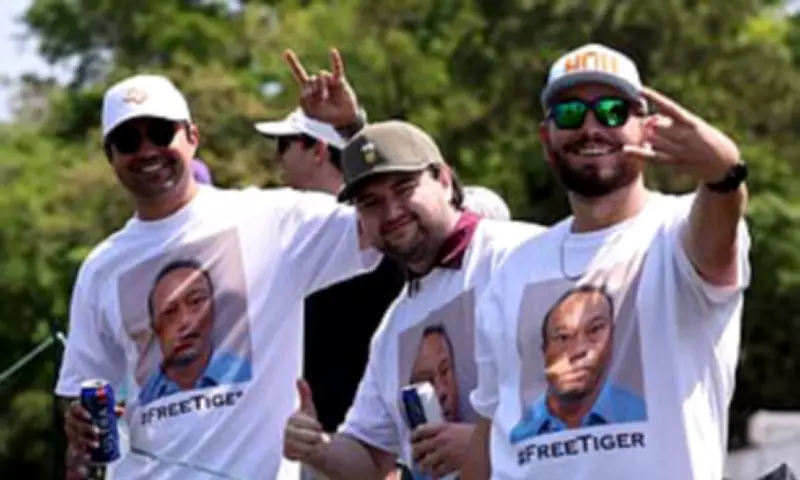
In a show of unwavering loyalty, a group of diehard supporters at the Texas Children's Houston Open were seen wearing white t-shirts emblazoned with Woods' mugshot on the front. The image depicted a bleary-eyed Woods, highlighting the stark contrast between his legendary status in golf and his recent legal troubles. This display of fan solidarity underscored the complex public reaction to his arrest, blending support with the seriousness of the charges.
Broader Implications and Ongoing Developments
The incident has sparked discussions about celebrity culture, legal accountability, and fan behavior in sports. As the story continues to unfold, further updates are expected regarding Woods' legal proceedings and any potential repercussions for his career and public image. The mugshot t-shirts serve as a tangible reminder of how quickly personal controversies can permeate public events, even in distant locations.