A Century of British Racing: From Fiery Beginnings to Modern Glory
This year commemorates a monumental milestone in motorsport history: one hundred years since the very first British Grand Prix took place. While the 2026 Formula 1 Championship promises cutting-edge technology and fierce competition, it pales in comparison to the raw danger and dramatic spectacle witnessed at that pioneering event in 1926.
The Inaugural Race: A Test of Endurance and Nerve
When the 2026 season commences with the Australian Grand Prix on March 8th, British supporters will eagerly cheer for reigning World Champion Lando Norris. The grid will feature two new constructor names—Germany's Audi and America's Cadillac—alongside eleven competing teams, including Ford's return after a twenty-two-year absence. By the time the British Grand Prix arrives at Silverstone on July 5th, the championship standings will undoubtedly have taken shape. Yet, these modern contests cannot rival the sheer peril of the original British Grand Prix, held a century ago at Brooklands in Surrey's typically peaceful countryside.
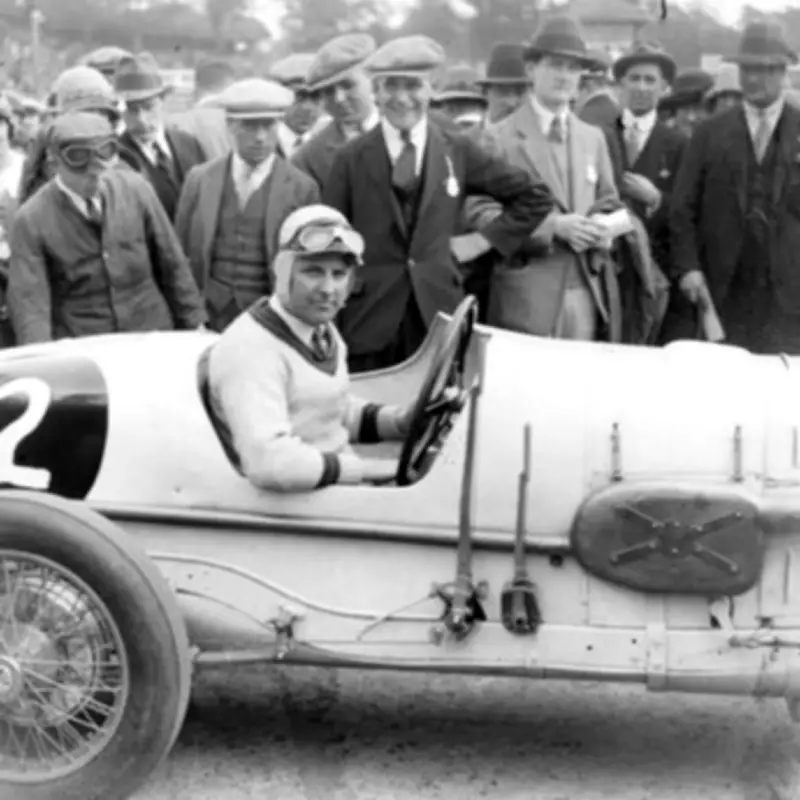
Drivers in 1926 faced extraordinary hazards: exhaust pipes that virtually sautéed their legs, racing attire that consisted of ordinary lounge suits, and spectators cheering from mere feet away, restrained only by a simple rope. The opportunity to host a grand prix was first extended to Britain in 1925 by the Association Internationale Des Automobiles Clubs Reconnus (AIACR), acting through its member, the Royal Automobile Club. However, finding a suitable venue proved challenging.

Overcoming Obstacles: Creating a Circuit from Scratch
Racing on closed public roads, as practised in France, was illegal in Britain. Brooklands, the nation's premier motor sport track near Weybridge, had opened in 1907 but was designed as a high-speed oval for testing and record attempts, lacking the necessary features for a grand prix. To address this, the RAC ingeniously constructed false chicanes using piles of sand, crafting a demanding circuit with tight corners for drivers to navigate.
International entries were welcomed, with French manufacturers Delage and Talbot each fielding three-car teams. British hopes rested on world land speed record holder Sir Malcolm Campbell, who drove a French Bugatti, and Frank Halford piloting his homemade Halford Special. An Aston Martin also competed, driven by George Eyston—a stark contrast to the brand's 2026 Formula 1 entry, which boasts a car eight times more powerful and two hundred percent faster than its 1926 predecessor.
Spectacle and Strife: The Race Day Experience
Crowds gathered, many positioned perilously close to the track behind a single rope, as nine cars roared to life on the starting grid. The noise echoed across towns and villages for miles, so disruptive that nearby residents threatened legal action to prevent twenty-four-hour racing through the night. The Brooklands track surface itself inflicted a terrible toll. Before completing even one lap, Jules Moriceau's Talbot suffered a broken front axle, forcing his retirement.
Allan Winn, vice-president of the Brooklands Museum Trust, elaborates on the circuit's challenges: "Brooklands was quite rough, because it was built from individual concrete panels laid on relatively soft land. It only got worse as the slabs settled. The whole track was bumpy. You had to be physically strong to drive one of these cars there. They were quite fast and you were being thrown around a lot—it was like riding a mountain goat, leaping from crag to crag."
Fiery Ordeals and Design Flaws
Eyston's Aston Martin retired after forty-four laps with a blown head gasket, but Delage drivers confronted a hazardous design fault absent from modern Formula 1. Louis Wagner could feel his feet frying even before realising his car was on fire. After abandoning the race, he required agonised shins and feet to be doused in cold water, the result of a badly positioned, leaking exhaust emitting red-hot heat.

After fifty laps, Delage driver Robert Benoist noticed his overalls were ablaze. Meanwhile, leading driver Robert Sénéchal, after eighty-two laps, pulled into the pits to plunge his feet into buckets of iced water. He then handed the car over to a suitably cooled-down Wagner, who proceeded to secure victory. It was a closely fought finish: the Sénéchal/Wagner Delage completed one hundred and ten laps in four hours and fifty-six seconds, with Malcolm Campbell's Bugatti claiming second place approximately ten minutes later.
Mr Winn notes: "Sénéchal was a very established racing driver, who had even become a car manufacturer himself by the time of the British Grand Prix." About eight minutes later, the only other finisher, Robert Benoist's Delage, crossed the line in third place. The car had rejoined the race with Andre Dubonnet, heir to the Dubonnet aperitif fortune, at the wheel. He completed the course wearing an expensive blue lounge suit, described by Motor Sport magazine as 'gent's natty suitings', despite never having driven any part of the circuit beforehand and spending most of the race with flames licking the car's undercarriage.
Legacy and Evolution: From Brooklands to Silverstone
All other entrants succumbed to mechanical failures, ranging from supercharger issues to misfiring engines. Nevertheless, despite these numerous 'hiccups', the inaugural British Grand Prix was deemed a resounding success. Motor Sport reported: "A brighter scene than Brooklands on August 7, 1926, would be hard to imagine; sunshine, dresses, sumptuous cars, grass, trees, advertisements, and lastly the little green and blue projectiles themselves, such is the picture retained in the mind, of this great event."
The race was repeated in 1927 but discontinued in 1928. Mr Winn explains: "It was quite difficult to attract the teams from abroad, and Brooklands itself found it to be a risky venture if they contributed towards the costs of the teams coming. So they declined the opportunity." The next British Grand Prix did not occur until 1948, with the Formula 1 World Championship formally commencing in 1950. Since then, a British Grand Prix has been held annually, primarily at Silverstone, with occasional shifts to Brands Hatch and Aintree in Liverpool.
Technological Transformation and British Ingenuity
Pioneering advancements by British teams such as Cooper, Lotus, McLaren, Tyrrell, and Williams have established the UK as the heart of the Formula 1 industry. Remarkably, even the new Audi and Cadillac cars are predominantly constructed here—a significant shift from 1926, when key entrants and the winning vehicle hailed from France.
For spectators, the first British Grand Prix offered a memorable day out. Tearooms and bars were open to the public, who could reach Weybridge station via a combined rail and race ticket from Waterloo. Autograph hunters might have spotted Sir Malcolm Campbell, though Mr Winn remarks: "He was not one of nature's more lovable creatures." Betting flourished in the race paddock, with bookmaker 'Long Tom' displaying odds, allowing punters to enjoy a flutter.
Mr Winn adds: "In the early days, Brooklands was promoted as an 'Ascot of Motor Racing'. If you were a member of the Brooklands Automobile Racing Club then you could enjoy the Members' Tearoom, a Members' Dining Room and a private bar."
Centenary Celebrations and Historical Preservation
The Brooklands Museum is planning a major celebration of the 1926 race centenary on Saturday, August 8th, 2026. Mr Winn and his team aim to assemble over one hundred grand prix cars from the past century in one of the museum's most ambitious events ever, featuring mock starts and demonstration runs.
He states: "The Delages that won in 1926 were some of the most amazingly advanced cars of their day. They ran on neat methanol—really drinking fuel—and made the most fantastic sound… certainly compared with the weedy sound the most recent grand prix cars have been making! They were so good they were still racing ten years later. We have one of the 1927 team cars in our collection, based on a 1926 practice car, redesigned to fix the exhaust system."
Visitors will have the unique opportunity to stand where the chequered flag fell in July 1926 and immerse themselves in history. Although racing at Brooklands concluded in 1939, sections of the circuit endure, particularly the hallowed concrete slabs that witnessed these pioneering moments.
British Grand Prix: A Comparative Snapshot
ENTRANTS: 1926: 9 cars, 3 finished; 2025: 20 cars, 15 finished.
WINNERS: 1926 - Robert Sénéchal/Louis Wagner (Delage); 2025 - Lando Norris (McLaren).
WINNING CAR'S POWER: 1926 - 170bhp at 8000rpm (Delage, 1.5-litre supercharged straight-eight); 2025 - 1000rpm at 15,000rpm (McLaren, 1.6-litre turbocharged V6).
VENUES: 1926 - Brooklands Motor Circuit, Surrey; 2025 - Silverstone Circuit, Northamptonshire.
TRACK SURFACE: 1926 - Concrete sections; 2025 - Bespoke high-grip asphalt.
CIRCUIT DISTANCE: 1926 - 2.61 miles; 2025 - 3.66 miles.
RACE START: 1926 - Red flag dropped by timekeeper; 2025 - Five-red-light electronic system.
RACE LENGTH: 1926 - 110 laps, 288 miles; 2025 - 52 laps, 190 miles.
RACE DURATION: 1926 - 4hr 18m 8sec; 2025 - 1hr 27min 15sec.
FASTEST AVERAGE LAP: 1926 - Major Henry Segrave (Talbot), 85.9mph; 2025 - Oscar Piastri (McLaren), 147.5mph.
SAFETY CAR: 1926 - None; 2025 - Aston Martin Vantage S.
HEAD PROTECTION: 1926 - Cloth or leather cap (optional), glass goggles; 2025 - Carbonfibre full-face helmet (mandatory) with neck support.
VISITOR ENTRY PRICE: 1926 - 2 shillings and sixpence; 2025 - £70-£269.
VISITOR PARKING: 1926 - Free; 2025 - £80.
GETTING THERE WITHOUT A CAR: 1926 - Train from Waterloo to Weybridge; 2025 - Park-and-ride coaches from various UK locations.