'I Was Very Puffed Out But I Couldn't Feel How Tired I Was': The Remarkable Rescue Swim
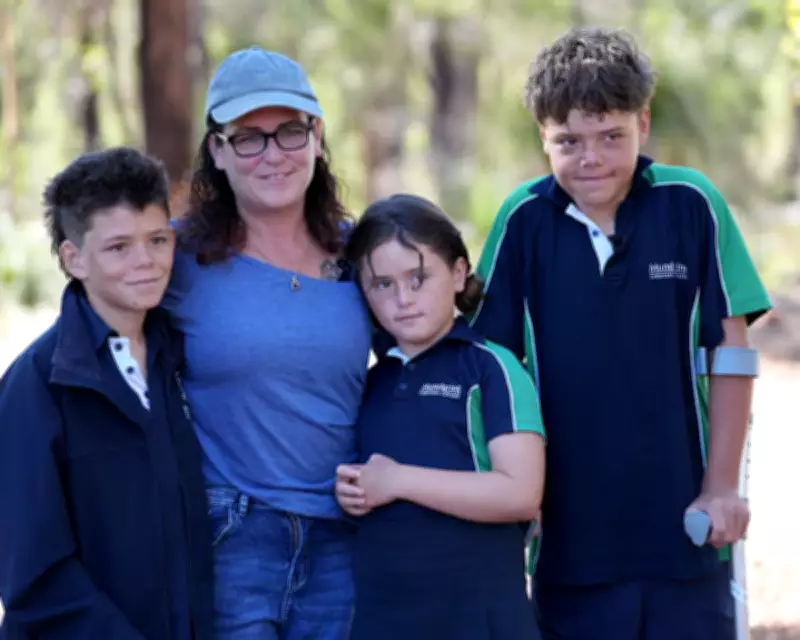
Thirteen-year-old Austin Appelbee has been described as "superhuman" after swimming four kilometres to shore and then running two kilometres to get help for his stranded family. The Australian teenager's extraordinary feat of endurance, which occurred during a holiday in Quindalup, Western Australia, has left experts analysing how he managed to push beyond normal physical limits.
The Harrowing Ordeal at Geographe Bay
Austin and his family were enjoying their holiday approximately 200 kilometres south of Perth when strong winds pushed their inflatable paddleboards and kayak offshore from Geographe Bay on Friday afternoon. Faced with a dangerous situation, his mother Joanne Appelbee made what she described as "one of the hardest decisions" - telling her son to swim ashore to seek help.
"I knew he was the strongest and he could do it," Joanne Appelbee told the ABC.

Initially attempting to use a kayak, Austin had to abandon the vessel after it took on too much water in the rough conditions. About two hours into his four-hour swim, he made the critical decision to ditch his lifejacket, continuing his journey toward shore.
"I was very puffed out but I couldn't feel how tired I was," Austin recalled of his experience. "I just keep swimming, I do breaststroke, I do freestyle, I do survival backstroke."
The Final Push to Safety
After swimming the 4km distance to shore in fading light, the exhausted teenager then ran 2km to his family's accommodation, where he used his mother's phone to call emergency services at approximately 6pm.
"I said, 'I need helicopters, I need planes, I need boats, my family's out at sea.' I was very calm about it. I think it was just a lot of shock," Austin explained.
Following the emergency call, he passed out from exhaustion and was taken to hospital for treatment. His family was eventually rescued floating about 14km offshore, while Austin was given crutches to help his sore legs bear his weight during recovery.
The Science Behind 'Superhuman' Endurance
Professor David Bishop, a muscle exercise physiologist at Victoria University, explained that fight-or-flight situations can enable both athletes and ordinary people "to go beyond what their perceived limits are."
There have been other documented cases of extraordinary strength in emergency situations. In 2013, two teenage girls in Oregon reportedly lifted a 1,360kg tractor off their father's chest, while in 2016, another US teenager was said to have lifted a car to save her father.
Professor Anthony Blazevich, a biomechanics expert at Edith Cowan University, detailed the physiological mechanisms at play: "If you get highly motivated, if you have some fear, you're going to be releasing adrenaline, noradrenaline, other stress hormones like cortisol, which dump a whole bunch of sugar into your blood."
He noted that these hormones help with brief to moderate activity, but for endurance lasting hours like Austin's swim, "eventually these systems do get depleted." The periods of recovery afforded by survival backstroke - a swimming style specifically designed to conserve energy - proved critical, particularly in saltwater where floating was relatively feasible.
The Mind Over Matter Factor
Some experts argue that endurance represents a significant psychological challenge as much as a physical one. Professor Samuele Maria Marcora, an exercise scientist at the University of Bologna, has demonstrated that mental fatigue can impair physical performance, while other research has found endurance performance improves with techniques like imagery, self-talk and goal setting.
Austin's own account supports this psychological dimension: "I was just thinking in my head: I was going to make it through, but I was also thinking about all my friends. I have to keep on going."
Professor Bishop summarised: "[Austin] had a base of swimming fitness and physiology that allowed his strong mind to go beyond the limits. It's an amazing feat."

Does Youth Provide an Advantage?
Professor Blazevich's research has revealed surprising findings about children's endurance capabilities. In a study comparing 10-year-old boys with 21-year-old men during high-intensity cycling, he discovered that the children outperformed most adults.
"What kids do is recover incredibly rapidly, as good as elite endurance athletes," Blazevich explained.
However, he noted that adults possess larger hearts and lungs, along with central nervous systems that "do not seem to fatigue as fast." This difference explains why children typically engage in intermittent play patterns - running, stopping, then running again throughout the day.
Interestingly, Austin told the ABC that he had begun swimming lessons at age four, but had previously found it "quite tiring" to swim just 350 metres without a break, making his four-kilometre swim even more remarkable.
Historical Parallels in Survival Swimming
Austin's achievement finds echoes in other remarkable survival stories from around the world. In 2013, South African man Brett Archibald was rescued after falling overboard a surf charter in the Indian Ocean and treading water for more than 28 hours.
The teenager's swim bears particular similarity to the story of Syrian refugee Yusra Mardini, who as a teenager in 2015 swam for over three hours to reach the island of Lesbos while pulling her migrant boat with two others after their dinghy began taking on water in the Aegean Sea.
More recently in 2024, a Chinese woman was rescued 80km off the Japanese coast after being swept out to sea and spending two nights in the ocean, buoyed by a rubber ring.
Austin Appelbee's extraordinary swim represents not just a remarkable individual achievement, but a case study in human endurance, the power of motivation, and the complex interplay between physiology and psychology in survival situations.