Alcaraz Forced to Remove Banned Fitness Device Before Australian Open Match
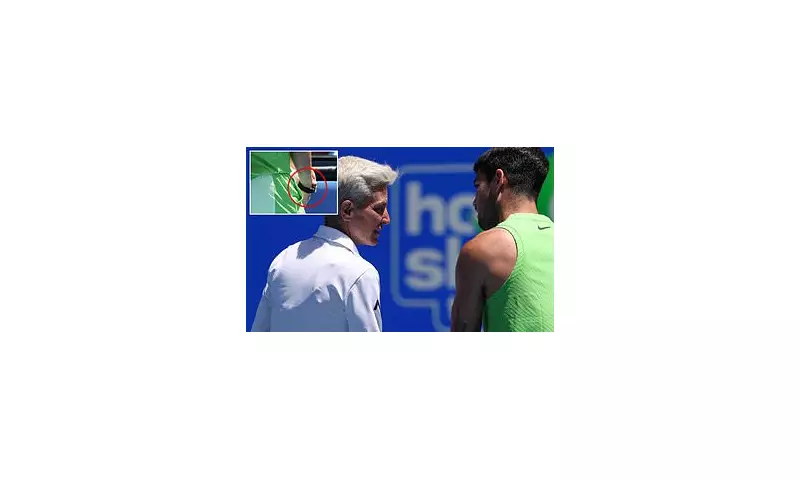
World number one Carlos Alcaraz found himself at the centre of a tennis rules controversy after being ordered to remove a prohibited fitness tracker during his Australian Open fourth-round match. The incident occurred on Rod Laver Arena as Alcaraz warmed up for his straight-sets victory over Tommy Paul, with chair umpire Marija Cicak spotting the device concealed beneath the Spaniard's wrist sweatband.
Umpire Intervention Sparks Grand Slam Regulations Debate
Alcaraz complied immediately without protest when instructed to remove the wearable, with the exchange captured on the tournament's world feed. The device in question was identified as a Whoop band – a screenless wearable popular among elite athletes for tracking recovery metrics, exertion levels, sleep patterns, heart rate and blood oxygen saturation through synced devices.
Despite their widespread adoption across professional sports, data-transmitting wearables face restrictions at Grand Slam tournaments under International Tennis Federation regulations. These rules prohibit such devices unless specifically pre-approved, primarily due to concerns regarding potential communication breaches, unauthorised coaching advantages and betting integrity issues.

Regulatory Confusion Between Tours and Grand Slams
The incident has highlighted significant regulatory confusion within professional tennis. Veteran commentator Mark Petchey explained during broadcast coverage: 'You're not allowed to play with a Whoop watch here or anything that monitors your vitals or anything else.' This creates a notable clash between tour regulations and Grand Slam enforcement, as Whoop devices remain permitted on both the ATP and WTA Tours – with the company serving as an official WTA partner.
Spanish media reports revealed Alcaraz had worn the fitness band during his first three Australian Open rounds without issue before it was flagged during his fourth-round encounter. Whoop founder Will Ahmed responded publicly to the incident, posting on social media platform X: 'Whoop is approved by the International Tennis Federation for in-match wear and poses no safety risk. Let the athletes measure their bodies. Data is not steroids.'
Unfazed Alcaraz Advances to Quarter-Final Showdown
On court, the disruption appeared to have minimal impact on Alcaraz's performance. After recovering from an early service break, the Spanish star steadied himself to defeat Paul 7-6 (8-6), 6-4, 7-5, extending his flawless run in Melbourne where he has yet to drop a single set throughout the tournament.
This victory sets up a highly anticipated quarter-final confrontation with Australian hope Alex de Minaur, who stormed into the last eight with an emphatic 6-4, 6-1, 6-1 demolition of Alexander Bublik in just 92 minutes. Following his commanding performance, de Minaur expressed satisfaction with his current level: 'So I'm super pleased with my level, I'm excited for the next one. That's going to be a big one, right? I'm going to have to come out all guns blazing and I'm excited for a battle against Carlitos.'
Historic Meeting Amid Challenging Conditions
The upcoming quarter-final will represent the first Grand Slam meeting between Alcaraz and de Minaur, adding historical significance to their encounter. The Australian trails significantly in their head-to-head record, having failed to secure a victory in their five previous ATP Tour meetings.
Extreme heat conditions forecast for Melbourne present additional challenges, with temperatures expected to trigger the tournament's Heat Stress Policy. These conditions are likely to influence both scheduling decisions and match environment, potentially necessitating an indoor session for the quarter-final clash. The combination of regulatory controversy, historic rivalry and challenging weather conditions creates a compelling narrative as the Australian Open reaches its critical stages.