Lehi Hopoate Expresses Deep Regret Over Eliesa Katoa's Serious Brain Injury
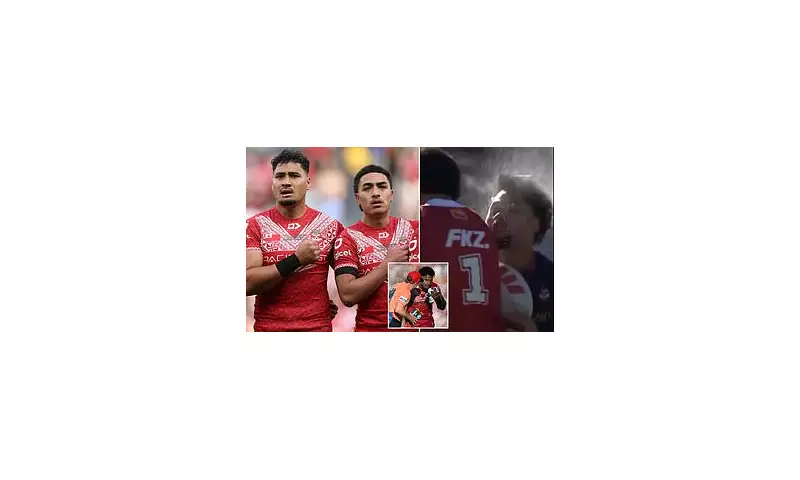
Manly Sea Eagles winger Lehi Hopoate has opened up about the traumatic incident during Tonga's Pacific Championship clash against New Zealand in November, stating he would have strongly advised his teammate Eliesa Katoa against playing if he could turn back time. The revelation comes as the rugby league community continues to grapple with the aftermath of a collision that left Katoa requiring emergency brain surgery.
The Fateful Warm-Up Collision and Its Aftermath
During the pre-match warm-up, Hopoate and Katoa accidentally clashed in mid-air while both attempting to catch a high ball. The impact resulted in Katoa suffering a significant head knock, causing him to fall to the ground. Medical staff attended to him immediately on the field and, after assessment, cleared the 26-year-old second-rower to participate in the match.
This decision would prove catastrophic, as Katoa endured two additional head impacts during the game. He was subsequently substituted out and began feeling unwell on the sideline before being rushed to hospital for urgent surgery to relieve pressure on his brain. Following a period of hospitalisation, Katoa is showing positive signs of recovery, though he will not feature for the Melbourne Storm during the 2026 NRL season.

Hopoate's Emotional Burden and Ongoing Support
Hopoate, who received considerable online criticism following the match, confessed to experiencing "mixed emotions" and persistent guilt over his role in the incident. "I was at fault for what happened to Eli with his first concussion," he told The Sydney Morning Herald. "We were both going for the high ball, we didn't see each other and then clashed."
The Manly player has maintained contact with Katoa since the injury, sending messages and gifts to check on his wellbeing. "I knew [he was not well]. I kept checking on him," Hopoate explained. "For him, because he had the red [Tongan] jersey on, he felt like he owed it to the boys [to play]."
Despite facing abuse on social media, including accusations of intentionally targeting his teammate, Hopoate stated he has managed to avoid negativity. "I didn't fall into that negativity. I was sweet," he remarked.
Family Perspective and NRL Investigation
Hopoate's father, former Manly player John Hopoate, confirmed his son's distress over the situation. "Lehi is hurting, 100 per cent, he is feeling for Eli," he said. John also criticised the television coverage for not showing the full context of the collision and highlighted the role of medical staff.
The NRL has taken disciplinary action against two doctors and a trainer who allowed Katoa to continue playing after the repeated head knocks, issuing them with proposed two-year bans. John Hopoate suggested that had medical personnel reviewed footage of the initial collision, Katoa would not have been permitted to play. "Every player wants to get on the field, but what do you do when the doctors tell you that you're OK?" he questioned.
Katoa's Recovery and Return to Training
Nearly three months after the incident, Katoa—who was named second-rower of the year at the 2025 Dally M awards—has begun light training with the Melbourne Storm. He recently shared Instagram posts showing him back on the field and participating in team-bonding activities, including a pre-season camp in Geelong where players wore T-shirts commemorating the Storm's 2012 Premiership win.
Storm teammate Ativalu Lisati provided an encouraging update on Katoa's reintegration, noting his positive influence on the squad. "Eli has been around training with us and it's been a motivation for us," Lisati told Code Sports. "He's been going through it tough, so to see him on the field is a motivation for us boys to do a job for him this year."
Lisati added that the team continues to engage with Katoa normally, seeking his guidance and expertise. "The boys are also picking his brain at training because we want to learn stuff from him and take a page from his book and apply it to how we'll play this year," he said.

This incident has sparked broader conversations about player welfare, concussion protocols, and the responsibilities of medical staff in professional rugby league, underscoring the delicate balance between competitive spirit and athlete safety.