Murray Challenges Cahill's Version of Sinner's Australian Open Scheduling
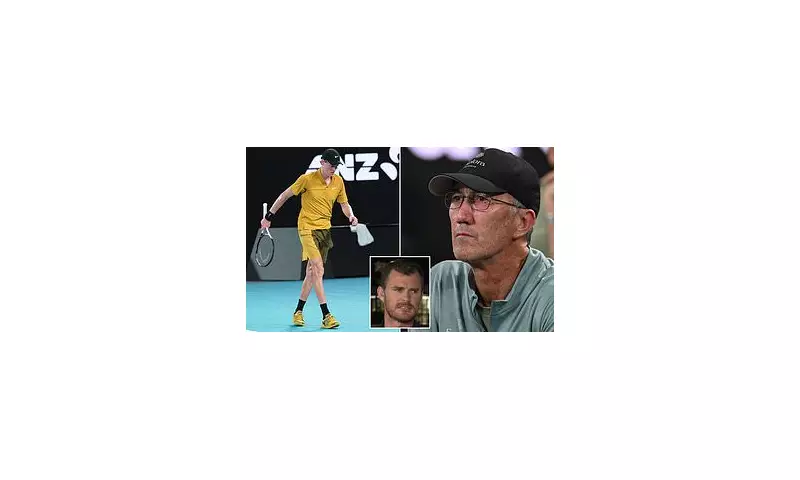
Jamie Murray has strongly contested claims made by Jannik Sinner's coach, Darren Cahill, regarding the Australian Open defending champion's match scheduling preferences. The dispute centres on whether Sinner requested an evening time slot for his fourth-round encounter against fellow Italian Luciano Darderi, following the player's concerning physical struggles during extreme heat conditions earlier in the tournament.
Sinner's Heat Struggles Prompt Scheduling Scrutiny
The controversy emerged after Sinner experienced significant difficulties during his third-round match against world number 85 Eliot Spizzirri. With temperatures soaring to 40°C at Melbourne Park, the Italian former world number one was visibly struggling, seizing up with cramp while trailing 3-1 in the third set. Play was halted precisely as Sinner's physical distress became apparent, under the tournament's Heat Stress Scale reaching level five.
This scale, introduced in 2019, comprehensively evaluates four climate factors: air temperature, radiant heat, humidity, and wind speed. When the index hits five, play is automatically suspended in both women's and men's singles matches. The intervention proved crucial for Sinner, who left the court while the roof at Rod Laver Arena was closed. Returning to significantly cooler conditions, he remarkably recovered to win the third set 6-4 before securing overall victory with scores of 6-4, 3-6, 4-6, 4-6.

Conflicting Accounts Emerge Regarding Scheduling Requests
Sinner's subsequent fourth-round match against Darderi was scheduled for the 6pm slot at Margaret Court Arena, marking his first appearance at the 7,500-capacity stadium since his fourth-round victory against Karen Khachanov in the 2024 Australian Open. Cahill firmly insisted that Sinner's team had not requested this evening session, despite Novak Djokovic receiving a walkover against Jakub Mensik that created scheduling flexibility.
'We did not request a night session,' Cahill stated unequivocally. 'We could have been moved to the night session when Jakub Mensik pulled out. It was offered to Jannik to move to that second at night, but he was quite happy with the schedule when it came out that it was not before 6pm on MCA, so we just stuck to the schedule.'
Murray Expresses Skepticism About Cahill's Assertions
Jamie Murray, the seven-time doubles Grand Slam champion, expressed profound skepticism about Cahill's version of events. Speaking to TNT Sports, Murray declared: 'I don't believe it. There's no way he went through what he went through in his last match and then they didn't want him to play as late as possible.'
Murray elaborated further, acknowledging Cahill's rights while maintaining his disbelief: 'I don't believe it personally, but I could be wrong. I'm not saying he's wrong. He's absolutely in his rights to ask to play late in the day, but I don't believe he went through what he went through and did nothing about it.'
Heat Protocols Continue Amid Player Commentary
Extreme heat measures remained in place throughout the tournament, with the roof at Rod Laver Arena closed for Alexander Zverev's victory over Learner Tien following Aryna Sabalenka's win against Iva Jovic. During her post-match press conference, Sabalenka humorously suggested gender differences in heat tolerance, remarking: 'I guess, yeah, as a woman, we are stronger than the guys, so they had to close the roof for the guys so they don't suffer!'
Sabalenka acknowledged the tournament's protective measures, stating: 'I knew they won't let us play in crazy heat. If it reached the 5, they would definitely close the roof, so I knew they were protecting us, our health.' She noted that the heat index reached 4.4 during her match, approaching the threshold for automatic suspension.

Comprehensive Heat Protocol Framework Explained
The Australian Open's Extreme Heat Protocol represents a sophisticated system designed to ensure player safety during Melbourne's notoriously variable summer conditions. When the Heat Stress Scale reaches level four, organisers can implement additional cooling measures, including an extra ten-minute break between sets. The tournament referee maintains authority to suspend play, order extra cooling breaks, or close arena roofs when conditions warrant.
Notably, if matches on outdoor courts have been suspended due to extreme heat, the referee may decide to close or keep closed the roof for upcoming matches on arena courts. Each player must receive at least thirty minutes' notice before play resumes following any suspension. The protocol specifically states that if the roof is closed before the end of the first set in women's singles or before the end of the second set in men's singles, no extra cooling breaks will be implemented.
Weather Conditions and Tournament Outlook
Despite forecasts predicting temperatures reaching 45°C late Tuesday, actual conditions peaked at just over 42°C at 5 p.m. local time at the Australian Open site near downtown Melbourne. The roof was subsequently opened for Carlos Alcaraz's quarterfinal victory over Alex de Minaur. Meteorological projections indicate more moderate conditions ahead, with maximum temperatures dropping to 24°C on Wednesday and mostly remaining in the 20s for the remainder of the week, considered mild by Melbourne's summer standards.
As the tournament progresses toward the women's final on Saturday and men's final on Sunday, the debate surrounding scheduling preferences and heat management continues to highlight the complex balance between competitive fairness, player welfare, and tournament logistics in elite professional tennis.