Six Nations Frenemies: Lions Bonds and Glasgow's Influence Shape Scotland's Campaign
The bustling media launch for the Six Nations in Edinburgh on Monday saw rival captains navigating a familiar dance. Sione Tuipulotu, Antoine Dupont, Jamie George, and others found themselves in constant proximity, shuttled between interview stations like shoppers exchanging polite nods in supermarket aisles.
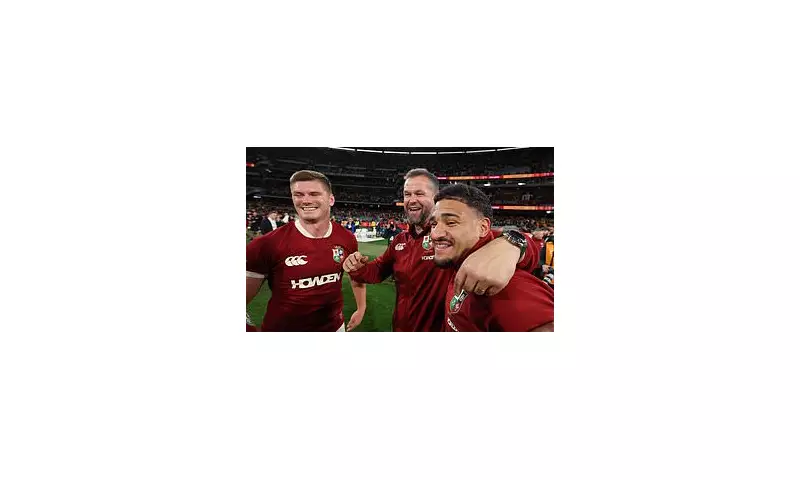
This annual convergence of international rivals is nothing new in the rugby calendar. Teams clash yearly, with many players sharing domestic leagues or even club dressing rooms. However, for those who have also worn the iconic red jersey of the British and Irish Lions, these relationships acquire an added, complex layer.
The Lions Legacy: From Teammates to Temporary Foes
Tuipulotu, Scotland's amiable yet fiercely competitive captain, is now intimately acquainted with this duality. Following his inclusion in Andy Farrell's Lions touring party to Australia last summer, he forged bonds that must now be temporarily set aside.

'Oh, no, it’s not edgy at all, to be honest,' the Glasgow centre insisted regarding the pre-tournament atmosphere. 'It’s edgy on the field, definitely. But I know Jamie George from over the summer. Obviously, Caelan [Doris] missed out on the tour through injury but I’ve known him from playing against him. And they’re all competitors.'
He describes the peculiar psychology at play: 'It’s a weird thing because you get along with them so well. But then the other side of you is like, “I’ve got to hate you in a little bit”. So that’s the reality of it all. I don’t think there’s any psyching people out in press conferences. I’ll wait until game day for that.'
Insights Gained, But No Clear Advantage
While his Lions experience provided a unique window into the mindsets and methods of Irish and English coaches, Tuipulotu is pragmatic about any tactical edge.
'[It helps] a tiny bit, I suppose,' he conceded. 'But they’ve also got insight into you so it works both ways. There are so many preconceived ideas about how people play. But when you’re in there... it’s interesting to see how they go about their business. You do pick up a lot of things.'
For him, the greater value was the steep learning curve. 'I think most importantly, on the Lions tour, you learn a lot. I know we’re all at the pinnacle of the sport by the time we make the Lions but it’s crazy how much more you can learn.' He pointed to players like Tadhg Furlong and Tom Curry, whose ownership of performances in major fixtures earned Test caps, as exemplars. 'That’s what we need for Scotland.'
The Glasgow Warriors Factor: Confidence from Club Form
A significant subplot for Scotland is the formidable form of Glasgow Warriors, who have contributed a remarkable 20 players to Gregor Townsend's squad. With the club excelling in Europe, there is palpable hope that this club-level momentum can translate to the international stage.
Tuipulotu believes the confidence and problem-solving skills honed at Scotstoun are transferable assets. 'Club rugby is not the same as Test rugby but you can take confidence from it,' he stated. 'The way that we’ve been playing and problem-solving as a leadership group... I can’t credit them enough. It’s important that we take that confidence into these big Test matches.'
He acknowledged the heightened pressure and narrower margins for error at Test level but remained optimistic. 'I believe we can bring those skills that we’ve picked up at Glasgow and which have won us big games into a Test environment.'
A Captain's Redemption After Injury Frustration
For Tuipulotu personally, this tournament represents a welcome return. This time last year, a pectoral muscle injury suffered en route to the launch event ruled him out for three months—a frustrating experience he describes as 'horrible'.
'I’m not the best observer of games. I got really frustrated in the crowd,' he admitted, recalling his spectator role at venues like Twickenham. 'It was weird observing as a spectator. You get to see things that you probably don’t notice when you’re playing because of the pressure.'

Now fully fit and leading his country, his motivation is clear. 'This will be my first time as captain in the Six Nations and I’m proud to do it, really motivated to have our best tournament yet. It’s exciting, all the boys meeting up again. It’s been a long three months. I’ve been excited for a long time to get back into the Six Nations environment.'
As the tournament approaches, the blend of Lions-forged respect, club-born confidence, and a captain's renewed hunger will be crucial ingredients for Scotland's campaign.