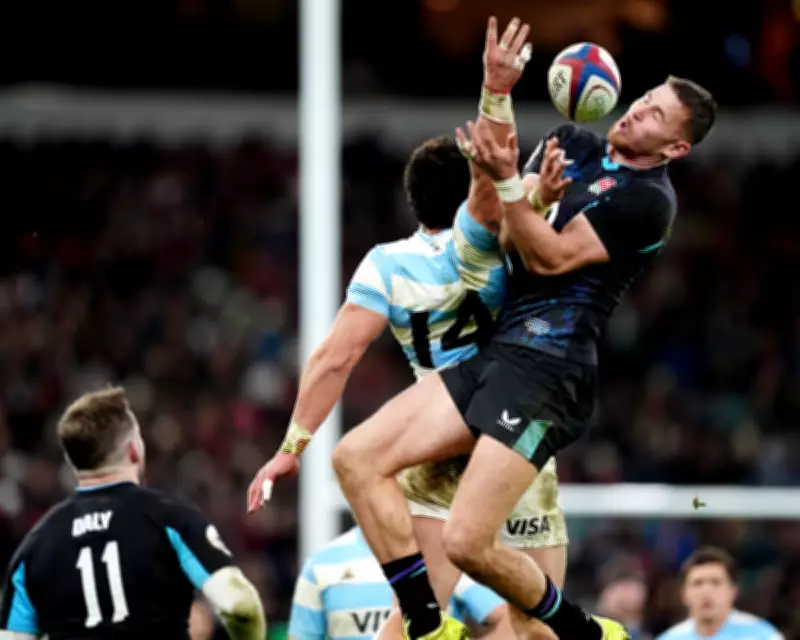
Freddie Steward Advocates for Rugby Law Reform to Curb Aerial Spoiling Tactics
England's Freddie Steward has issued a compelling call for rugby union's governing bodies to reassess the regulations surrounding contestable kicks, which he claims are rendering aerial battles more challenging than ever. As the Six Nations championship kicks off next week, the full-back is pushing for a ban on one-handed "flapping" by chasing players, insisting that all jumpers must make a genuine two-handed effort to catch the ball.
The Impact of Current Laws on High Ball Collection
Steward highlighted that under the current framework, it has become increasingly difficult to secure high balls with consistent success. This shift is largely attributed to the spoiling tactics employed by onrushing opponents, a trend exacerbated by the crackdown on defensive escort runners. With England coach Steve Borthwick anticipating Wales to kick the ball "50 times" in their upcoming match at Allianz Stadium, Steward's concerns are particularly timely.
"It's probably more difficult than ever to come down clean with the ball with this new law," Steward stated, confirming his strong support for a regulatory tweak. "A law change where they have to make a genuine attempt to catch the ball would be really positive. It's too easy for wingers just to be a nuisance."

He criticised the current approach for lacking skill, noting that players can simply throw their bodies in and flail an arm without making a sincere catch attempt. Steward admitted to struggling with this dynamic, as he holds himself to high standards of securing every aerial ball, a feat that has become notably harder in today's game.
Adaptations and Increased Injury Risks
In response to these challenges, Steward has been forced to modify his technique in ways that heighten the risk of injury to opponents. He explained that previously, he could ascend with less speed and height, but now he must operate at maximum velocity and elevation to compete effectively.
"It's so much more physical in the air now," Steward revealed. "It used to be quite a safe space. Now you have to be braver and almost expect a collision every time you go up."
His adjustments include catching the ball squarer, positioning his knee as a "genuine battering ram" to deter flapping wingers. This strategic shift prioritises physicality over ball retrieval, a departure from traditional methods that Steward feels is necessary to adapt to the evolving game dynamics.
Broader Implications for Rugby Union
Clamping down on one-handed taps would align with existing penalties for defensive knock-downs, potentially fostering a fairer contest. On a positive note, the increase in loose balls could create more opportunities for broken field running and counterattacks. However, this has not yet reduced the prevalence of repetitive box kicking, as teams continue to seek advantages from any "crumbs" that may fall their way.
Steward, aged 25, predicts a surge in contestable kicking during this year's Six Nations, describing it as a tactical evolution akin to a "game of chess." Despite his advocacy, some stakeholders, including South Africa's assistant coach Mzwandile Stick, favour the current law for promoting equitable aerial contests and potentially leading to more scrums from defensive knock-ons.
As debates intensify, Steward's insights underscore the ongoing balancing act between safety, skill, and strategy in modern rugby union, with implications for players, coaches, and fans alike.