Carlos Alcaraz Defends Medical Timeout After Gruelling Australian Open Triumph
The world number one, Carlos Alcaraz, has firmly rejected accusations of gamesmanship following his monumental five-set victory over Alexander Zverev in the Australian Open semi-finals. In a match that stretched for an exhausting five hours and 27 minutes, Alcaraz showcased remarkable resilience to secure his place in the final, but the contest was not without its contentious moments.
A Battle of Endurance on Rod Laver Arena
Alcaraz appeared to be in complete control early on, racing to a two-set lead against the German third seed. However, the momentum shifted dramatically in the third set when the Spaniard began to exhibit signs of physical distress. After appearing to vomit into a towel and visibly struggling with his right thigh, Alcaraz called for a medical timeout at 5-4 down in the set.
This decision sparked immediate controversy, as cramp is typically classified as a loss of condition rather than an acute injury under tennis rules, with treatment usually restricted to changeover periods. Zverev was overheard expressing his frustration to the match supervisor, suggesting that top players like Alcaraz and Jannik Sinner receive preferential treatment.

Alcaraz's Firm Rebuttal and Zverev's Reaction
In his post-match press conference, Alcaraz was unequivocal in his defence. "In the beginning it was on just one muscle, so I didn't think it was cramp at all," he explained. "I just told what happens to the physio and he decides to take the medical." The 22-year-old insisted he believed he had sustained a genuine injury at the time, which justified the intervention.
For his part, Zverev chose to downplay the incident after the match, despite his visible on-court anger. "I didn't like it, but it's not my decision," he stated. "I don't want to talk about this right now, because I think this is one of the best battles there ever was in Australia. It doesn't deserve to be the topic now." The German instead focused on his regret at failing to capitalise on a 5-2 lead in the second set, which ultimately proved costly.
A Fifth-Set Fightback for the Ages
With the match levelled at two sets apiece, Zverev broke early in the decider to lead 5-3, placing Alcaraz's dream of becoming the youngest man to complete a career Grand Slam in serious jeopardy. Yet, displaying the tenacity that has defined his rise, Alcaraz reeled off four consecutive games to clinch a 6-4, 7-6 (5), 6-7 (3), 6-7 (4), 7-5 victory.
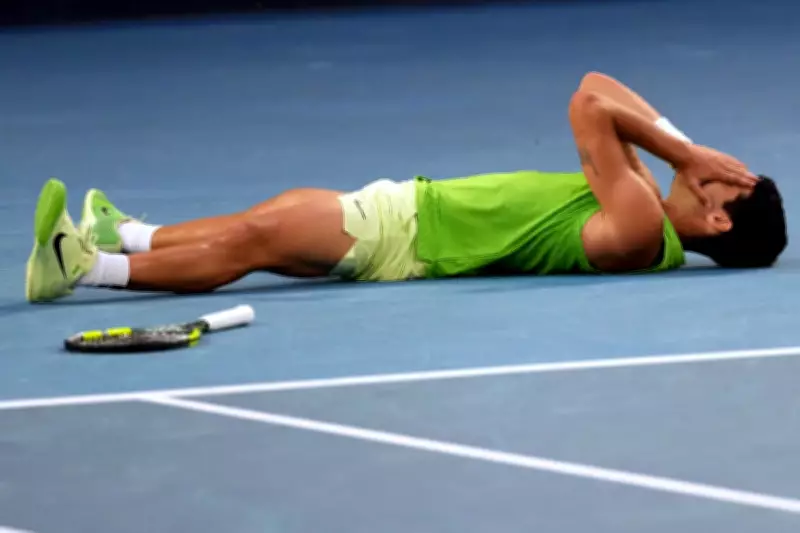
Upon sealing the win with a powerful forehand, Alcaraz collapsed onto his back in exhaustion and relief. Reflecting on the extraordinary comeback, he credited his mental maturity. "When I was younger, there were a lot of matches that I just didn't want to fight anymore or just I gave up," Alcaraz admitted. "Then I got mature and I just hate that feeling. Every step more, every just one second more of suffering, one second more of fighting, is always worth it."
Looking Ahead to the Final
The physical toll of this epic encounter raises immediate questions about Alcaraz's recovery ahead of Sunday's final. Having become the youngest man in the Open Era to reach all four Grand Slam finals, he now faces the challenge of regenerating both body and mind in a short timeframe.
Meanwhile, Zverev's quest for a maiden major title continues, with this defeat marking another heartbreaking near-miss at a Grand Slam. The match, played in temperatures peaking at 29.8°C, will be remembered not only for its incredible drama and skill but also for the debate it ignited over the interpretation of medical rules in elite tennis.