Tennis Stars Świątek and Gauff Slam 'Zoo Animal' Surveillance at Tournaments
In a striking critique of modern tournament practices, world number two Iga Świątek has echoed concerns previously raised by American star Coco Gauff about the pervasive camera surveillance that tracks players' every move. The issue came to the forefront during the Australian Open, where both athletes highlighted what they perceive as an invasion of privacy in the relentless pursuit of content and entertainment.
The 'Zoo Animal' Comparison
Following her quarterfinal defeat to Elena Rybakina, Świątek was asked about the lack of off-camera spaces for players. Her response was both vivid and pointed. "Yeah, the question is, are we tennis players, or are we, like, animals in the zoo where they are observed even when they poop, you know?" she remarked, before slightly apologising for the graphic analogy. "OK, that was exaggerating obviously, but it would be nice to have some privacy. It would be nice also to, I don’t know, have your own process and not always be, like, observed."
The Polish champion, who has secured four French Open titles alongside victories at Wimbledon and the US Open, emphasised that while being watched on court and in press conferences is part of the job, constant surveillance elsewhere feels unnecessary. "We’re tennis players. We’re meant to be watched on the court, you know, and in the press. That’s our job," she stated. "It’s not our job, like, be a meme when you forget your accreditation." This reference alluded to a viral moment where Świątek was stopped by security after forgetting her credential, an incident that became an internet sensation.

Gauff's Frustration and Racket-Smashing Incident
Świątek's comments build upon concerns voiced earlier by Coco Gauff, the world number three and two-time major winner. After her quarterfinal loss to Elina Svitolina, Gauff smashed her racket seven times on a concrete ramp near the player area—a moment captured by cameras despite her efforts to find privacy. "I tried to go somewhere where I thought there wasn’t a camera because I don’t necessarily like breaking rackets," Gauff explained in her post-match news conference.
She revealed she had deliberately avoided smashing her racket on court to maintain a professional appearance in front of fans. "So, yeah, maybe some conversations can be had," Gauff suggested, "because I feel like at this tournament the only private place we have is the locker room." She also referenced a similar incident involving Aryna Sabalenka after the US Open final, questioning why such private moments need broadcasting.
Tournament Practices and Fan Engagement
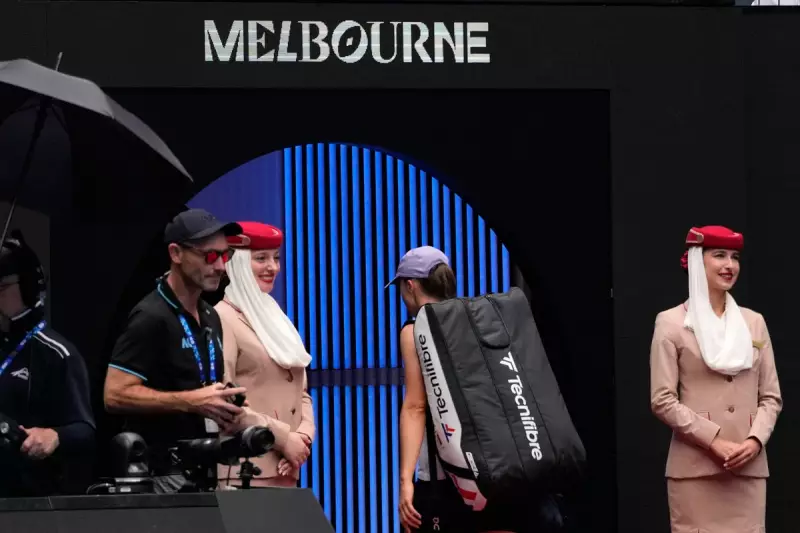
This surveillance is not unique to the Australian Open, though organisers there have notably expanded fan engagement activities around the season-opening major, creating a three-week festival atmosphere. Cameras in non-public areas, while not always broadcast live, capture moments that frequently go viral for being dramatic, cute, or informative.
Świątek pointed out practical implications, noting she would appreciate space to practice certain aspects of her game immediately before matches without global scrutiny. "It would be nice to have some space where you can do that without the whole world watching," she said. As one of Poland's premier athletes, she acknowledges that public attention comes with the territory but argues for clearer boundaries.
A Growing Conversation in Tennis
With Świątek and Gauff ranked among the top three in women's tennis, their concerns carry significant weight and are likely to spark broader discussions within the sport. The balance between providing entertainment through constant content and respecting player privacy remains a contentious issue. Both stars advocate for more designated private areas beyond locker rooms, suggesting that current practices may compromise athletes' mental preparation and personal moments.
As tennis continues to evolve in the digital age, the feedback from its leading players could prompt tournament organisers worldwide to reevaluate surveillance protocols, ensuring that the pursuit of engagement does not come at the expense of competitors' well-being and dignity.