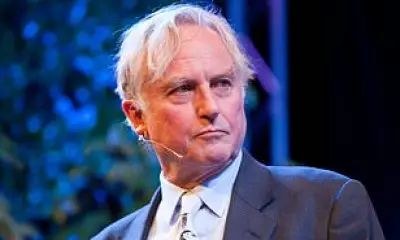
The chief executive of leading artificial intelligence startup Anthropic has issued a stark warning that humanity is entering a phase of AI development that will profoundly test our species, arguing the world urgently needs to "wake up" to the imminent risks.
A Critical Rite of Passage for Humanity
Dario Amodei, co-founder and CEO of the company behind the popular Claude chatbot, voiced his grave concerns in a substantial 19,000-word essay titled "the adolescence of technology." He described the arrival of highly powerful AI systems as potentially just around the corner, stating that this represents a turbulent yet inevitable rite of passage.
"I believe we are entering a rite of passage, both turbulent and inevitable, which will test who we are as a species," Amodei wrote. He added with striking clarity: "Humanity is about to be handed almost unimaginable power, and it is deeply unclear whether our social, political, and technological systems possess the maturity to wield it."

The Imminent Arrival of Powerful AI
The tech entrepreneur, whose company is reportedly valued at an astonishing $350 billion, defined "powerful AI" as a model smarter than a Nobel prizewinner across multiple disciplines including biology, mathematics, engineering and writing. Such systems could give or take directions from humans and, while primarily existing on computer screens, could control and even design robots for their own purposes.
Amodei suggested these powerful AI systems capable of autonomously building their own systems could be as little as one to two years away. While acknowledging this timeline might be "considerably further out," he emphasised that recent rapid technological progress should be taken with the utmost seriousness.
Economic Disruption and Societal Challenges
The Anthropic CEO highlighted the profound economic implications, noting that AI could potentially halve all entry-level white-collar jobs and send overall unemployment soaring to 20% within the next five years. A recent survey supports these concerns, revealing that a quarter of Britons fear losing their jobs to AI within this timeframe.
Amodei identified a dangerous paradox: "This is the trap: AI is so powerful, such a glittering prize, that it is very difficult for human civilisation to impose any restraints on it at all." The economic rewards from AI, particularly productivity gains from job elimination, could be so substantial that nobody applies the necessary brakes.
Safety Concerns and Corporate Responsibility
The warning comes as Anthropic published an 80-page "constitution" for Claude outlining how the company intends to make its AI "broadly safe, broadly ethical." Amodei expressed particular concern about some AI companies showing "disturbing negligence" towards issues like the sexualisation of children in current models, which raises doubts about their ability to address autonomy risks in future systems.
He specifically referenced the controversy over sexualised deepfakes created by Elon Musk's Grok AI that flooded social media platform X over the Christmas and New Year period, including warnings about the chatbot creating child sexual abuse material.
Government Collaboration and Public Service Applications
Amodei published his essay as the UK government announced that Anthropic would help develop chatbots to support jobseekers with career advice and employment searches. This forms part of broader efforts to create AI assistants for public services, demonstrating both the potential benefits and the complex integration of AI into societal structures.
A Path Forward with Cautious Optimism
Despite the grave warnings, Amodei expressed measured optimism about achieving a positive outcome: "I believe if we act decisively and carefully, the risks can be overcome – I would even say our odds are good. And there's a hugely better world on the other side of it. But we need to understand that this is a serious civilisational challenge."
The Anthropic co-founder, who previously worked at rival OpenAI before founding his company in 2021, has consistently warned about the dangers of unrestrained AI development. He noted that the world is "considerably closer to real danger" in 2026 than it was in 2023, when debates about existential AI risks first gained significant political traction.

Amodei concluded with a sobering assessment: "If the exponential continues – which is not certain, but now has a decade-long track record supporting it – then it cannot possibly be more than a few years before AI is better than humans at essentially everything." His essay serves as both a warning and a call to action for humanity to prepare for the profound changes artificial intelligence will bring to our civilisation.