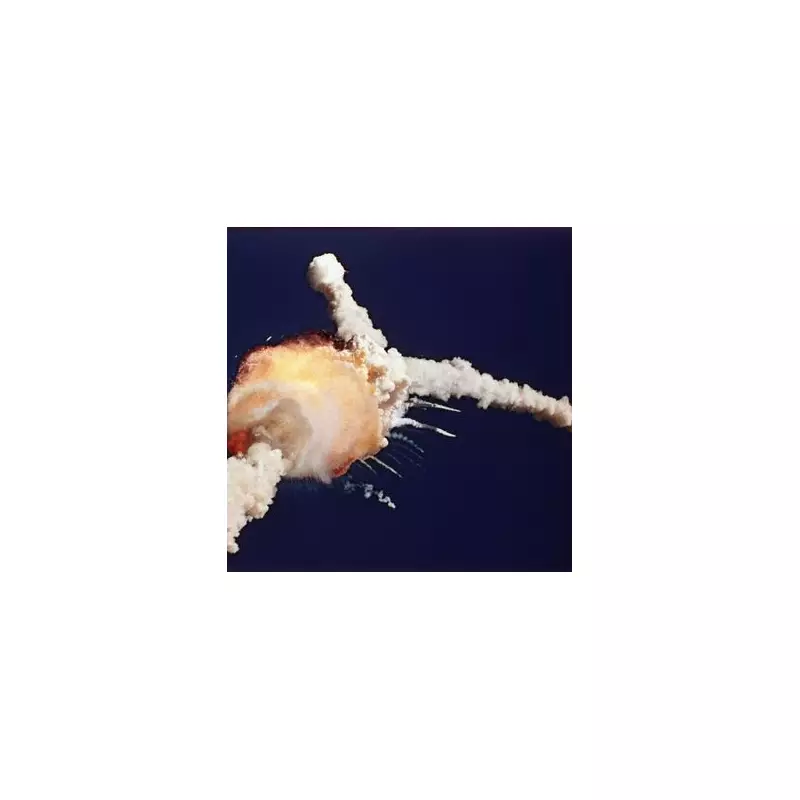
Challenger Disaster: Forty Years On, New Insights Into Tragic Final Moments
Today marks four decades since the Space Shuttle Challenger was destroyed a mere 73 seconds into its flight, a catastrophe that claimed the lives of all seven crew members on board and was witnessed live by millions of horrified television viewers. The mission, which carried Christa McAuliffe, the first teacher selected to go to space, ended in a devastating fireball that shocked the world and led to a major overhaul of NASA's safety protocols.
The Launch That Captivated a Nation
On the morning of January 28, 1986, anticipation was high as the Challenger prepared for launch from Kennedy Space Center in Florida. This was no ordinary mission; it featured 37-year-old Christa McAuliffe, a high school teacher from New Hampshire who had been chosen from over 11,000 applicants for NASA's Teacher in Space Programme. Her presence transformed the launch into a national educational event, with classrooms across America tuned in to watch history being made.
Commander Francis Scobee's voice echoed through mission control with the now-chilling phrase "go throttle up," suggesting everything was proceeding as planned. Yet just three seconds later, pilot Michael Smith's abrupt utterance of "uh oh" was the last communication received from the shuttle before all contact was lost. On the ground, NASA officials and spectators could only watch in helpless dread as the unthinkable unfolded in the sky above.

The Catastrophic Failure and Immediate Aftermath
To the millions watching, it appeared the space shuttle had exploded in a massive fireball. However, subsequent investigations revealed a more complex sequence of events. A critical booster designed to prevent fuel tank leaks had weakened and failed moments after lift-off, allowing searing gas to cause the external fuel tank to buckle and rupture. This triggered a huge fireball that engulfed Challenger, but the crew module remained intact initially and continued climbing for another 25 seconds before atmospheric pressure tore it apart at approximately 48,000 feet.
The wreckage, including the crew module, plunged into the Atlantic Ocean about 18 miles from the launch site in roughly 100 feet of water. In the immediate aftermath, NASA maintained publicly that all seven astronauts—Commander Francis Scobee, Pilot Michael Smith, Mission Specialists Judith Resnik, Ellison Onizuka, and Ronald McNair, and Payload Specialists Gregory Jarvis and Christa McAuliffe—had perished instantly in what appeared to be an explosion.
Disturbing New Evidence Emerges Decades Later
Forty years after the tragedy, previously unreleased evidence and analysis suggest a more harrowing possibility: that the Challenger crew may have survived the initial breakup of the shuttle and remained conscious for their final moments. Dr Joseph Kerwin, director of Life Sciences at the Johnson Space Center at the time, conducted the official investigation into the astronauts' deaths. His report, delivered six months after the disaster, concluded that the force of the blast was insufficient to have killed or even seriously injured those on board.
Perhaps most disturbingly, when debris was recovered from the ocean floor, investigators found that three of the crew's personal air packs—emergency oxygen systems designed to provide several minutes of breathable air—had been manually activated. Each pack required a conscious, deliberate action to switch on, suggesting at least some astronauts were alive and attempting to respond to the emergency after the shuttle began to break apart.
The Unanswered Questions About Their Final Seconds
Dr Kerwin's report ultimately deemed the exact cause of death inconclusive. He presented two possible scenarios for the crew's final moments. One possibility was a sudden, catastrophic loss of cabin pressure that would have rendered all seven astronauts unconscious almost immediately, sparing them awareness of their fate. However, Kerwin noted that such a rapid decompression would likely have caused visible damage to the shuttle's middeck floor, which was not found in the wreckage.

The alternative, and more troubling, scenario is that cabin pressure decreased more gradually. If this occurred, the entire crew would have remained conscious and fully aware during the approximately 25 seconds it took for their module to climb to its maximum altitude before plummeting back to Earth. This would mean they experienced the terrifying realization of their situation until impact with the ocean surface.
A Legacy of Safety Reforms and Enduring Questions
The Challenger disaster led to a 32-month hiatus in the Space Shuttle programme and comprehensive safety reforms at NASA. The Rogers Commission investigation identified the primary technical cause as the failure of O-ring seals in the solid rocket booster, compounded by flawed decision-making processes that allowed the launch to proceed despite known concerns about cold weather effects on the equipment.
Four decades later, the tragedy continues to serve as a sobering case study in engineering ethics, organizational communication failures, and the profound risks of space exploration. While the exact experiences of the seven astronauts in their final seconds may never be fully known, the emerging evidence suggests their deaths were not the instantaneous event long portrayed to the public. Their legacy endures not only in improved spaceflight safety protocols but in the enduring memory of Christa McAuliffe's educational mission and the ultimate sacrifice made by all aboard Challenger.