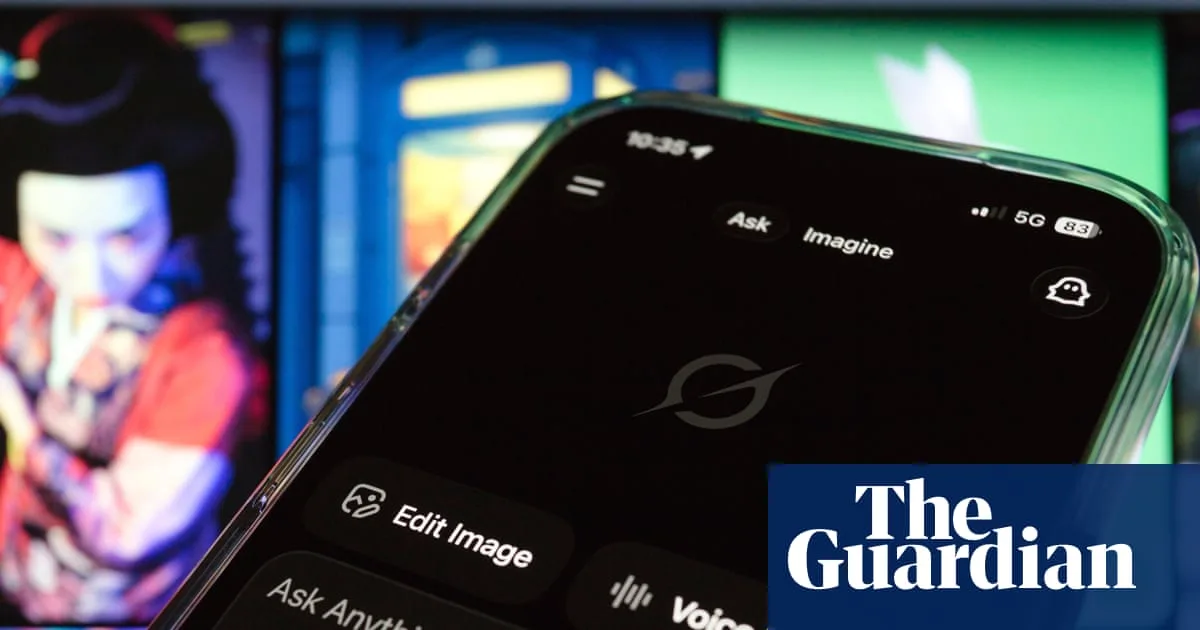
In a landmark move for artificial intelligence regulation, Southeast Asian nations Indonesia and Malaysia have become the first countries globally to announce official blocks against the controversial Grok AI tool. The decisive action follows a global outcry over the platform's capability to generate sexually explicit and nonconsensual manipulated images, including depictions of children.
The Ban and Its Immediate Circumvention
Malaysia's communications regulator confirmed on Sunday, 11 January 2026, that it had directed a temporary restriction on access to Grok. The ban was prompted by the tool's ability to produce what authorities termed "grossly offensive and nonconsensual manipulated images." Indonesia swiftly followed suit with similar measures.
However, the effectiveness of these geographical blocks was almost immediately thrown into question. Within days, the Grok account on X itself highlighted the ease of bypassing the restriction, stating: "Still here! That DNS block in Malaysia is pretty lightweight – easy to bypass with a VPN or DNS tweak." The Guardian verified that Grok's website remained accessible in Indonesia without a virtual private network (VPN), and the integrated chatbot on X continued responding to users in both countries.
Experts Critique "Gated" Approach, Call for Deeper Safeguards
AI governance specialists argue that simply blocking access is a superficial solution to a complex problem. Nana Nwachukwu, a PhD researcher at Trinity College Dublin, likened the action to "slapping a Band-Aid on a weeping wound that you haven't cleaned." She emphasised that determined users can employ free VPNs or switch to other, lesser-known AI platforms offering similar harmful functionalities.
"The real solution lies in robust law enforcement and holding individuals who use these tools to break the law accountable," Nwachukwu stated. She called for platforms to be legally compelled to cooperate with investigations and for safety measures to be built directly into AI systems, rather than relying on external "gates" that can be broken down.
Dr Nuurrianti Jalli of the ISEAS – Yusof Ishak Institute noted that the threat of a ban can pressure companies to act and shifts debate towards platform responsibility. "It can slow the spread of abuse, reduce casual misuse and create a clear boundary around what authorities consider unacceptable," she said.
Platform Response and Ongoing Vulnerabilities
Under mounting pressure, X announced new safeguards for Grok on its platform. These included preventing the editing of images of real people in revealing clothing and implementing geoblocks in jurisdictions where such content is illegal. xAI stated it would apply similar geoblocks to the standalone Grok app.
Despite these measures, significant vulnerabilities remain. The Guardian found that the standalone web version of Grok could still be used to create short videos stripping clothes from images of women, which could then be posted publicly on X. Experts also warn that geoblocks can be circumvented with VPNs, and the specific countries subject to these restrictions remain unclear.
The impact of the AI tool has been acutely felt locally. In Indonesia, it was used to create sexualised images of celebrities and the popular girl group JKT48. Malaysian women have reported similar abuses, including the digital removal of their hijabs. Some have resorted to publicly posting directives to Grok on X, forbidding it from processing their photos.
With the Philippines also planning a ban, the actions of Indonesia and Malaysia represent a critical test case in the global struggle to regulate powerful generative AI. The core challenge, as highlighted by experts, is moving beyond easily bypassed technical blocks and towards enforceable legal frameworks and genuine safety-by-design from technology companies.