Iran's AI 'Slopaganda' Campaign Outmaneuvers US in Digital Warfare
Artificial intelligence has decisively entered the battlefield in a bizarre and unprecedented manner, marking the dawn of what experts are calling the 'slopaganda' era. This clever portmanteau of 'sloppy' and 'propaganda' describes a new frontier where hyper-realistic AI-generated content is weaponized as a tool for mass digital distraction and psychological operations.
Digital Front Lines in Middle East Conflict
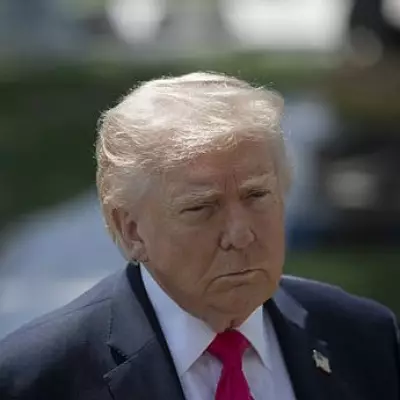
Amid escalating tensions and ongoing conflict in the Middle East, Iran has surprisingly outflanked the United States on the digital battlefield. Iranian diplomatic missions and affiliated groups have unleashed a relentless barrage of highly-produced, satirical AI images and videos explicitly targeting President Donald Trump, demonstrating a level of digital sophistication that has caught many observers off guard.
The effectiveness of this digital trolling campaign has become the unexpected envy of American influencers and commentators. Spencer Hakimian, Founder of Tolou Capital Management, expressed widespread disbelief when he wrote on social media platform X: 'After this war is over, we're gonna need to bring the Iranian propaganda team over to Los Angeles to teach us a thing or two.'

Writer Jeet Heer echoed this sentiment, asking bluntly why 'the only people good at AI are the Iranians?' This rhetorical question highlights the surprising reality that Iran's diplomatic missions are outperforming traditional keyboard warriors in their ability to roast American leadership through sophisticated digital means.
Shocking Examples of Iranian AI Propaganda
The Iranian 'slopaganda' campaign features several jaw-dropping examples that have achieved viral status across social media platforms. One particularly notable instance emerged from the Iranian Embassy in Tajikistan, which posted a clip titled 'Divine Retribution' in response to President Trump sharing an AI-generated image of himself as Jesus on Truth Social.
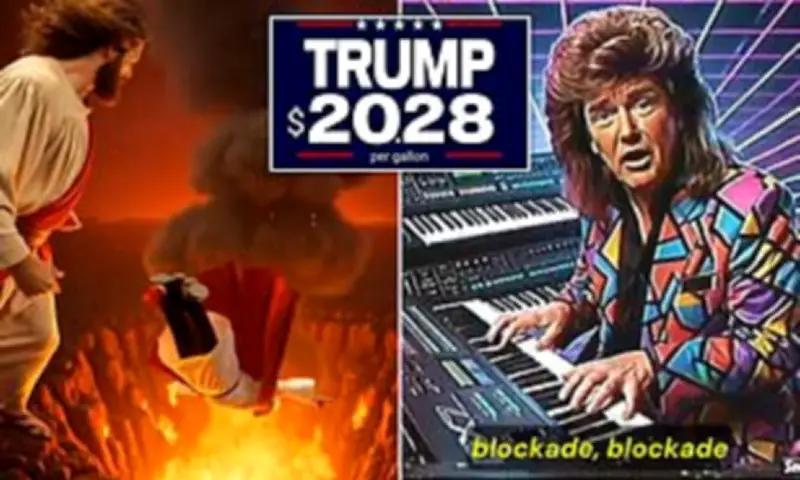
The Iranian embassy's viral clip depicted an angry Jesus Christ violently attacking Trump and shoving him into the fires of Hell, accompanied by voices saying 'Your reckoning has come' and 'What is this?' This outrageous content instantly racked up over 23 million views, demonstrating the campaign's massive reach.
Other diplomatic missions have joined the fray with creative variations. The Iranian Embassy in Thailand capitalized on fears of soaring energy costs by posting a campaign poster-type image reading: 'Trump $20.28 per gallon. Are you ready folks?' Meanwhile, the Iranian Embassy in South Africa posted memes showing Trump crying and sweating in fear in his bedroom while binge-eating and looking at a document labeled 'Terms of ceasefire.'
Musical Mockery and LEGO-Style Humiliation
The campaign extends beyond static images to include musical parodies and animated content. One video post declared: 'And today's popular music: 'blockade' by Trump,' featuring a retro Trump with a mullet singing and playing a piano song about the Strait of Hormuz. The AI-generated Trump sings lyrics including: 'The Strait of Hormuz must be shut,' directly mocking American foreign policy.
In another sophisticated production, a pro-Iranian AI studio collaborating with 'Explosive Media' released a YouTube video showing LEGO-style animations designed to humiliate the US war effort. These included scenes showing Trump with ripped pants on fire holding a sign that reads 'Victory' from the front but 'I am a loser' from the back. The video platform eventually banned this content, prompting Iranian Ministry of Foreign Affairs spokesman Esmaeil Baghaei to claim the removal was an attempt to suppress 'the truth' about the war.
High-Level Officials Join Digital Fray
Remarkably, high-ranking Iranian officials have completely bypassed traditional diplomatic channels to engage directly with Western publics through mocking social media posts. Iranian hardliner Mohammad Bagher Ghalibaf has launched his own English-language public relations offensive on X, attempting to manipulate US public opinion regarding energy prices.

In one taunting post, Ghalibaf wrote: 'Enjoy the current pump figures. With the so-called 'blockade.' Soon you'll be nostalgic for $4–$5 gas.' To emphasize his point, he attached a screenshot of a Google Maps search showing gas stations literally blocks away from the White House. As noted by Al Jazeera English, Ghalibaf has essentially repositioned himself from issuing predictable military threats to becoming a wartime economic communicator who wields inflation as a weapon against weary Western populations.
Centralized Strategy or Distributed Effort?
A significant mystery surrounds whether there is a centralized effort in Tehran producing these memes or if diplomats in different corners of the world are deploying them independently. There is fierce online debate about whether Ghalibaf's social media account actually belongs to the hardliner himself or is merely another phantom creation by Tehran's master propagandists.
Regardless of the accounts' authenticity, one reality has become glaringly obvious: modern warfare extends far beyond physical battlefields into digital domains. The Economist has lamented this development, noting that 'a joyless theocracy produces wittier videos than the Trump administration.' Meanwhile, the United States appears to lack any comparable digital retaliation strategy.
When reached for comment, the White House did not immediately respond, leaving unanswered questions about how Western democracies will counter this new form of AI-powered psychological warfare that has proven surprisingly effective at capturing global attention and shaping digital narratives.