The Quantum Threat: When Will Q-Day Arrive?
In what sounds like a plot from a science fiction thriller, cybersecurity experts are warning that the world faces an imminent technological crisis that could fundamentally dismantle digital secrecy as we know it. The moment when quantum computers become powerful enough to crack all of Earth's digital encryption has been ominously dubbed 'Q-Day'. From that point forward, any information not protected by advanced 'post-quantum' security measures would be completely exposed – including sensitive financial transactions, confidential military communications, and private personal data.
What Exactly Is Q-Day?
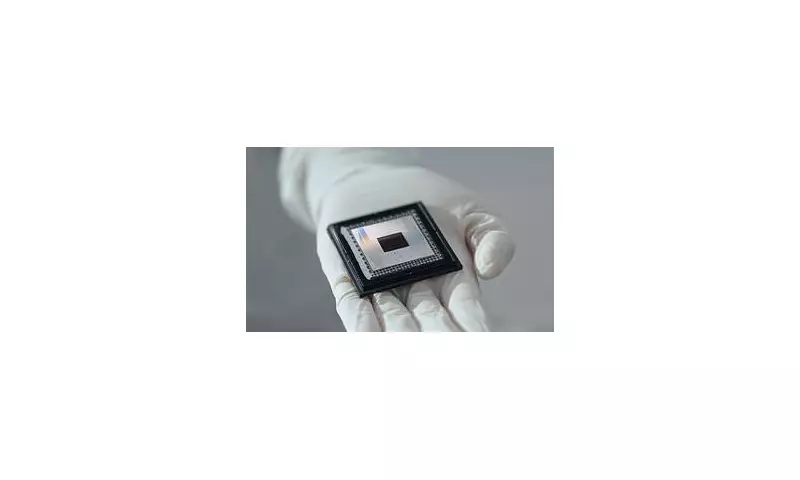
To understand the quantum threat, we must first grasp how quantum computers differ from conventional machines. Traditional computer chips, like those in your smartphone or laptop, process information using binary 'bits' that exist as either ones or zeros. Quantum computers, however, exploit the strange properties of matter at subatomic levels using 'qubits' (quantum bits) that can simultaneously represent one, zero, or both states at once.
This quantum superposition allows these revolutionary machines to solve multiple complex problems concurrently. Scientists believe specially designed quantum programs could enable computations exponentially faster than anything possible with conventional chips. Problems that might take billions of years to solve on today's supercomputers could potentially be cracked in mere seconds by quantum machines.

The alarming consequence is that this unprecedented computing power could be directed against the encryption protocols that currently safeguard our most sensitive digital information. Cybersecurity professionals refer to the advent of this capability as 'Q-Day' – though it may not arrive as a single dramatic moment, but rather as a gradual erosion of digital security.
Expert Predictions: From Two Years to Never
The Daily Mail recently consulted six leading cybersecurity and quantum computing specialists about when Q-Day might materialise, revealing a striking divergence of opinion within the scientific community.
Dr Chloe Martindale, senior lecturer in cryptography at the University of Bristol, suggests the threat window spans from 2028 to 2046, telling the publication: "A government or company with a sufficiently powerful quantum computer would be able to decrypt and potentially alter anything sent over the internet anywhere in the world."
Jason Soroko, Senior Fellow at cybersecurity firm Sectigo, points to 2030 as a plausible timeframe, noting: "The current state of engineering is proceeding at a sufficient pace that 2030 is a good chance to see that." He adds that any nation developing such capability would likely keep it a closely guarded secret, much like Britain's wartime Enigma code-breaking achievements.
Ewan Ferguson, CEO of Full Proxy, suggests 2030-2035 as a credible risk window, highlighting that even government agencies disagree on timelines – with the UK's National Cyber Security Centre targeting 2035 for encryption migration, while America's NIST authority recommends completion by 2030.
However, other experts urge caution about imminent predictions. Professor Artur Ekert, quantum physicist at the University of Oxford, believes quantum computers capable of breaking public key cryptography are "probably decades away," though he stresses: "We must start preparing now. For one thing, we need to educate the next generation of cyber warriors in quantum tech."
Professor Robert Young, an expert on quantum encryption from Lancaster University, suggests the cybersecurity apocalypse timeline is often exaggerated: "In this field, we often joke that practical quantum computing has been 'five years away' for the last 25 years." He adds that quantum decryption faces significant technical hurdles and that intelligence agencies typically have cheaper methods for targeting encryption.
Most sceptically, Dr Damiano Abram, lecturer on cyber security at the University of Edinburgh, suggests Q-Day "may also never arrive," citing fundamental challenges with scaling quantum systems while maintaining stability through error correction.

The 'Harvest Now, Decrypt Later' Threat
Even if Q-Day remains decades away, experts warn that the danger is already present through what's known as the 'harvest now, decrypt later' strategy. Malicious actors – including criminal organisations and nation states – are already stealing encrypted data today, banking on future quantum capabilities to eventually crack it open.
Dr Martindale explains the particular concern: "Encrypted data is stored now, and some of it – like medical data – you may also want to be private in 20 years' time." This means that sensitive information being protected today could become vulnerable tomorrow when quantum decryption becomes feasible.
The Race for Post-Quantum Security
Despite their disagreements about timing, all experts concur on one critical point: the world needs to begin preparing immediately. Major technology companies including Microsoft and Google have made significant quantum computing breakthroughs in recent years, though substantial engineering challenges remain.
The transition to 'post-quantum cryptography' – encryption methods designed to withstand quantum attacks – represents a monumental undertaking for governments, financial institutions, and corporations worldwide. Updating security infrastructure across global systems will require years of coordinated effort and substantial investment.
Dr Abram concludes with a pragmatic warning: "We need to start using post-quantum cryptography today, even if it is unclear when, and if, quantum computation at scale becomes a thing." As the quantum computing race accelerates between tech giants and national research programmes, the countdown to Q-Day – whether measured in years or decades – has undoubtedly begun.