From Sketches to Skies: How Xpeng's Designers Are Reimagining Future Mobility
Xpeng's Vision: Flying Cars and Autonomous Design Futures

In the rapidly evolving world of automotive innovation, the future of driving is being reimagined not just on the ground, but in the air. According to leading designers, the next frontier of mobility lies in three-dimensional transportation, blending art, technology, and visionary thinking.

The Art and Science of Car Design

Car designers are often seen as the Hollywood superstars of the automotive industry, combining impeccable style with forward-thinking creativity. Recently, industry insiders had the opportunity to spend a day with two such visionaries: Laurens van den Acker, the mercurial Renault Group design boss, and Rafig Ferrag, head of creative design for the Chinese brand Xpeng.

Van den Acker offered a secret glimpse into the future, leaving observers with the tantalising promise that the automotive world "ain't seen nothing yet." Meanwhile, Ferrag, who has worked for prestigious brands like Peugeot, Citroën, and Honda, is now channelling his expertise into Xpeng's ambitious projects.

Where Design Meets Dream

Ferrag, speaking at the London Art Fair, emphasised that car design is as much about art as it is about engineering. "The genesis of the design started because of drawing – a passion for drawing, a passion for art," he explained. "Whatever can touch beauty in general – photography, paintings, sculpture, architecture, product design – things that make people dream, that look beautiful to your eyes, or that can communicate pleasure to people."

This philosophy is evident in Xpeng's current lineup. The Xpeng G6, already on sale in the UK, features a sleek, full-width front light bar that predates similar designs in vehicles like the Tesla Model Y. The Xpeng P7+ is celebrated for its aesthetic appeal, while the G9 SUV demonstrates how functional vehicles can also be visually attractive.

The Limits of Current Design

Our conversation naturally turned to the future of car design, particularly in the context of electric vehicles and autonomous driving. Ferrag noted that while EV platforms offer flexibility, "the regulations are still there – safety regulations – and these are shaping the cars today." He believes that until Level 5 autonomous driving is achieved, vehicle shapes will remain relatively static. "In my opinion, as long as we don't reach level five autonomous driving, the shapes are going to stay where they are for quite a long time."

A New Era of Creativity

However, once fully autonomous cars become a reality, designers will be unleashed into a new realm of creativity. "This will be the next level of creativity for designers to think of something completely different," Ferrag said. "Then the possibilities are much, much bigger." This shift promises to redefine not just how cars look, but how they function and integrate into our daily lives.

Taking to the Skies

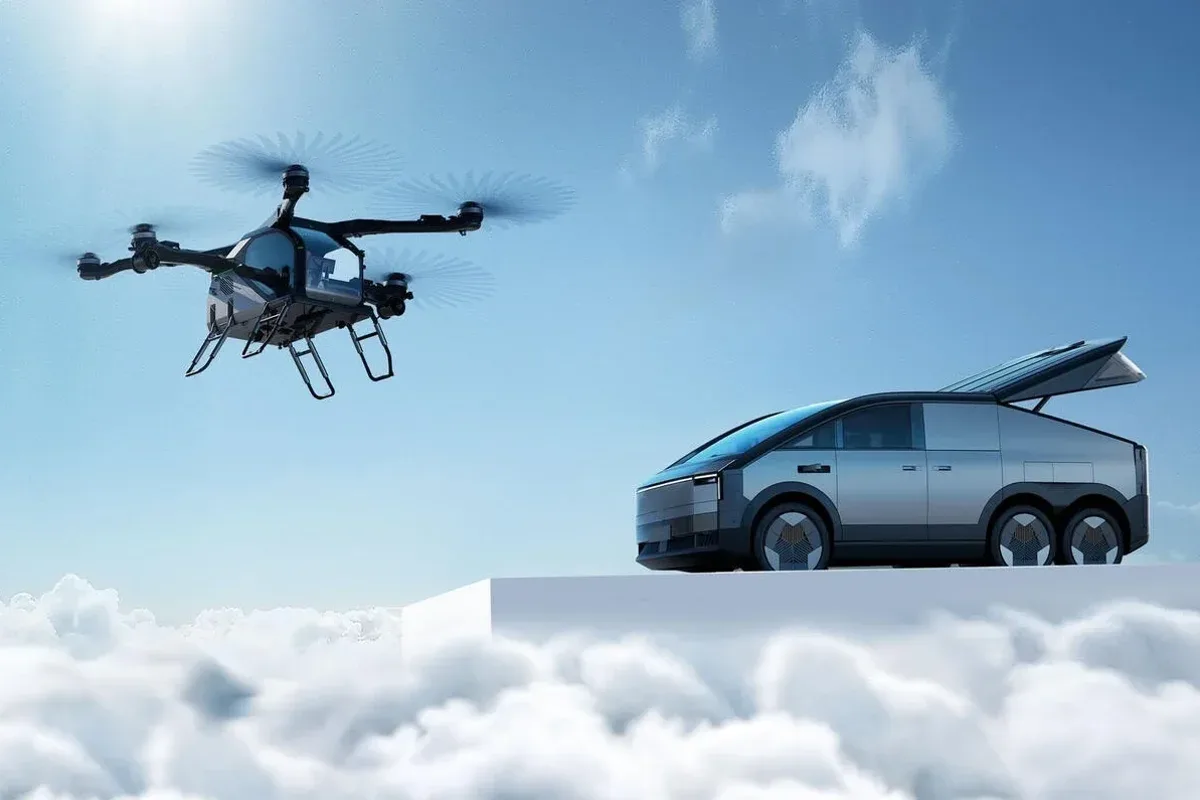
But Xpeng's vision extends far beyond the tarmac. The company, through its offshoot brand Xpeng AeroHT, is actively developing flying cars. Ferrag, who is involved in this project, expressed genuine excitement about the progress. "I mean, if you experience this in real life, this is already the future to me," he remarked.

Reflecting on his journey from the conservative automotive mindset of France to the innovative environment at Xpeng, Ferrag shared: "Coming from France with all those conservative thoughts and mindsets, and then going to a company like Xpeng, you design a car that flies – and then a few months later we are building prototypes that actually fly."

The Imminent Reality of Flying Cars

Ferrag is confident that flying cars are not a distant fantasy. "To me, I completely believe this is coming," he stated. "We are working on robots that behave almost like humans today. If you see it, you’d be astonished by the progress. So it’s close – actually, very, very close."

When asked if flying cars will replace traditional vehicles, Ferrag offered a nuanced perspective. "Replaced? Probably not," he said. "But definitely, we are living in a 3D world, and right now we are just using a 2D platform to transport ourselves. The 3D platform is the air, and it is still open for exploration. In my opinion, there are many things we can do with transportation, and when you add up the layers of transport, the 2D layer will naturally become less important."

Looking Ahead

Ferrag has invited industry observers to meet at the Beijing Auto Show in April, where he plans to showcase Xpeng's flying cars and advanced robots in person. This encounter promises to be a groundbreaking demonstration of how mobility is evolving, potentially offering a glimpse of conversations held not on the ground, but up in the air.

As the automotive world stands on the cusp of a transformative era, driven by electrification, autonomy, and aerial innovation, designers like Ferrag are leading the charge. Their work reminds us that the future of transportation is not just about getting from A to B, but about reimagining the very essence of movement in an increasingly three-dimensional world.