Mexico's Cartel Violence Surge Amplified by AI-Driven Disinformation Campaign
In the aftermath of the killing of Mexico's most powerful drug lord, a torrent of online disinformation has exacerbated cartel violence and sown widespread panic across the nation. The Mexican government has confirmed that false narratives and artificially generated content have significantly amplified public fear following the death of Nemesio Oseguera Cervantes, known as "El Mencho."
Chaos Unleashed by Digital Deception
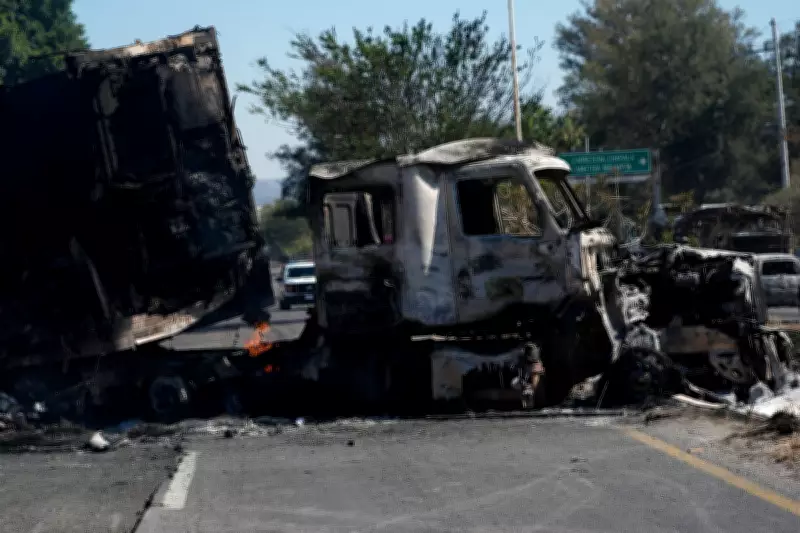
When roadblocks, explosions, and gunfire erupted after the massive army operation to capture El Mencho on Sunday, citizens turning to their smartphones for information encountered a social media landscape depicting a country in utter chaos. The Jalisco New Generation Cartel responded with retaliatory violence spanning approximately twenty states, resulting in more than seventy fatalities.
Beyond the genuine accounts of destruction and official shelter-in-place warnings, the internet became flooded with sophisticated disinformation—fake videos and images crafted using artificial intelligence specifically designed to instill terror. Mexican authorities have emphasized that these deceptive posts deliberately manipulated public perception during the crisis.

"We didn't know what was true and what was false," recounted Victoria Elizabeth Peceril, a 31-year-old mother walking with her three children in Guadalajara. "We were really scared." Her experience reflects the confusion that gripped countless Mexicans as fabricated stories proliferated online.
Government Analysis Reveals Disinformation Scale
During President Claudia Sheinbaum's daily news briefing, officials presented data compiled by Tecnologico de Monterrey University, revealing between 200 and 500 problematic posts since Sunday's operation. Among these, up to thirty posts garnered over 100,000 views each, demonstrating the viral reach of the falsehoods.
The university's analysis categorized the disinformation as follows:
- 35% to 40% lacked proper context
- At least 25% were misleading
- Nearly 25% were manipulated by AI or completely fabricated
Notable false claims included a commercial plane ablaze at Guadalajara's international airport, gunmen seizing the airport and taking tourists hostage, a U.S. agent strangling Oseguera Cervantes, and President Sheinbaum hiding on a naval vessel. Other speculation falsely linked the killing to Venezuela's former president Nicolás Maduro or suggested Mexico eliminated the drug lord rather than extraditing him to the United States.
"There was a lot of badly intentioned news Sunday, looking to generate terror," President Sheinbaum stated, condemning the malicious spread of false information.
Cartel's Technological Sophistication and Public Vulnerability
The Jalisco cartel has cultivated a reputation for extreme violence, including downing military helicopters and attempting assassinations of high-profile officials. This history makes social media posts alleging extraordinary cartel brutality particularly credible to a fearful public. Many Mexicans rely on messaging app chat groups and social platform X for community updates, especially in northern border cities where organized crime dominates daily life.
"At first, we believed everything," admitted Nicolás Martín, a 28-year-old Mexico City resident who was vacationing near Puerto Vallarta when violence erupted. He described the online images as resembling "what you see in movies," noting the surprisingly high quality of early Sunday posts, including what appeared to be professional drone footage showing explosions and fires.
Organized crime expert Vanda Felbab-Brown of the Brookings Institution suggested that cartel affiliates likely produced some disinformation, noting the Jalisco group's significant investment in online presence. "The criminals are becoming very tech-savvy," she observed, describing the misinformation campaign as "impressive and sophisticated" with AI-generated content probably originating from cartel-controlled chatbots.
"It certainly added to the aura of chaos and meltdown in Mexico," Felbab-Brown concluded, highlighting how the disinformation amplified the perception of national instability.

Public Response and Lasting Impact
Despite efforts by Mexican authorities and the U.S. Embassy to debunk false information, distinguishing fact from fiction proved challenging for many citizens. Sarai Olguín, a 22-year-old college student in Guadalajara, received numerous videos and photos from friends while sheltering at home. She paradoxically credited the frightening posts with keeping people off dangerous streets.
"In a way it's good, because all of this false news helped take care of people even though they sowed immense fear," Olguín reflected, acknowledging one post that warned "after a certain hour they were going to kill everyone." This dual effect—simultaneously protecting and terrifying the population—illustrates the complex consequences of modern disinformation during crises.
The incident underscores the evolving threat of AI-manipulated content in conflict zones, where criminal organizations leverage technology to manipulate public perception and amplify chaos for strategic advantage.