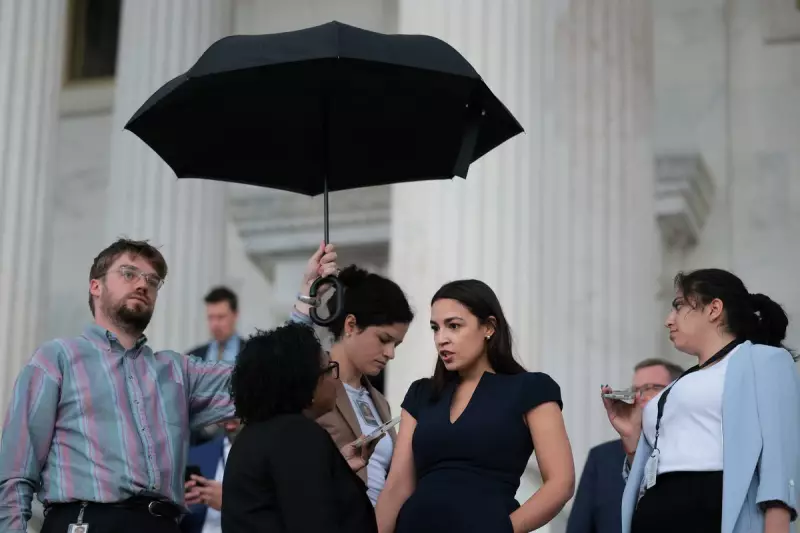
In a rare display of cross-party unity, the United States Senate has unanimously passed landmark legislation aimed at criminalising the creation and distribution of non-consensual, sexually explicit deepfake images. The DEFIANCE Act, spearheaded by Congresswoman Alexandria Ocasio-Cortez, represents a significant step in tackling a form of digital abuse that has proliferated with the rise of artificial intelligence.
A Bipartisan Senate Move Against Digital Abuse
The Senate approved the bill by unanimous consent on Tuesday 14 January 2026, a procedural move indicating widespread, uncontested support. The legislation directly targets the malicious use of AI to generate fake pornographic material featuring individuals without their permission. This issue gained urgent international attention following scandals involving the AI tool Grok, owned by Elon Musk's X platform, which was used to generate and spread such images of women and underage girls.
The global reaction was swift. In the United Kingdom, Labour Leader Sir Keir Starmer warned Musk that "fast action" was required. Meanwhile, Indonesia and Malaysia became the first nations to block access to Grok entirely. Against this backdrop, Ocasio-Cortez's bill found a surprising breadth of support, with even House Speaker Mike Johnson, a Republican, voicing his approval.

"I'm certainly in favor of it," Johnson told The Independent. "We've got to find the vote tally, but that should be a big bipartisan concern. We need to protect children online, and we need to stop these abuses. It's terrible. It's horrible."
The House Hurdle and Unlikely Alliances
Despite the Senate's decisive action and Speaker Johnson's supportive words, the path to law remains uncertain. This is not the first time the Senate has passed the DEFIANCE Act; an earlier version died in the House of Representatives during the previous Congress. Ocasio-Cortez confirmed she has spoken with Johnson to push for progress, stating the focus is now on "having those conversations to ensure that the legislation moves."
Support in the House comes from unexpected quarters. Republican Representative Nancy Mace, a MAGA-aligned figure, told The Independent she backs the bill after having a sexually explicit AI-generated image of herself removed from online. "It was sexually explicit, in my opinion, and disgusting," Mace said. However, she argued the core problem lies not with the technology itself, but with "the human who's prompting the technology."
The political landscape is complicated by the involvement of Elon Musk. Despite a reported falling out with former President Donald Trump, Musk has pledged to support Republicans. Furthermore, in a controversial move last December, the Pentagon announced it would add Musk's Grok to its official "AI arsenal." Ocasio-Cortez responded wryly to this development, noting, "I mean, they’re in business together."
A Sign of AOC's Evolving Political Clout
The advancement of this bill is widely seen as a marker of Alexandria Ocasio-Cortez's growing influence within the Democratic Party and Congress at large. Once dismissed by the party establishment as a radical firebrand after her stunning 2018 primary victory, she has steadily built her role as a power broker and leading messenger.
Her endorsement swayed the New York mayoral primary last year, and she now fundraises for moderate Democrats who might once have kept their distance. She has also become a key voice in responding to Trump-era immigration policies. The unanimous Senate passage of her signature bill on a pressing tech and social issue underscores this cemented position, demonstrating an ability to craft legislation that commands broad, bipartisan appeal in one chamber, even as it faces hurdles in the other.
The coming weeks will test whether the House of Representatives can match the Senate's consensus and deliver a long-awaited legal shield against a deeply harmful digital phenomenon.