The world of computer science and historical preservation has lost a significant figure with the passing of Professor Simon Lavington at the age of 85. A distinguished academic, Lavington earned international acclaim for his meticulous work documenting the history of early British computers, a contribution recently honoured with a prestigious fellowship.
A Life Dedicated to Computing and Education
Born in Chelsea, London, Simon was the son of Jane, a nurse, and Edgar Lavington, a business consultant. His educational journey began at Haileybury College in Hertford, followed by a gap year in Quebec. He then embarked on his lifelong association with technology by enrolling in an electrical engineering degree at the University of Manchester in 1959.
It was at Manchester where his passion for computing truly ignited. For his final year project, he collaborated with a colleague to construct a serial one-bit adder, utilising specialised transistors from the landmark Ferranti Atlas computer project. This hands-on experience set the stage for a prolific academic career.

Simon remained at Manchester to pursue an MSc and later a PhD, supervised by Frank Sumner. His doctoral research was groundbreaking, focusing on automatic speech recognition using a speech converter attached to the Atlas computer. His academic prowess led to an assistant lectureship in computer science in 1965, with promotions to lecturer and senior lecturer following. He played a key role in the university's ambitious MU5 computer project, which succeeded the Atlas system.
Championing Computer History and Youth Development
In 1986, Lavington's expertise was recognised with his appointment as Professor of Computer Science at the University of Essex, a position he held with distinction until his retirement in 2002. Upon moving to Sproughton, Suffolk, he and his wife, Rosalind, became deeply involved in village life.
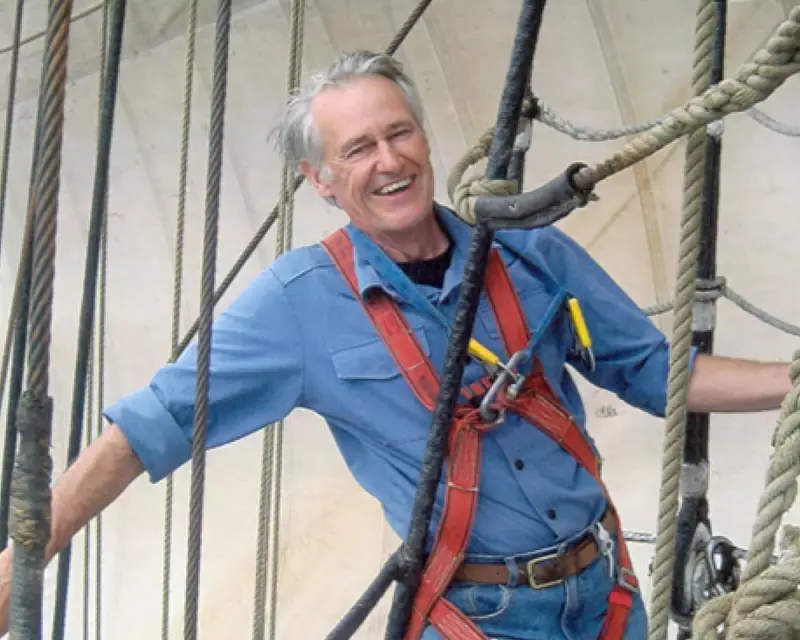
Beyond the lecture hall, Simon possessed a profound passion for sailing and youth development. From 1999 to 2012, he was a regular and dedicated presence aboard the tall ship Stavros S Niarchos. He took responsibility for leading groups of young people on educational sailing trips, demonstrating a unique blend of technical knowledge and pastoral care. In a particularly impactful initiative, he secured funding from the UN and British High Commission for three bi-communal Mediterranean voyages. These trips brought together Cypriot youngsters from both Greek and Turkish communities, fostering dialogue and understanding through shared experience at sea.
His commitment to preserving the legacy of his field was equally formidable. After joining the committee of the Computer Conservation Society (CCS) in 1999, he became its digital archivist in 2004. He was instrumental in the CCS's work, most notably in creating and managing the Our Computer Heritage project, a vital digital repository. His first book, A History of Manchester Computers, published in 1975, was followed by six more. At the time of his death, he had begun work on a new book focusing on the pioneering work of female programmers.
A Lasting Legacy in Technology and Community
In 2024, his lifetime of dedication was formally acknowledged when he was awarded an honorary fellowship of the National Museum of Computing. The fellowship recognised his "outstanding contributions towards the history and ongoing development of computing".
Even in his later years, Lavington remained actively engaged. In 2019, he collaborated with an old colleague to write successful proposals for two milestone plaques from the Institute of Electrical and Electronics Engineers (IEEE). These plaques celebrated Manchester's monumental contributions to computing: the Manchester University "Baby" Computer and its derivatives, and the Atlas computer with its invention of virtual memory. The milestones were unveiled on 21 June 2022, the anniversary of the first program run on the Manchester "Baby" in 1948.

Simon Lavington is survived by his wife Rosalind (née Twyman), whom he met in 1963 and married in 1966, his four children Damian, Dominic, Hannah, and Tamsin, eight grandchildren, a great-grandchild, and his sisters, Sarah-Jane and Diana. His legacy endures in the annals of computer history, in the memories of the young people he inspired at sea, and in the community he called home.