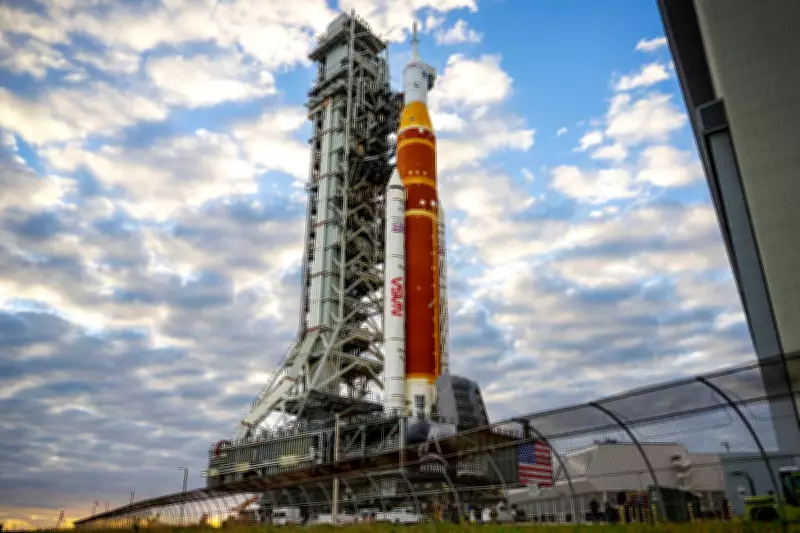
Nasa has been compelled to postpone its historic Artemis II mission, marking the first crewed journey around the Moon in more than five decades, due to unusually cold weather conditions in Florida. The US space agency cited a "rare arctic outbreak" at the Kennedy Space Center launch site as the primary reason for adjusting the timeline, pushing back the highly anticipated launch.
Revised Launch Schedule and Weather Challenges
The launch of Artemis II, which will carry four astronauts on a lunar flyby, is now scheduled for no earlier than 8 February, representing a two-day delay from the original plan. Nasa had intended to conduct a crucial fueling test, known as a wet dress rehearsal, for the massive 98-metre Space Launch System rocket on Saturday, but cancelled these preparations late on Thursday due to forecasted below-freezing temperatures.
The critical dress rehearsal has been rescheduled for Monday, contingent upon favourable weather conditions. In an official statement, Nasa explained that the adjustment was necessary to ensure success, as the expected weekend weather would violate established launch safety protocols. "Teams and preparations at the launch pad remain ready for the wet dress rehearsal," the agency noted, emphasising their readiness despite the setback.

Narrow Launch Windows and Technical Adaptations
Nasa faces a constrained launch window each month due to specific Earth-Moon alignment requirements, making timing particularly sensitive. With this latest delay, the agency now has only three available days in February to initiate the mission before potentially slipping into March. Officials have indicated that any further postponements would result in a day-for-day shift in the schedule.
To mitigate the effects of the cold, engineers are employing heaters to maintain the temperature of the Orion capsule atop the rocket and adapting rocket-purging systems to function effectively in the chilly environment. These measures are crucial to safeguarding the spacecraft and ensuring mission readiness once conditions improve.
Astronaut Quarantine and Mission Objectives
The four astronauts selected for the Artemis II mission—Nasa's Reid Wiseman, Victor Glover, and Christina Koch, along with Jeremy Hansen from the Canadian Space Agency—remain in quarantine in Houston. Their arrival at the Kennedy Space Center in Florida is currently uncertain as they adhere to a strict 14-day isolation period designed to minimise exposure to illnesses.
During quarantine, the crew will maintain contact with friends, family, and colleagues while avoiding public spaces, wearing masks, and practising social distancing with any individuals they encounter. This protocol underscores the meticulous health precautions taken to protect the astronauts ahead of their groundbreaking journey.
The 10-day Artemis II mission will represent the farthest human travel since the Apollo 17 mission in 1972, which was also the last time astronauts walked on the lunar surface. Unlike that historic landing, Artemis II will not include a Moon touchdown; instead, its primary objectives focus on testing the systems and hardware essential for returning crews to the lunar surface. This mission serves as a critical precursor to the planned Artemis III landing mission, currently slated for 2027.
Historical Context and Future Implications
This delay highlights the ongoing challenges of space exploration, where even rare weather events can impact meticulously planned schedules. The Artemis programme aims to reestablish a human presence on the Moon, with Artemis II playing a pivotal role in validating technologies for future deep-space endeavours. As Nasa navigates these unforeseen obstacles, the global space community watches closely, anticipating the next chapter in lunar exploration.