Astronaut's Emotional Breakdown After Lunar Mission
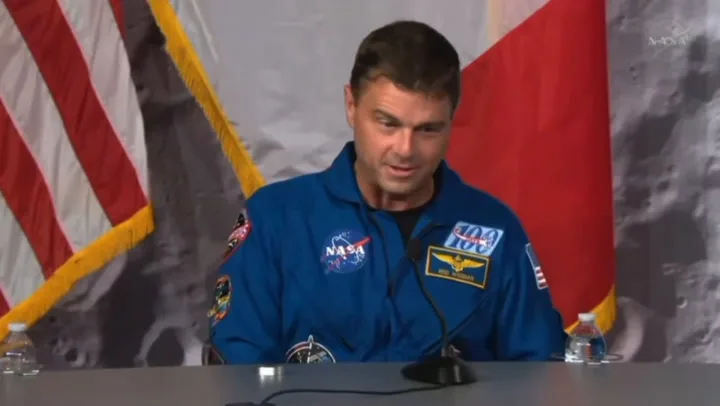
Commander Reid Wiseman of the Artemis II mission has travelled an astonishing 250,000 miles, equivalent to a journey to the moon and back, but one of the most poignant moments of his space odyssey occurred not in the cosmos, but upon his return to Earth. During a press conference, Wiseman, who openly states he is 'not religious', revealed that seeing a cross on a US Navy chaplain's collar brought him to tears, highlighting the profound emotional impact of his experience.
The Moment of Overwhelming Emotion
Reflecting on the 10-day mission that took the crew to the dark side of the lunar surface, Wiseman described a shift in consciousness that many astronauts report, known as the 'Overview Effect'. When asked about this cognitive change, he shared a deeply personal anecdote. After splashdown in the Pacific Ocean, the team was picked up by the US Navy, and Wiseman requested a visit from the ship's chaplain. 'I saw the cross on his collar and I just broke down in tears,' he said, explaining that despite his lack of religious affiliation, the symbol provided a rare avenue for processing the otherworldly journey.
Processing the Profound Feat
Since their return last week, the Artemis II crew, which includes pilot Victor Glover and mission specialists Christina Koch and Jeremy Hansen, have been undergoing extensive medical and physical testing. Wiseman noted that they have not had adequate time for decompression or reflection on their record-breaking achievement, which saw them travel farther from Earth than any humans in history. 'It was very hard to fully grasp what we just went through,' he admitted, emphasising the surreal nature of the mission.
Incredible Sights from Space
The astronauts witnessed breathtaking phenomena, including Earth 'setting' behind the moon, a rare solar eclipse, and our planet suspended in the darkness of space. Wiseman recalled telling Glover during the eclipse, 'I don't think humanity has evolved to the point of being able to comprehend what we are looking at right now.' Hansen added that observing the depth of the galaxy left him with a sense of fragility and feeling infinitesimally small, further illustrating the transformative power of space travel.
The Overview Effect Explained
The 'Overview Effect' is a well-documented cognitive shift experienced by astronauts when viewing Earth from space. It is characterised by an overwhelming sense of awe, unity, and a deeper connection to the planet. This phenomenon often leads to a realisation of Earth's fragility and interconnectedness, with many astronauts reporting a diminished view of national boundaries and a heightened commitment to global cooperation. Edgar Mitchell, an Apollo astronaut, famously described developing an 'instant global consciousness' after his lunar mission, underscoring how perspective can dramatically alter human understanding and values.
Post-Mission Adjustments and Challenges
Despite the mission's profundity, Koch revealed that the crew has been sleeping well since their return, though she experienced disorientation, such as expecting objects to float in microgravity. Wiseman also disclosed a tense moment when a smoke detector went off 80,000 miles from Earth, requiring quick reconfiguration. When discussing the Orion capsule, he expressed confidence in its readiness for future missions, suggesting that the Artemis III Orion could be launched imminently with crew safety assured.
Looking Ahead to Artemis III
The next phase of the Artemis program will involve testing commercial lunar landers in Earth's orbit, paving the way for a crewed return to the moon's surface by 2028. This ambitious endeavour builds on the successes of Artemis II, which aimed to complete a lunar flyby and test systems for future landings. With a total mission cost estimated at $44 billion, the program represents a significant investment in space exploration and human achievement.
Artemis II: Key Facts at a Glance
- Launch Date: April 1
- Mission Objective: Lunar flyby and system testing for future landings
- Total Distance: 620,000 miles (one million km)
- Mission Duration: 10 days
- Estimated Cost: $44 billion (£32.5 billion)
- Crew: Commander Reid Wiseman, Pilot Victor Glover, Mission Specialists Christina Koch and Jeremy Hansen
- Key Stages: Launch from Kennedy Space Centre, translunar injection, lunar flyby, and splashdown in the Pacific Ocean