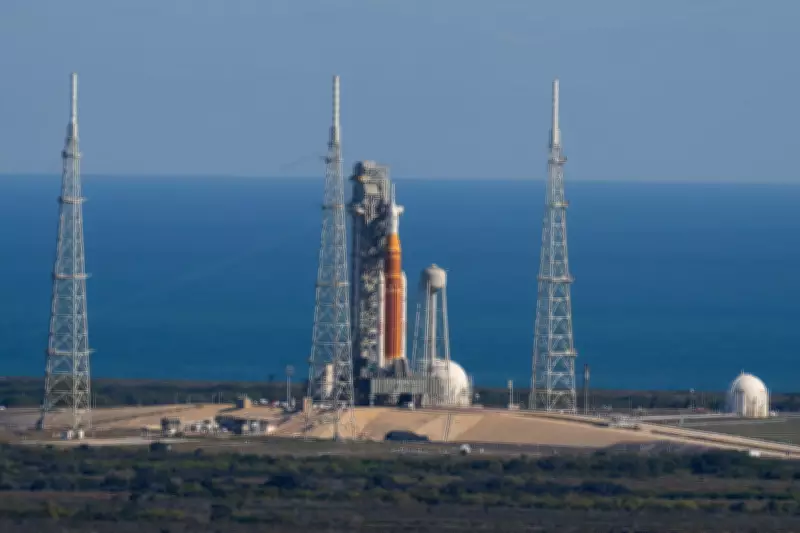
NASA has announced a significant postponement of its landmark Artemis moonshot, the first crewed lunar mission in over half a century, citing extreme cold weather conditions at the launch site. The space agency confirmed on Friday 30 January 2026 that the historic journey, which will carry four astronauts around the moon and back, is now targeted for no earlier than February 8, a two-day delay from the original schedule.
Weather Woes Force Critical Schedule Changes
The decision comes as near-freezing temperatures are forecast for Kennedy Space Center in Florida, prompting NASA to call off a crucial fueling test of the massive 322-foot (98-meter) moon rocket that was planned for Saturday. This critical dress rehearsal, a vital step in pre-launch preparations, has now been rescheduled for Monday, contingent on improved weather conditions.
Tight Launch Window Creates Pressure
The delay creates a remarkably narrow launch window for NASA, leaving the agency with only three available days in February to attempt the mission before operations would slip into March. NASA officials emphasized in a statement that any further postponements would result in a day-for-day schedule change, highlighting the precision required for lunar launch timing.

Commander Reid Wiseman and his three crew members remain in quarantine in Houston, with their arrival at the Florida launch complex now uncertain due to the revised timeline. This mission represents NASA's first attempt to send astronauts to lunar vicinity since the Apollo 17 mission concluded the original moon exploration program in 1972.
Technical Adaptations for Cold Weather
NASA engineers are implementing special measures to protect the spacecraft systems from the challenging conditions. Heaters are actively maintaining proper temperatures for the Orion capsule positioned atop the massive rocket, while rocket-purging systems are being specifically adapted to function effectively in the cold environment.
The space agency faces particular scheduling challenges as it only has a limited number of days each month when celestial mechanics and operational requirements align to permit lunar launches. This makes weather-related delays particularly impactful for the ambitious Artemis program, which aims to establish a sustainable human presence on and around the moon.