Synthesia's Valuation Skyrockets to $4 Billion in Major Funding Boost
In a significant development for the UK's technology landscape, Synthesia, a British AI startup specialising in realistic video avatars, has announced a near-doubling of its valuation to an impressive $4 billion (£3 billion). This milestone follows a successful $200 million funding round, spearheaded by Google Ventures, the venture capital arm of the search giant. The company, which was previously valued at $2.1 billion last year, continues to expand its footprint in the competitive AI sector.
Corporate and Institutional Adoption Drives Growth
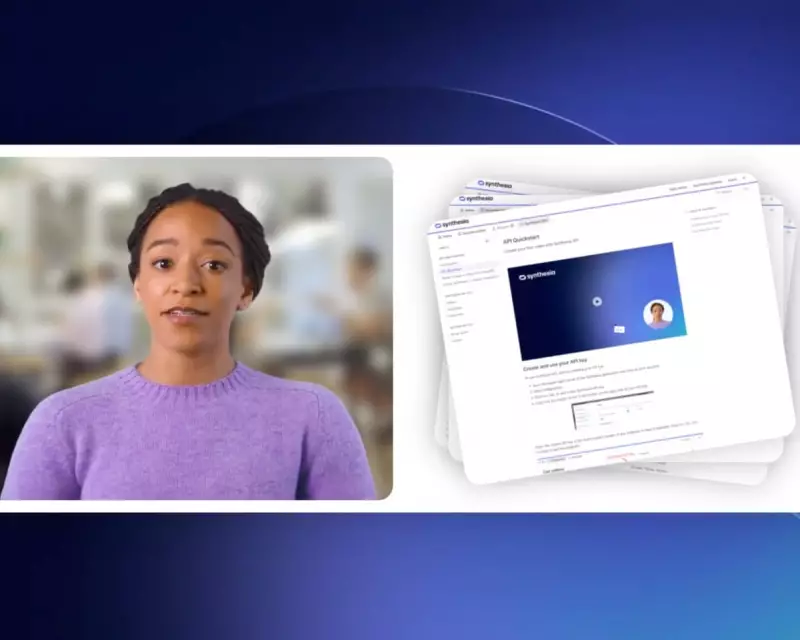
Synthesia's innovative platform utilises human actors to generate digital avatars, offering organisations the capability to create replicas of their staff for various corporate applications. These AI-driven presenters are deployed in scenarios ranging from health and safety training to cybersecurity advisories and workplace communication enhancements. The firm boasts an impressive client roster, with 70% of the FTSE 100 companies, including major names like NatWest, Lloyds Bank, and British Gas, utilising its services. Beyond the corporate sphere, Synthesia's technology is also employed by non-corporate entities such as the NHS, the European Commission, and the United Nations.
Strategic Focus on Long-Term Validation
Steffen Tjerrild, co-founder of Synthesia, emphasised that the increased valuation reflects the confidence of longstanding investors rather than mere hype surrounding the AI industry. "Existing investors have seen the progress, have seen the numbers, have seen them compound year over year," Tjerrild stated. He highlighted that this funding round is predominantly led by insiders who deeply understand the business, underscoring a validation of the company's execution and strategic improvements over time. This approach contrasts with broader concerns in the tech investment community, where sharp valuation increases for AI startups have been viewed as disconcerting by some, such as noted British tech investor James Anderson.

Financial Performance and Future Prospects
According to its latest published accounts, Synthesia generated revenues of $58.3 million in 2024 but reported a pre-tax loss of $59.2 million, attributed to investments in headcount, technology, and new office spaces. Despite this, the company is on track to achieve $200 million in revenues this year, signalling robust growth potential. The $4 billion valuation places Synthesia on par with established UK broadcaster ITV, which is valued at approximately £3.1 billion. Notably, Tjerrild's shareholding in the company is now worth $160 million, matching that of chief executive and fellow co-founder Victor Riparbelli.
Expansion and Ethical Considerations
Founded in 2017 by Danish nationals Tjerrild and Riparbelli, along with computer scientists Matthias Niessner and Lourdes Agapito, Synthesia has rapidly evolved into a key player in the AI avatar market. Last year, the company marked its growth with a move to new offices in central London, an event attended by Mayor Sadiq Khan and then-technology secretary Peter Kyle. While Khan praised Synthesia's success, he has also cautioned about the potential risks of AI, warning that reckless use could lead to mass unemployment if intelligent systems replace human roles. In response, Tjerrild argued that AI can foster job creation, citing Synthesia's own expansion: "We're an AI-first company, we have 600 employees and we hired 40% more people last year," he noted, suggesting that increased productivity can drive further hiring and investment.
Looking ahead, Synthesia is developing new avatar technologies aimed at enhancing employee training and skill development through role-playing scenarios and tailored explanations. This focus on practical applications, combined with strong investor backing, positions the company for continued innovation and influence in the global AI arena.