Japan's Deadly Snowfall: 30 Lives Lost as Winter Election Faces Disruption
Heavy snowfall across Japan's coastal regions has claimed 30 lives and injured hundreds, with authorities warning of further precipitation that could disrupt the country's upcoming winter election. The extreme weather conditions, which have seen temperatures plummet to as low as -23°C in northern districts, are raising significant concerns about voter turnout in what is Japan's first mid-winter election in almost three decades.
Fatalities and Injuries Mount Across Affected Regions
The death toll has reached 30 people, with Niigata prefecture recording 12 fatalities, Akita six, and Aomori four. Many of these tragic deaths occurred as residents were attempting to remove snow from around their homes. Among the victims was a 91-year-old woman who was found buried under approximately three metres of snow outside her residence. In another heartbreaking incident, a man in his 60s died after his house collapsed under the weight of accumulated snow.
Nearly 290 people have been injured nationwide due to snow-related accidents, with some suffering serious injuries. Officials have confirmed that some deaths were linked to falls from rooftops or sudden illness while working in the severe conditions that have gripped the country.

Election Preparations Complicated by Severe Weather
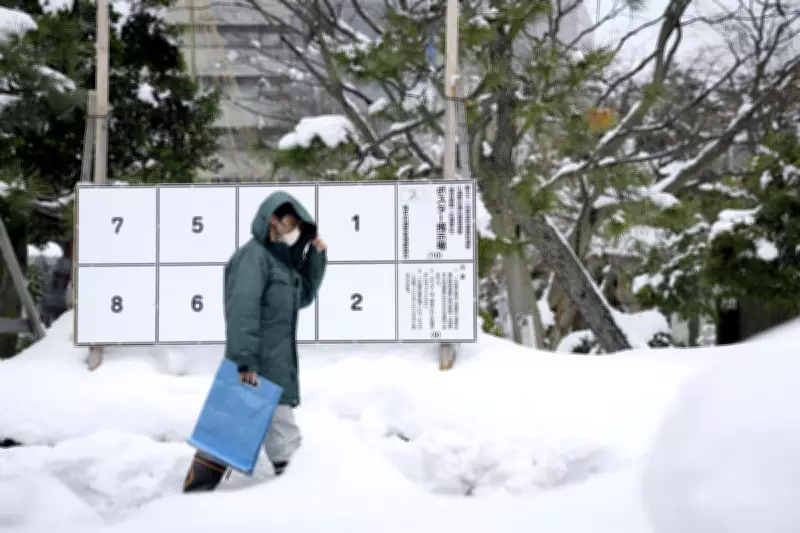
The extreme weather is complicating election preparations in snowbound regions, with Prime Minister Sanae Takaichi calling on voters to carefully participate while monitoring weather conditions. In Fukui and Aomori prefectures, election billboards were buried under snow last week, while some municipalities have been forced to reduce the number of signboards because conventional installation sites have become inaccessible.
Polls suggest Ms Takaichi's Liberal Democratic Party is on course for victory, but analysts warn that severe weather could depress turnout, especially in rural and snowbound regions that traditionally play a decisive role in Japanese elections. The East Asian country is scheduled to go to polls on 8 February after the prime minister called a snap election to strengthen her hold on power.
Record Snowfall and Government Response
In the northern city of Aomori, accumulated snowfall reached 183cm on Sunday, the highest level recorded since 1986. By Tuesday, snow depth in the city stood at about 175cm, more than double the seasonal average. Several other cities have reported snow accumulation of at least 135cm.
The Japanese government has ordered the deployment of troops to assist in affected areas, with officials warning residents to watch for avalanches, falling snow from roofs, and the risk of power outages. Aomori governor Soichiro Miyashita highlighted the imminent life-threatening crises, noting that he had requested military disaster relief, particularly for elderly residents living alone who require help clearing snow.
Weather Patterns and Future Forecasts
Japan's weather agency has confirmed that some parts of the country are experiencing more than double the usual snowfall after a cold Arctic air mass lingered over the archipelago. Heavy snowfall continued along the Sea of Japan coast on Tuesday, driven by winter pressure patterns bringing freezing air over the Tohoku region.
Forecasters have warned that additional snow showers are likely in parts of the north and west in the coming days, raising concerns that disruptions could continue ahead of the voting day. Prime Minister Takaichi has urged all ministers to take every possible measure to prevent damage and provide necessary support without hesitation as further significant snowfall is forecast for the weekend.
Though Japan is accustomed to heavy snowfall, authorities say the conditions are particularly severe this winter, burying homes, disrupting transport, and stranding travellers across the affected regions.