The skies above Britain could be illuminated with breathtaking displays of the Northern Lights this week, following the detection of massive solar storms by NASA scientists. The Met Office has issued a forecast suggesting that the Aurora Borealis may become visible across certain regions of the United Kingdom within the coming days, offering a rare celestial spectacle for stargazers.
Solar Activity Reaches Peak Intensity
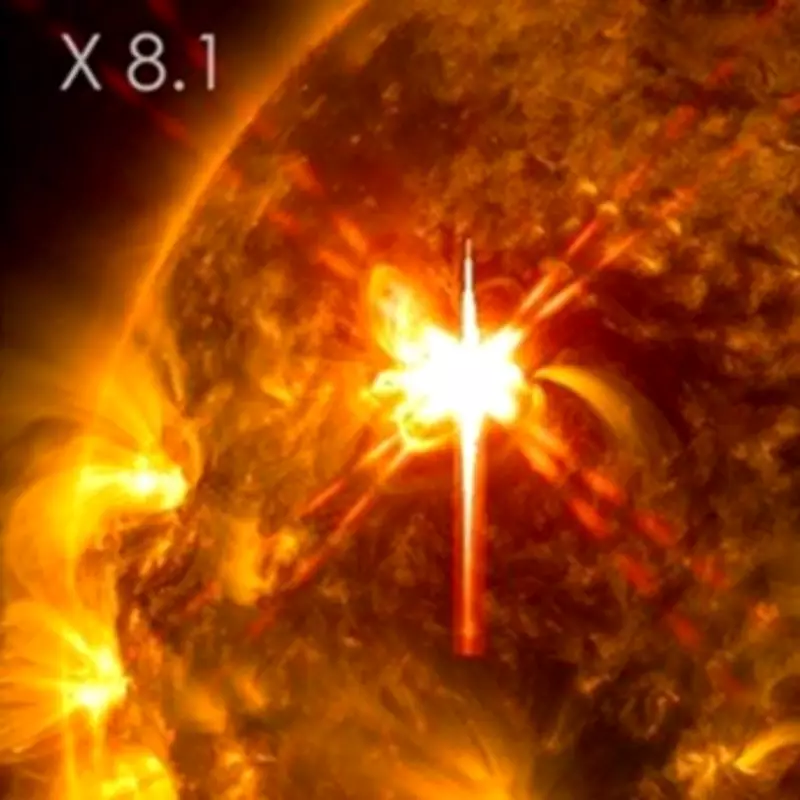
NASA's Solar Dynamics Observatory spacecraft has captured images of four significant solar flares erupting from the Sun's surface. These powerful bursts of energy included an exceptionally strong X8.1 class flare, which space agency officials described as uncommon during this period of solar maximum. The solar maximum represents the peak of the Sun's 11-year activity cycle, when such intense phenomena become more frequent but still remarkable.
Timeline of Solar Eruptions
The space agency reported that the Sun emitted three strong solar flares on February 1st, with peak intensities occurring at 7:33 a.m. ET, 6:37 p.m. ET, and 7:36 p.m. ET. A fourth substantial flare followed on February 2nd, reaching its maximum at 3:14 a.m. ET. NASA's classification system identifies these events as X1.0, X8.1, X2.8, and X1.6 flares respectively, with the X-class designation reserved for the most intense solar eruptions.

Potential Impacts and Opportunities
While solar flares and coronal mass ejections (CMEs) can disrupt radio communications, electric power grids, navigation signals, and pose risks to spacecraft and astronauts, they also create the conditions necessary for spectacular auroral displays. When these charged particles interact with Earth's magnetic field and atmosphere, they produce the shimmering ribbons of colour known as the Northern Lights.
Met Office Forecast Details
According to the latest Space Weather forecast from the Met Office, aurora activity is expected to remain at background levels until Thursday, February 5th. At that point, a predicted glancing impact from a coronal mass ejection could significantly increase geomagnetic activity. This development raises the possibility of aurora sightings for parts of Scotland and other locations at similar geomagnetic latitudes, provided skies remain clear of cloud cover.
Understanding Solar Phenomena
Solar flares represent powerful bursts of radiation emanating from the Sun's surface, while coronal mass ejections involve massive eruptions of plasma and magnetic fields from the solar corona. When these phenomena are Earth-directed, they can create both technological challenges and visual wonders. The current solar maximum period makes such events more likely, though flares of X8.1 magnitude remain relatively unusual even during this active phase.
British observers in northern regions should monitor space weather forecasts and hope for clear night skies this week to potentially witness this extraordinary natural light show. The combination of scientific monitoring by NASA and forecasting by the Met Office provides valuable advance notice for those hoping to experience one of nature's most dazzling displays.