UK Flood Crisis Intensifies with 99 Locations Under Official Warnings
The United Kingdom is bracing for further widespread flooding as relentless rainfall continues to batter the nation, with the Environment Agency issuing urgent flood warnings for ninety-nine specific locations across the country. This severe weather event shows no signs of abating, with forecasters predicting at least another week of persistent downpours that threaten to exacerbate an already critical situation.
Widespread Impact and Record-Breaking Rainfall
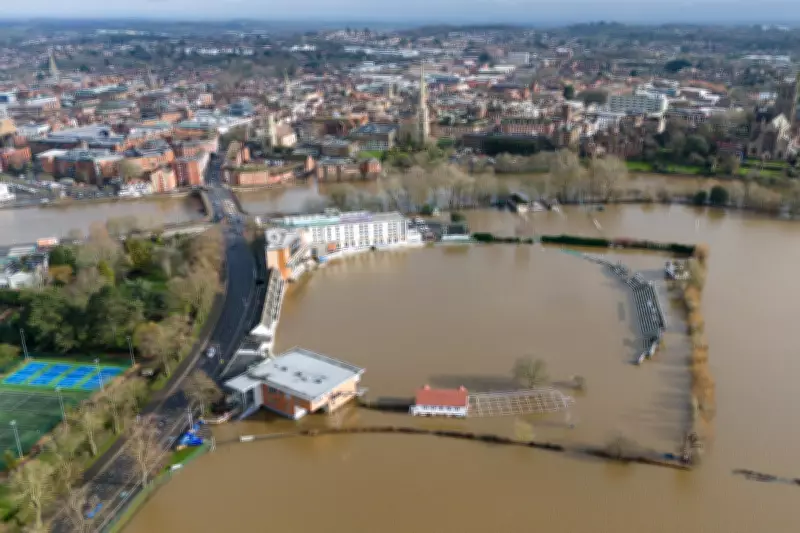
According to the latest Environment Agency figures, an estimated three hundred properties have already been inundated by floodwaters, with communities across southern England, the southern Welsh border region, and the East Midlands facing the most immediate danger. A further one hundred and seventy areas remain under flood watch as the agency monitors rising water levels and saturated ground conditions.
This ongoing deluge follows what meteorologists have described as a record-breaking January, with Cornwall in south-west England and County Down in Northern Ireland experiencing their wettest January on record according to Met Office data. The UK has already received eighty-nine percent of the average rainfall expected for the entire meteorological winter period spanning December through February, while England has exceeded this average by a significant eleven percent.

Geographical Hotspots and Continuous Precipitation
Several regions have experienced extraordinary consecutive days of rainfall, with parts of Devon, Cornwall, Worcestershire, Somerset, and West Sussex recording more than thirty consecutive days of precipitation. Remarkably, specific locations including North Wyke in Devon, Cardinham in Cornwall, and Astwood Bank in Worcestershire have seen rainfall every single day of the year so far.
Andrew Hitchings, flood duty manager at the Environment Agency, emphasized the seriousness of the situation: "With another band of rain on its way, we need the public to remain vigilant to the risk of flooding. As well as significant groundwater remaining likely in parts of Dorset and Wiltshire, there are risks of significant river flooding impacts on the Somerset Levels, with minor river flooding impacts expected in parts of the East Midlands and probable in Worcestershire and Gloucestershire."
Weather Warnings and Forecast Predictions
The Met Office maintained a yellow weather warning for rain across much of southern Wales and England until midnight on Monday, with further yellow warnings anticipated for parts of eastern Scotland on Tuesday and Wednesday. Forecasters have noted that twenty-six weather stations recorded new highs for January rainfall, leading to widespread sentiment that winter weather patterns have been "stuck on repeat."
Senior operational meteorologist Simon Partridge provided a sobering outlook: "The weather is set to remain unsettled throughout the remainder of the week with further spells of wet and windy weather for many areas of the UK. With so much rain having already fallen over parts of the UK this year, many areas are sensitive to further rainfall. Therefore, further rainfall warnings are likely as the week progresses. There is currently no sign of any prolonged dry weather for the next seven to ten days."
Emergency Response and Community Impact
The Environment Agency has mobilized significant resources in response to the flooding crisis, with teams deploying pumps, temporary barriers, and conducting waterway clearance operations to help floodwaters drain away more effectively. According to Hitchings, "So far more than sixteen thousand homes and businesses have been protected but sadly three hundred have suffered flooding and our thoughts are with those communities affected. Our teams will continue to do all they can to support local people."
Eastern Scotland faces particular disruption on Tuesday, with forecasters predicting fifteen to thirty millimeters of rain falling widely across the region, and potentially forty to sixty millimeters in higher elevation areas. This additional precipitation threatens to overwhelm already saturated ground and drainage systems, creating new flood risks in previously unaffected areas.

The combination of record-breaking rainfall, saturated ground conditions, and continued unsettled weather patterns has created what experts describe as an exceptionally wet start to the year, with no immediate relief in sight for communities already struggling with flood damage and disruption.