Toxic Air Crisis Engulfs Southern US as Wildfire Smoke Spreads Across Multiple States
Thousands of residents across the southern United States are breathing dangerous levels of toxic pollutants on Wednesday morning, prompting urgent health advisories urging people to remain indoors whenever possible. Air quality monitoring maps reveal extensive 'Unhealthy' zones spanning parts of Georgia, Alabama, Florida and New Mexico, creating hazardous atmospheric conditions affecting numerous communities.
Elevated Pollution Levels Pose Serious Health Risks
The deteriorating air quality stems from elevated concentrations of PM2.5 - microscopic particles composed of toxic organic compounds and heavy metals emitted from various sources including vehicles, industrial operations and widespread wood burning. Health authorities emphasize that prolonged exposure to these pollutants can trigger significant respiratory problems, aggravate existing asthma conditions, place additional strain on cardiovascular systems, and contribute to long-term lung damage.
Medical experts particularly caution that children, elderly individuals, and people with pre-existing heart or lung conditions face the greatest immediate danger. However, they note that even otherwise healthy individuals may experience respiratory irritation and breathing difficulties while current air quality alerts remain active across affected regions.

Georgia and Florida Bear the Brunt of Pollution Crisis
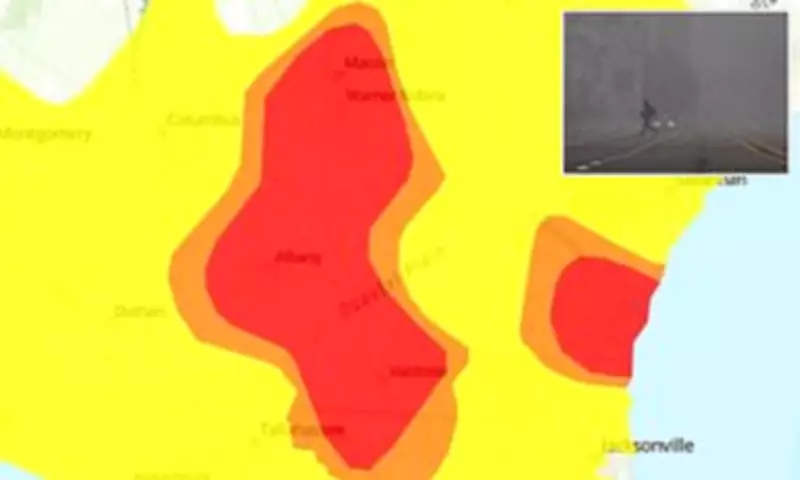
Unhealthy air quality advisories are most concentrated across central and southern Georgia, where several mid-sized cities and surrounding rural communities now find themselves situated within the worst pollution zones. In central Georgia, the most severe conditions center on Macon and Warner Robins, where a large dark-red zone on air quality maps indicates pollution levels that can adversely affect the entire population.
Southwest Georgia shows similar deterioration, with Albany positioned firmly within the red zone while poor air quality spreads toward Valdosta and nearby Coastal Plain communities. Along Georgia's coastline, including the town of Brunswick, another unhealthy-level pollution pocket impacts areas near Savannah, prompting specific warnings for residents to minimize outdoor exposure.
The pollution crisis has significantly spilled into northern Florida, particularly in counties closest to the Georgia border where drifting smoke has pushed air quality into unhealthy territory. The Lake City area has recently recorded conditions in the unhealthy range, making it one of Florida's most impacted locations. Nearby communities including Gainesville and parts of Putnam County have also experienced dangerous pollution spikes, with some readings climbing to extremely high levels.
Areas around Ocala currently sit on the edge of unhealthy conditions, with pollution levels fluctuating between unsafe for sensitive groups and worse. Additional regions experiencing deteriorating air quality include portions of the Big Bend, the Florida Panhandle, and areas near Jacksonville, with conditions ranging from moderate to unhealthy at various times throughout the day.
New Mexico Faces Separate Air Quality Emergency
In southern New Mexico, a distinct unhealthy air zone has developed around Las Cruces and surrounding parts of the Mesilla Valley, where dust accumulation combined with regional pollution has driven air quality to dangerous levels. Officials have issued specific air quality advisories for this region, urging residents in the hardest-hit areas to avoid strenuous outdoor activity and remain indoors whenever possible.
Wildfire Smoke Drives Widespread Atmospheric Contamination
Forecasters indicate that pollution zones are likely to persist through the weekend, with smoke from multiple active wildfires drifting across state lines and settling over communities during calm overnight conditions. Large fires burning in south Georgia, along with dozens of smaller blazes across Florida and neighboring states, continue pumping substantial smoke into the atmosphere, creating hazy conditions that can deteriorate rapidly when wind patterns weaken.

Officials warn that smoke tends to pool overnight and during temperature inversions, effectively trapping pollutants close to ground level and causing morning conditions to be particularly hazardous in many affected areas. As long as dry weather patterns continue, experts say the region will remain vulnerable to sudden air quality fluctuations, with some communities potentially experiencing worsening conditions with minimal advance warning.
Limited Relief Forecast Amid Persistent Drought Conditions
Meaningful air quality improvement appears unlikely until steady rainfall moves into affected regions, a development meteorologists describe as uncertain in the short term. Current forecasts show little to no significant precipitation across north and central Florida and southern Georgia in coming days, leaving drought-stricken landscapes vulnerable to continued wildfire activity.
While some weather outlooks mention potential shower activity later in the weekend, officials caution that any rainfall may provide only temporary relief rather than lasting improvement. Looking further ahead, fire danger and associated smoke risks are expected to remain elevated through at least May as ongoing drought conditions keep vegetation exceptionally dry and highly flammable across much of the southeastern United States.
Experts note that the most reliable air quality relief typically arrives when the region transitions into its summer wet season, when regular rainfall patterns help suppress fire activity and gradually clear accumulated smoke from the atmosphere. Until that seasonal shift occurs, authorities in all affected states continue urging residents to minimize outdoor activity and closely monitor local air quality forecasts for updates.