The Northern Hemisphere is poised for its annual celestial pivot as the winter solstice arrives on Sunday, 21 December 2025. This astronomical event marks the shortest day and longest night of the year for regions north of the equator, including the United Kingdom, and heralds the official start of astronomical winter.
The Science Behind the Solstice
This profound shift in daylight hours stems from the Earth's axial tilt as it orbits the sun. During the December solstice, the Northern Hemisphere reaches its maximum tilt away from the sun. This positioning results in the sun tracing its lowest and shortest arc across our sky, delivering minimal daylight and maximum darkness.
The term 'solstice' itself has ancient roots, originating from the Latin words 'sol' (sun) and 'stitium' (pause or stop). It signifies the moment the sun's apparent journey southward in the sky ceases. For sun-seekers, the solstice brings hopeful news: from this point, the sun begins its gradual climb once more. Each subsequent day will grow slightly longer until the summer solstice in late June.

Solstices, Equinoxes, and Defining the Seasons
Solstices are one of two key astronomical markers, with equinoxes being the other. While solstices represent the peaks of solar inequality, equinoxes occur when the Earth's tilt aligns with its orbit, granting nearly equal daylight and darkness to both hemispheres. The autumnal equinox typically falls between 21 and 24 September, with the vernal (spring) equinox occurring between 19 and 21 March.
It is crucial to distinguish between astronomical seasons, dictated by Earth's position relative to the sun, and meteorological seasons. Meteorologists define seasons in three-month blocks based on temperature cycles, meaning their winter began on 1 December, weeks before the astronomical event.
A Timeless Human Fascination
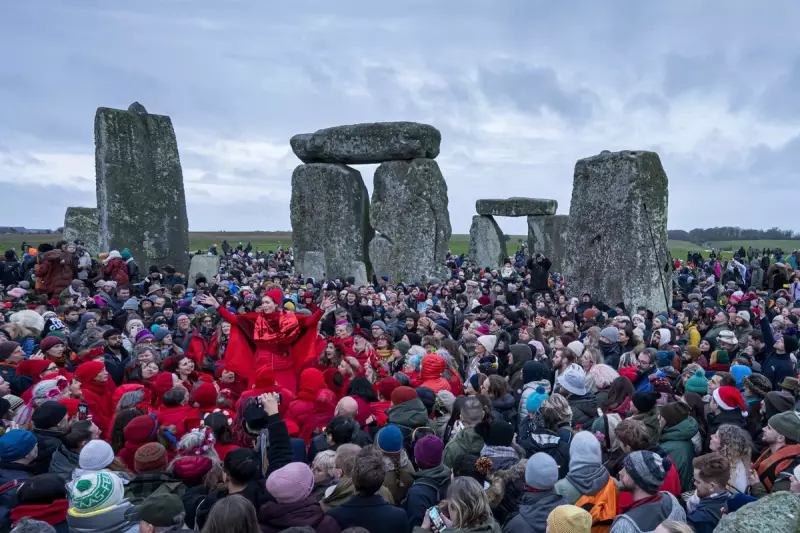
Humanity has observed and celebrated the solstices for millennia. Ancient monuments like Stonehenge in Wiltshire, England, were meticulously engineered to align with the sun's path on these significant days. These enduring structures stand as a testament to our long-standing desire to understand and mark the rhythms of the cosmos.
While the UK endures its darkest afternoon on 21 December, the solstice is ultimately a turning point. It is a reminder that even at the peak of winter's gloom, the celestial mechanics are already set in motion to return the light, minute by minute, day by day.