Winter Storms Freeze US Economy: Multi-Billion Dollar Toll Assessed
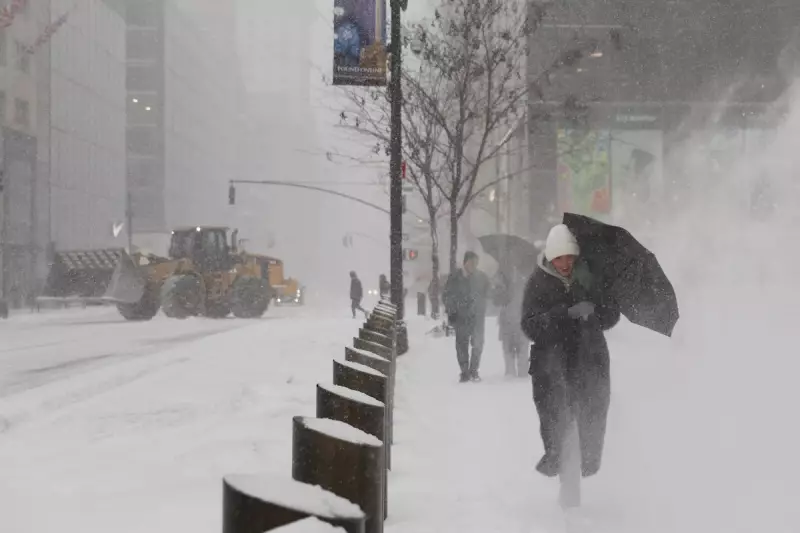
Paralyzing winter storms sweeping across the American East are delivering a severe economic chill, with experts calculating the widespread disruption is extracting a multi-billion dollar toll from the United States economy. The deadly combination of ice, snow, and freezing temperatures has brought significant portions of the country to a standstill, prompting urgent assessments of the financial fallout.
Quantifying the Economic Frostbite
Economists and meteorologists are grappling with the complex task of calculating the precise cost of winter weather disasters. Unlike hurricanes, floods, or fires, which cause tangible destruction to buildings and infrastructure, the economic impact of snow and ice storms is often more diffuse, rooted in lost opportunities and operational paralysis.
"Events like this storm highlight just how interconnected our economy is with weather conditions," explained Jacob Fooks, a research economist at Colorado State University's Cooperative Institute for Research in the Atmosphere. "When major transportation hubs shut down or power grids fail, the cascading effects ripple through supply chains and business operations across multiple sectors simultaneously."

Fooks noted that while researchers lack a complete consensus, most estimates indicate severe weather events can collectively reduce the nation's gross domestic product by 0.5% to 2% annually—a figure he described as "very substantial." With U.S. GDP hovering around $30 trillion, this translates to potential annual losses ranging from $150 billion to $600 billion due to extreme weather.
Divergent Estimates and Early Projections
Most specialists agree it is premature to assign a definitive cost to the recent weekend storm and the ongoing week of subfreezing temperatures. However, private weather firm AccuWeather has generated controversy with a preliminary estimate placing the storm's cost between $105 billion and $115 billion. This figure, linked to over 11,400 grounded flights and widespread disruptions, has been met with skepticism from several independent experts who consider it excessively high and lacking in detailed substantiation.
"A lot of it comes from the disruptions that occur to commerce, the cost of power outages," stated AccuWeather Chief Meteorologist Jonathan Porter. "Some businesses are going to be shut down for days or a week or more." Porter emphasized the storm's pervasive impact, dubbing it "the storm that shut it all down," a event that had, by Monday, claimed at least 25 lives alongside causing extensive power outages and travel chaos.
In contrast, climate economist Adam Smith, formerly responsible for NOAA's billion-dollar weather disaster list, asserted the storm will "easily cost multiple billions of dollars," likely marking the first billion-dollar weather disaster of 2026. Yet, Smith, now a senior scientist at Climate Central, firmly dismissed AccuWeather's projection as a significant outlier, citing the company's history of inflated estimates compared to later, more rigorous analyses from climate and insurance groups.
The Challenge of Calculating Intangible Losses
A core difficulty in appraising winter storm costs lies in the nature of the losses. Hurricanes and floods typically cause insurable damage to physical assets. Winter storms, however, predominantly generate economic damage through lost opportunity—a more amorphous concept that is notoriously challenging to quantify.
"When we talk about the billion dollar damage, we talk about hurricane damage, we’re basically talking about insurable losses," noted former NOAA chief scientist Ryan Maue. "People generally aren’t renumerated for bad weather."
Former National Weather Service Director Louis Uccellini added that while there are economic losers, there can also be localized winners, such as hardware stores selling shovels or grocery stores experiencing a pre-stock surge. Nevertheless, experts like Fooks argue that the aggregate losses—from shattered supply chains and shuttered businesses to emergency response and infrastructure repair costs—far outweigh any minor, isolated gains.

Historical Context and a Warming Climate
For perspective, the costliest winter storm on U.S. records remains the 2021 Texas ice storm, with damages around $26 billion. The 2016 Northeast blizzard incurred approximately $3 billion in costs. Smith suggested the current, widespread storm could approach the financial magnitude of the 2021 Texas event due to its vast geographic reach.
Looking forward, experts warn that such costly weather disasters are occurring with "increasing frequency and impact around the world" as the climate warms, according to Porter. This latest paralyzing event serves as a stark, contemporary example of the profound and expensive interconnection between extreme weather and economic stability, with the final bill for this deep freeze still being calculated.