Residents across parts of Lancashire and Cumbria were woken by an early morning earthquake today, which caused household items to shake and produced a sound likened to thunder.
The Tremor's Details and Immediate Impact
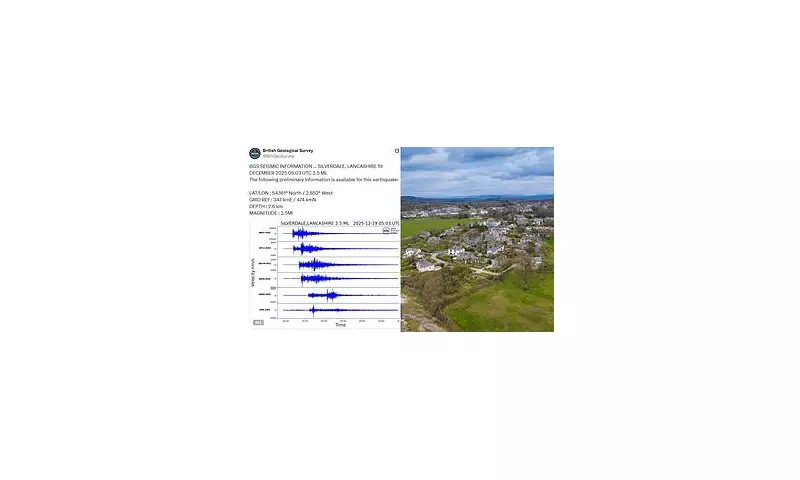
The seismic event, measuring 2.5 on the Richter scale, occurred at 5.03am. Its epicentre was located off the coast of Silverdale, Lancashire, at a depth of approximately 2.6 kilometres below the earth's surface. The tremors were felt in the surrounding area, including around Morecambe Bay.
According to reports collected by the British Geological Society (BGS), locals described feeling a 'sharp shaking jolt'. Many were alerted by a loud 'thunder noise' that accompanied the shaking. The force was sufficient to make radiators and pictures on walls rattle within homes.

A Repeat Event for the Region
This morning's quake marks the second such event to affect the area in a matter of weeks. It comes just two weeks after a larger, 3.3 magnitude earthquake was recorded on December 4. That earlier tremor struck at 11.23pm and was felt by residents across the South Lakes, Lancashire, and the Cumbrian towns of Kendal and Ulverston.
Witnesses to the previous event said it 'felt like an explosion', with some reporting that their entire homes seemed to shake. The recurrence of seismic activity has drawn attention to the UK's geological landscape.
Understanding Earthquake Scale and UK History
Earthquakes are measured using the Richter scale, which records seismic movements. While most modern quakes register between three and seven, events measuring six or higher are typically considered life-threatening.
The United Kingdom is not immune to significant seismic activity. The most powerful earthquake ever recorded here occurred 60 miles off the coast of Yorkshire in 1931, registering a substantial 6.1 on the Richter scale.
Globally, the record is held by the Great Chilean earthquake of 1960, which measured a colossal 9.5 magnitude. That catastrophic event resulted in significant loss of life and displacement.
While today's tremor was minor in comparison, it served as a reminder of the dynamic geological forces at work beneath the British Isles.