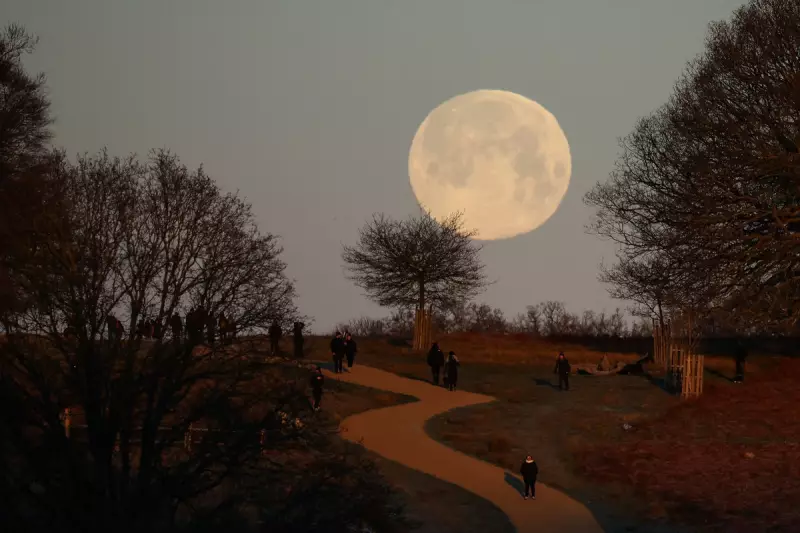
The first full moon of 2026, known as the Wolf Supermoon, put on a dazzling display for skygazers across the United Kingdom this weekend. Despite biting cold temperatures, many were treated to excellent views of the larger and brighter lunar spectacle.
Celestial Spectacle from Coast to Coast
From the ancient stones of Stonehenge to the modern skyline of Glasgow, the supermoon provided a dramatic backdrop. Striking photographs captured the moon setting behind Stonehenge in Wiltshire on Saturday morning. Further images showed it looming above Glasgow in Scotland and shining over the Thames Estuary in Minster, Kent.
In London, the sight was equally impressive. The Wolf Moon was photographed setting in Richmond Park, while passengers on the London Eye also seized the opportunity to capture the event. The moon reached its fullest phase at around 10am on Saturday, 3 January 2026, according to astronomers at the Royal Observatory in Greenwich.

Why Is It Called the Wolf Moon?
Astronomer Jess Lee from the Royal Observatory Greenwich explained the origin of the unique name. "The January full moon is often called the Wolf Moon, a name inspired by wolves that were thought to roam during the long winter nights," she said. The nickname is believed to come from the hungry wolves howling as they prowled for scarce food during the deep winter months.
Lee emphasised that enjoying the sight requires no special equipment. "You don’t need any special equipment or to escape light pollution to enjoy the view, it’s a beautiful sight in cities and rural areas alike," she added.
A Supermoon Defined by Cold Clarity
The event was classified as a supermoon, which happens when a full moon coincides with the moon's closest approach to Earth in its orbit. This celestial alignment makes the moon appear up to 14% larger and 30% brighter compared to when it is at its furthest point.
The clear skies that provided perfect visibility came with a frosty price. Overnight temperatures plunged below freezing for many, and were still hovering around 0°C at 10am on Saturday. The south-west of England and west Wales experienced slightly milder conditions, with some areas reaching 4°C by the time the moon was at its highest point.
The widespread photographic evidence from across the nation confirms that the Wolf Supermoon of 2026 was a breathtaking start to the year's astronomical calendar, offering a moment of natural wonder amidst the winter chill.