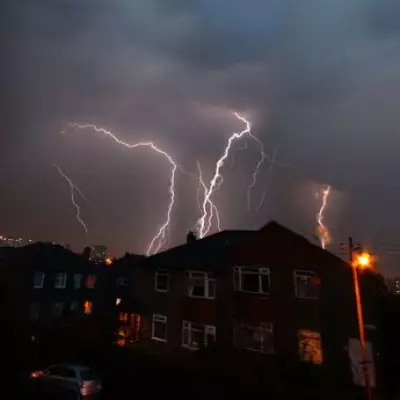
Residents across Cornwall are expressing growing anger and frustration as they enter a second week without essential services following the devastation wrought by Storm Goretti. The powerful storm, which struck last week with gusts of up to 99mph and torrential rain, has left a trail of destruction that local authorities and utility companies are struggling to clear.
A State of Abandonment in Rural Communities
In the remote village of New Mill, 86-year-old Linda Williams has been living without heating, lighting, or a working telephone for five days. The retired council accounts assistant is relying on old battery lamps and layers of clothing to keep warm. "I think it’s safe to say that we’re in a bit of a state," she said, voicing a fear shared by many: "But it can’t go on for ever … can it?"
Her neighbour, 75-year-old Roger Gillespie, is cooking on a camping stove and heating his 15th-century mill house with a log burner. He, his dog, and even his muscovy ducks—brought inside for safety—are managing in the dark, illuminated only by oil lamps and a permanent head torch. While describing himself as a "bit of a survivalist," Gillespie expressed concern for less resilient members of his community.

Infrastructure Failures and a Plea for National Help
The scale of the problem is vast. Cornwall Council reported its highways teams were dealing with roughly 1,000 incidents, many involving multiple fallen trees. Seven schools were forced to remain closed. The storm's impact was tragically underlined by one fatality, where a tree crushed a caravan.
Local Liberal Democrat councillor Juliet Line has been visiting isolated residents, criticising the "lack of national attention." She highlighted a critical vulnerability: "The internet-based phone systems, for example, just don’t work when something like this happens. People don’t even know if help is coming."
Andrew George, MP for St Ives, has called for a national emergency to be declared, arguing that local responders are overwhelmed. He criticised utility companies for presenting an "everything is under control" message that does not match the reality on the ground.
Scenes of Destruction from Villages to Historic Sites
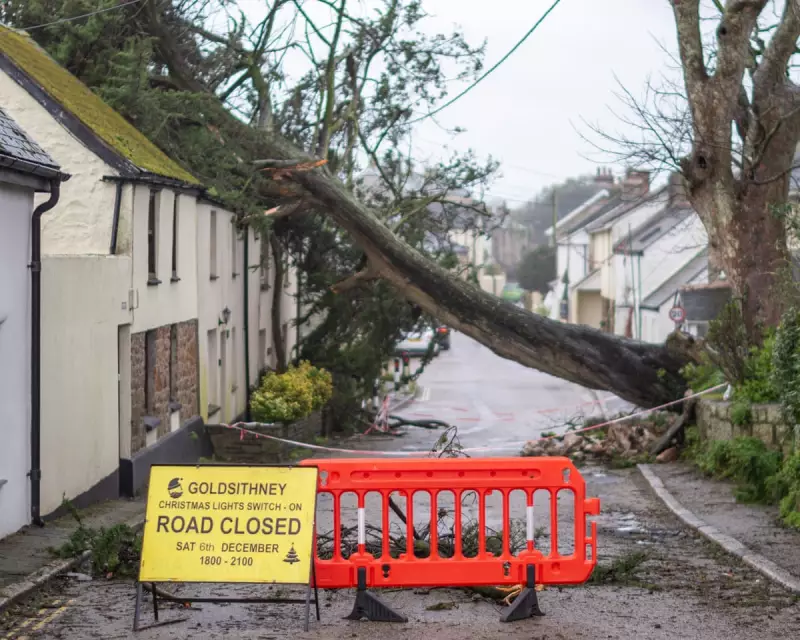
In Goldsithney, near Penzance, a massive fallen tree cleaves the main street in two, its weight resting on a cottage roof. Neighbour Harry Glasson recounted how the family inside had a narrow escape, being downstairs when the tree struck. "If it had been a few hours later they’d have been in bed and may not have survived," he said, adding grimly that the ongoing blockage was symptomatic of "the state of the country."
The environmental and economic cost is also severe. On the iconic St Michael’s Mount, approximately 80% of the island's trees were felled. The National Trust estimates hundreds of thousands of pounds worth of damage has been done across its south-west properties, calling it the worst storm in 16 years.
In response to concerns, Cabinet Office minister Dan Jarvis offered a "categoric assurance" that the government cared about Cornwall. He defended the local response and stated that convening the Cobra emergency committee had not been deemed necessary, though lessons would be learned.
Back in New Mill, retired headteacher Jan Shearn, 80, summed up the community's weary resolve and uncertainty. "God knows when we’ll be back to normal," she said, as neighbours continue to support one another in the cold and the dark.