Estonia's Frozen Sea Highway Opens as Arctic Temperatures Grip Northern Europe
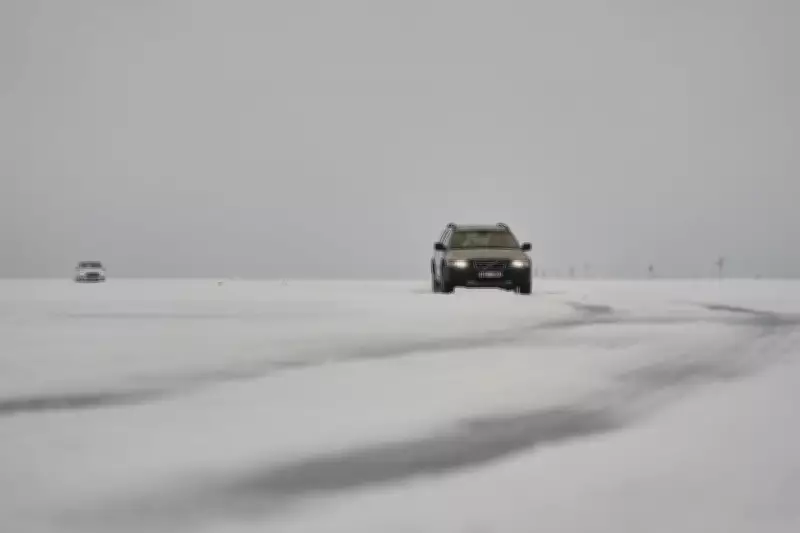
An extraordinary natural phenomenon has emerged in the Baltic region, where plummeting temperatures have enabled Estonian authorities to officially open a remarkable 20-kilometre ice road across a frozen stretch of sea. This temporary highway connects the country's two largest islands, Saaremaa and Hiiumaa, providing a vital winter link for thousands of residents.
A Route Born from Necessity and Tradition
The decision to formally establish the ice corridor came after locals, facing disrupted ferry services, began spontaneously driving across the frozen sea, risking their safety. With weeks of temperatures dropping to minus 10 degrees Celsius, the Baltic Sea has solidified sufficiently to support vehicle traffic. For the 9,000 inhabitants of Hiiumaa, this route is essential for accessing Saaremaa's larger population of 31,000 for shopping, education, and connection to mainland Estonia.
Hergo Tasuja, the mayor of Hiiumaa, emphasised that while the ice road addresses a practical need, it is deeply embedded in local culture. "For generations, people here have lived with the sea—swimming and boating in summer, and in winter, it's in their blood to venture onto the ice," Tasuja told The Associated Press. This marks the first time in approximately eight years that such conditions have allowed an ice road to operate, following a period of milder winters.

Engineering a Safe Passage on Shifting Ice
Creating a drivable path over a frozen sea is a complex and hazardous undertaking. Marek Koppel, a road maintenance supervisor at Verston Eesti, the construction company managing the project, detailed the meticulous process. Workers must measure ice thickness every 100 metres, ensuring it exceeds the 24-centimetre safety minimum. They smooth over ridges and cracks, with weather and ice stability monitored continuously, leading to route adjustments as needed.
Strict regulations govern usage to prevent accidents. Vehicles must not exceed 2.5 tonnes and must maintain specific speeds—either below 20 kph or between 40 and 70 kph—to avoid vibrations that could fracture the ice. Drivers cannot stop, must keep a safe distance, and passengers are prohibited from wearing seatbelts with doors kept easily open for rapid evacuation if the ice gives way.
A Novel Experience for Locals and Visitors Alike
The ice road's opening has attracted curiosity and necessity. Alexei Ulyvanov, a resident of Tallinn, travelled to the islands specifically to demonstrate this unique mode of transport to his children. "The road was pretty good, it was easy to ride," he remarked, highlighting the educational value of experiencing a car journey over the sea.
With the current cold spell persisting, authorities have contracted Verston to open two additional ice routes this week, linking mainland Estonia to smaller islands. This expansion underscores the temporary yet critical infrastructure role these frozen passages play in Estonia's winter mobility, blending modern engineering with age-old adaptation to the harsh Baltic climate.