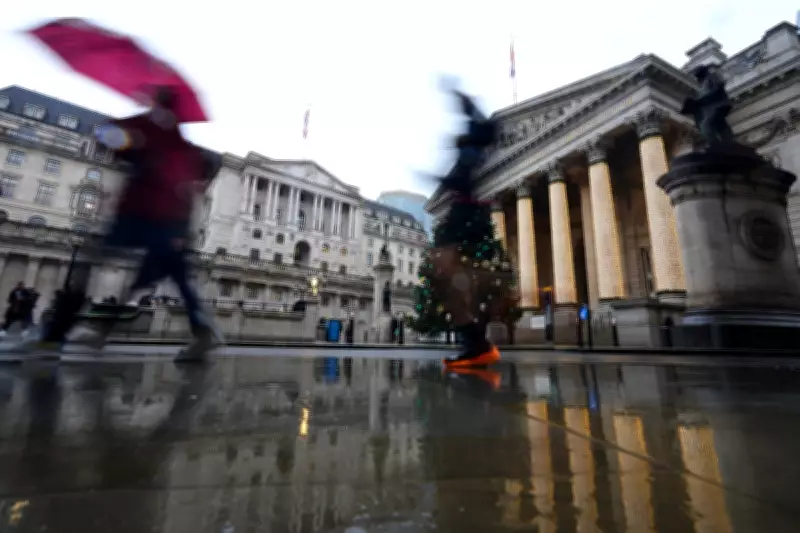
The Bank of England is poised to keep its main interest rate steady at 3.75% during its upcoming meeting this Thursday, as inflation continues to linger above the central bank's target and the British economy demonstrates signs of a stronger-than-anticipated recovery.
Inflation Remains a Key Concern
Despite a general downward trend over the past year, inflation in the UK remains stubbornly elevated at 3.4%, which is significantly above the Bank of England's official 2% target. This persistent inflationary pressure is a primary factor influencing the Monetary Policy Committee's decision to maintain the current rate.
"The early data covering 2026 hint at stronger demand and stickier inflation than we had expected," noted Andrew Wishart, a senior UK economist at Berenberg Bank, highlighting the complex economic landscape facing policymakers.

Economic Growth and Rate Cuts
The central bank has been on a path of gradual monetary easing over the past eighteen months, typically adjusting rates every three months. Its last reduction occurred in December, when it cut the key rate by a quarter of a percentage point and signalled that further decreases were probable later in the year.
However, a series of recent economic indicators have revealed that the British economy has made a more robust start to the year than many analysts predicted. This unexpected strength in economic activity has the potential to exert upward pressure on inflation, complicating the timing of future rate cuts.
Balancing Act for Policymakers
Economists emphasise that forthcoming data will be crucial in determining when the Bank of England might implement its next interest rate reduction. Lower interest rates are designed to stimulate economic growth by reducing borrowing costs for both consumers and businesses, which can lead to increased spending and investment.
Yet, this stimulus carries the risk of fuelling higher prices. Central bankers must therefore carefully balance these competing forces, striving to prevent inflation from eroding the value of earnings and savings without unnecessarily hindering economic growth.
Political and Economic Context
The political landscape adds another layer of complexity. Britain's Labour government, which secured victory in the 2024 general election, has seen a significant decline in public support, partly attributable to economic factors. The government will be keenly hoping for a sharp fall in inflation this year, which would allow the central bank to further reduce borrowing costs and potentially alleviate some economic pressures on households and businesses.
As the Bank of England prepares for its Thursday announcement, all eyes will be on its assessment of these intertwined economic dynamics and its guidance for future monetary policy moves in a still-uncertain environment.