Parliament Debates Tough New Measures to Combat Fly-Tipping
The House of Lords has heard compelling arguments for a significant crackdown on fly-tipping, with peers backing proposals that could see offenders receive penalty points on their driving licences and have their vehicles seized by police. The debate centered on amendments to the Government's wide-ranging Crime and Policing Bill, highlighting the growing urgency to address environmental crime.
Penalty Points as Personal Deterrent
Conservative peers have proposed punishing fly-tipping offenders with three penalty points on their driving licences. Lord Davies of Gower, a Conservative shadow Home Office minister, argued that while fines might be viewed as a "calculated business risk" by those operating for profit, "the prospect of licence endorsement introduces a personal and escalating consequence."
Home Office minister Lord Hanson of Flint confirmed that "the Government is looking carefully and quickly at this issue of penalty points," though he noted that implementing such measures would require addressing the Road Traffic Offenders Act 1988 rather than environmental legislation.

Vehicle Seizure Powers for Police
Peers also called for clarification in law that police can seize vehicles used to dump waste illegally. Lord Davies emphasized that "removing the instrument of the crime is one of the most effective deterrents available," arguing this would disrupt organized dumping activity and reinforce the seriousness of environmental crime.
Former Metropolitan Police commissioner Lord Hogan-Howe, an independent crossbencher, strongly supported the vehicle seizure proposals. "A large vehicle can be worth £20-, £50-, £100,000," he noted. "This starts to make a difference in their business model and that, it seems to me, is vital." He added that authorities could sell seized vehicles, with proceeds going directly to law enforcement.
Growing Problem Demands Action
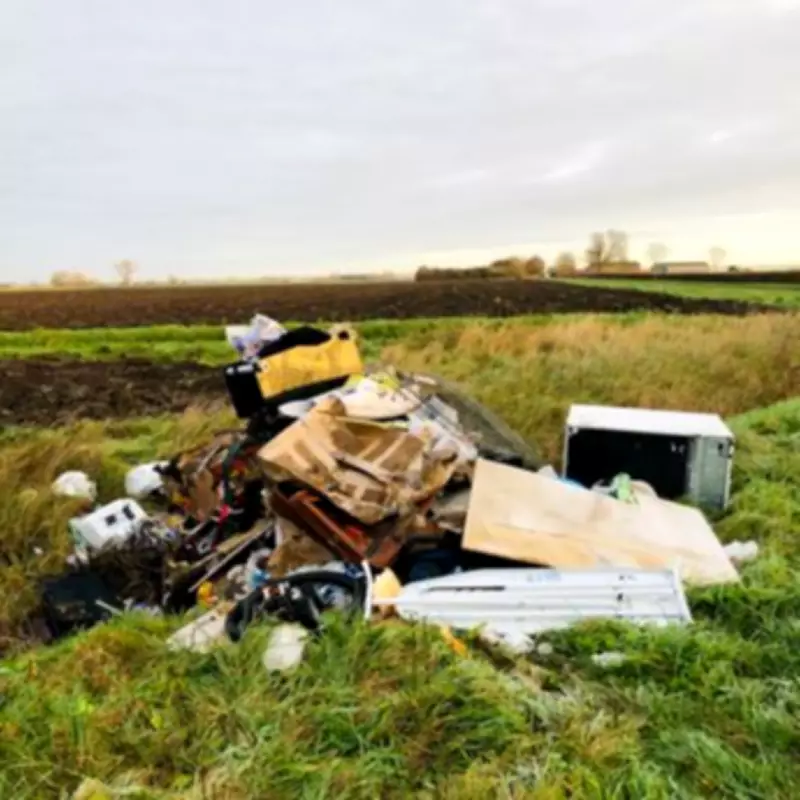
The debate was informed by stark statistics showing English local authorities dealt with 1.26 million fly-tipping incidents throughout 2024/25. Lord Hanson referenced both these figures and a massive 12-meter-high, 20,000-tonne waste tip near Kidlington, Oxfordshire, stating they have helped to "focus Government minds" on the issue.
Lord Hogan-Howe warned of growing health hazards linked to illegal dumping, including toxic waste and rat infestations near residential areas. "Vans and cars are used to transport waste far from the original site and dump it illegally," Lord Davies observed, describing vehicle-enabled fly-tipping as "almost self-evident."
Existing Powers and Parliamentary Process
While supporting the sentiment behind vehicle seizure proposals, Lord Hanson noted that "local authorities already have the power to seize vehicles linked to waste crime under the Environmental Protection Act 1990." He emphasized the Government's commitment to responding "in a responsible way" to the fly-tipping crisis.
In a separate development, the Government suffered a defeat when peers backed a Conservative amendment by 213 votes to 150, demanding fly-tipping guidance that would clarify offenders' liability for costs incurred through loss or damage resulting from their crimes. The Bill must undergo further parliamentary scrutiny before it can become law.
The proposals represent a significant shift toward treating fly-tipping as a serious criminal offense with personal consequences for offenders, moving beyond traditional fines toward measures that directly impact both mobility and business operations.