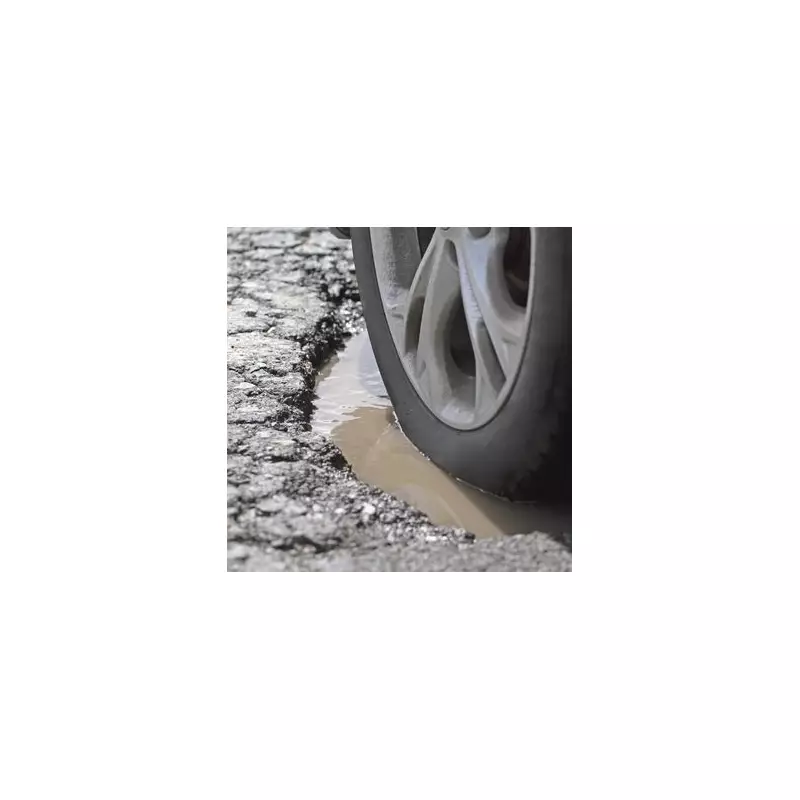
For countless motorists across the UK, the scourge of potholes is a daily frustration that can lead to expensive vehicle damage and safety concerns. With a recent government announcement of £7.3 billion for road maintenance falling short of the estimated £17 billion needed to fix the nation's crumbling tarmac, the issue remains a hot-button political topic. Consumer rights expert Martyn James provides a comprehensive guide on whether it's worth your time pursuing a council for compensation and how to maximise your chances of success.
Understanding the Pothole Problem and Your Rights
Potholes are more than just a nuisance; they are a significant electoral issue that voters consistently rank alongside litter and bin collections. Despite successive governments delegating responsibility to local councils and the Highways Agency, the problem persists. A key challenge for drivers is the lack of a standard national definition for a pothole. Research by the RAC Foundation reveals that Local Highway Authorities (LHAs) use varying minimum depth criteria, ranging from 20mm to 50mm, and assess them by length, width, and risk level.
This means your ability to claim hinges on the specific council's definition. To find this, searching the council's website or typing 'pothole' along with the council name into a search engine is advised. The responsible body is usually the local council or LHA where the damaging pothole is located, though it could also be Highways England for major roads.

Immediate Steps After Hitting a Pothole
Your safety is paramount. Only pull over where it is safe to do so. Some damage, like a buckled wheel or tire blowout, will be immediately obvious, while other issues with steering, suspension, or the undercarriage may manifest later through strange noises or misaligned steering.
Gathering evidence is crucial. Use your phone's voice notes to record details while they're fresh. If it is safe, take photographs of the pothole, ideally with a common object like a coin or a shoe next to it for scale. Note the exact location, time, date, and weather conditions. Crucially, check online forums or community sites to see if the pothole has already been reported, as this can strengthen your case. You will likely need to get the vehicle repaired before claiming, so obtain multiple quotes to demonstrate reasonable costs.
Navigating the Claims Process and Potential Appeals
To make a claim, you must report the pothole to the responsible authority—the local council, city authority, or Highways England. Your claim should include a full breakdown of the incident, repair costs with receipts, photos, and any evidence the pothole was a known, pre-reported hazard. Councils often cite Section 58 of the Highways Act 1980, arguing they are not liable unless the defect was previously reported. Counter this with your gathered evidence of prior knowledge.
If your claim is rejected, you can appeal. This often involves submitting Freedom of Information (FoI) requests for the council's road maintenance schedules and repair logs for that specific stretch of road. Use this information to formally challenge their decision. Should the council still refuse, your final recourse is the Small Claims Court. The process, which varies slightly across England and Wales, Scotland, and Northern Ireland, can be initiated online and is designed to be accessible for individuals seeking redress for relatively low-value claims.
While some councils are notoriously difficult, perseverance armed with the right evidence can lead to a successful outcome. As Martyn James concludes, for drivers furious enough to see it through, claiming compensation for pothole damage is a fight that can be won.