China Announces Lowest Growth Target in Over Three Decades
China has set its most modest economic growth target in more than thirty years, a clear signal that Beijing acknowledges the mounting strains within the model that powered its historic economic ascent. The target, outlined during the annual "two sessions" political gathering, has been downgraded to a range of 4.5 to 5 per cent for 2026.
A Historic Downgrade Amid Structural Challenges
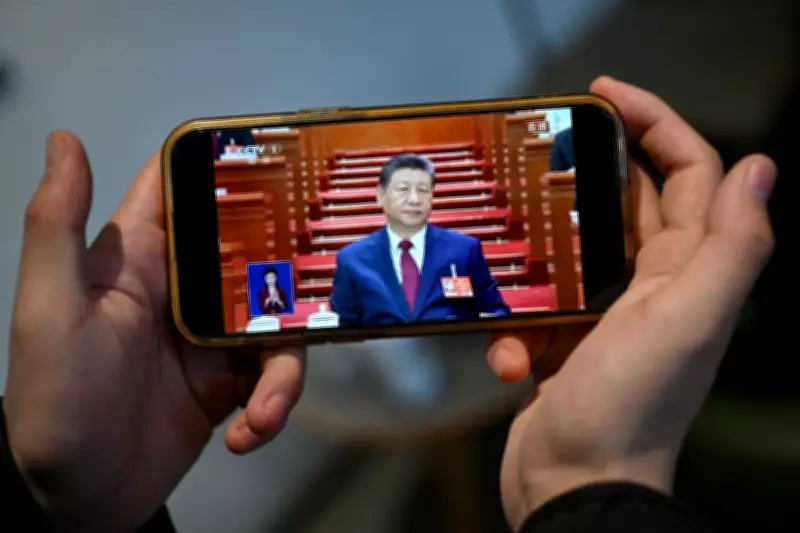
This marks the first time China has lowered its growth target since it was pegged at "around 5 per cent" in 2023, representing the country's lowest official goal since 1991. The announcement came as part of the government's work report delivered by Premier Li Qiang to thousands of delegates at the National People's Congress in Beijing.
"The task of transitioning to new growth drivers is formidable," Premier Li stated during his hour-long address. "The imbalance between strong supply and weak demand is acute, market expectations are weak, and there are many risks and hidden dangers in key areas."

The tightly choreographed meetings, overseen by President Xi Jinping, also saw the release of China's 15th five-year plan, which sets strategic objectives for the world's second-largest economy from 2026 to 2030.
Navigating Internal and External Headwinds
Beijing is attempting to recalibrate its traditionally export-dependent economy as it confronts a perfect storm of domestic challenges. These include persistently weak consumer consumption, a prolonged property market slump, rising local government debt levels, a shrinking population, and energy market disruptions linked to the conflict in Iran.
Analysts suggest that setting a lower growth target provides Beijing with greater flexibility to implement necessary structural reforms. These reforms could include reducing industrial overcapacity and making the economy less reliant on exports, particularly after China posted a record $1.2 trillion trade surplus in 2025.
"Facing internal and external headwinds, China has dialled back its 2026 growth target to 4.5-5 per cent," noted Mohamed El-Erian, chief economic adviser at Allianz. "While this marks the lowest since 1991, it may still prove ambitious unless Beijing aggressively ramps up domestic economic reforms."
Shifting from Investment to Consumption
Andy Ji, an economic analyst, highlighted that the key takeaway is Beijing's acknowledgment of structural slowdown through its shift from a fixed "around 5 per cent" target to a more flexible and lower range.
"Beijing is trying to manage a 'controlled glide' in growth while building a new economy based on technology rather than property," Ji explained. He added that authorities are attempting to force a strategic shift from investment-led to consumption-led growth.
In terms of fiscal stimulus, China plans to maintain a budget deficit of 4 per cent of GDP, similar to the previous year. The government has kept special debt issuance quotas unchanged, allocating 1.3 trillion yuan ($188.49 billion) for central government and 4.4 trillion yuan for local governments.
Social and Military Spending Priorities
The government also announced several social welfare measures, including raising minimum monthly pensions by 20 yuan per person and increasing basic medical insurance subsidies for rural, non-working residents by 24 yuan. Additional commitments include boosting education spending, subsidising childcare, and reforming public hospitals.
On the defence front, Beijing will increase military spending by 7 per cent according to a separate budget report. While this is down from the 7.2 per cent target set last year, it still outpaces wider economic growth targets at a time of rising global tensions.
"We will make solid gains in military training and combat readiness and speed up the development of advanced combat capabilities," Premier Li declared in his speech. This comes as China aims to modernise its armed forces by 2035 amid increasing regional tensions, particularly concerning Taiwan, which Beijing claims as its territory.

Geopolitical Uncertainties and Economic Resilience
The growth target announcement comes just weeks before an expected visit by former US President Donald Trump to meet with President Xi Jinping, amid looming trade war tensions. Premier Li confirmed the government would roll out economic policies "in response to US tariffs," which have fluctuated sharply since Trump launched a trade war with China after returning to office last year.
China is also navigating significant geopolitical uncertainties, particularly following US-Israeli strikes on Iran, its longtime strategic partner. These actions have destabilised global oil markets, creating additional challenges for Beijing. China remains heavily reliant on Iranian oil, purchasing approximately 80 per cent of its crude oil imports at discounted rates, with Iranian oil accounting for about 13 per cent of total imports.
This marks the second major economic partner targeted in recent months, following US military action in Venezuela that has cut off Beijing's access to Venezuelan oil since the capture of President Nicolas Maduro in January. Despite these challenges, China appears determined to project confidence as it navigates both domestic economic transitions and complex international relations.