Iran Issues Stark Warning of $200 Oil Amid Escalating Gulf Conflict
Iran's military command has issued a dire warning to the world, urging preparations for oil prices to surge to $200 per barrel as attacks on merchant vessels in the Gulf continue to disrupt global energy supplies. This comes amidst ongoing hostilities following Iran's strikes on Israel and other Middle Eastern targets, which have demonstrated Tehran's capacity to retaliate and destabilise regional security despite intense US-Israeli military operations.
Military Spokesperson Threatens Economic Retaliation
Ebrahim Zolfaqari, spokesperson for Iran's military command, directly addressed the United States, stating, "Get ready for oil to be $200 a barrel, because the oil price depends on regional security which you have destabilised." In a further escalation, Zolfaqari announced that Iran would respond with attacks on banks conducting business with the US or Israel, advising people across the Middle East to stay at least 1,000 metres away from banking institutions. This threat followed overnight strikes on bank offices in Tehran.
Strait of Hormuz Blockade Creates Severe Supply Disruption
The situation on the ground remains tense, with no indication that ships can safely navigate the Strait of Hormuz. Approximately one-fifth of the world's oil supply is currently blockaded behind this narrow channel along the Iranian coast, marking the most significant disruption to energy supplies since the oil shocks of the 1970s. In the latest incidents, three more merchant ships were struck by unknown projectiles in the Gulf, bringing the total number of vessels reportedly hit since the conflict began to 14.

- A Thai-flagged bulk freighter suffered an explosion and fire, forcing crew evacuation.
- A Japan-flagged container ship sustained damage.
- A Marshall Islands-flagged bulk carrier was also impacted.
Oil Market Volatility and International Response
Oil prices, which briefly spiked to nearly $120 per barrel earlier this week, have since eased to around $90, as investors speculate that US President Donald Trump may find a swift resolution to the war he initiated alongside Israel nearly two weeks ago. However, governments are not taking chances; the International Energy Agency is expected to recommend an unprecedented release of 400 million barrels from global strategic reserves. This measure would take months to implement and would only compensate for about three weeks of oil flow through the Strait of Hormuz.
Defiance and Casualties on Both Sides
In a show of defiance, large crowds of Iranians took to the streets for funerals of top commanders killed in airstrikes, carrying caskets and displaying flags and portraits of the slain Supreme Leader Ali Khamenei and his son Mojtaba. An Iranian official revealed that Mojtaba Khamenei was lightly injured early in the conflict when airstrikes killed his father, mother, wife, and a son. He has not made any public appearances or issued direct messages since the war began.
Casualty figures continue to mount, with Iran's UN ambassador reporting over 1,300 Iranian civilian deaths since US and Israeli airstrikes commenced on February 28. Iranian strikes on Israel have killed at least 11 people, while scores have perished in Israeli attacks on Lebanon. Washington confirms seven US soldier fatalities and approximately 140 wounded.
Military Actions and Regional Escalation
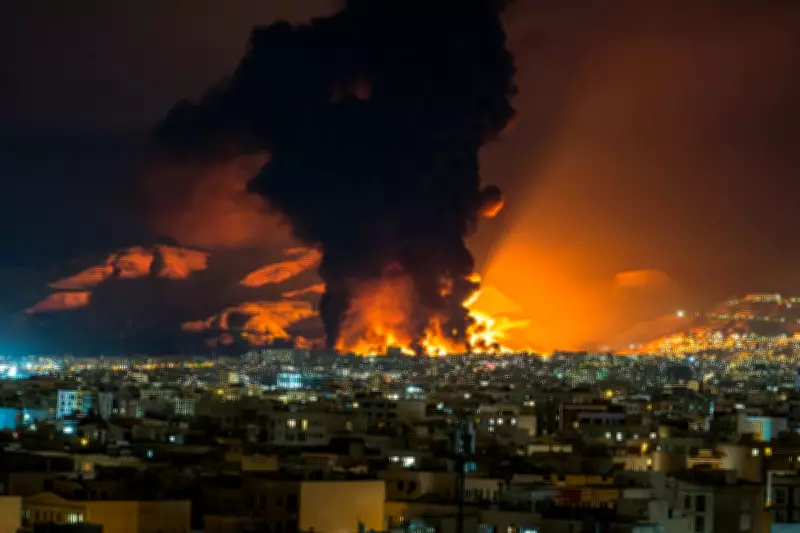
The Iranian military claimed responsibility for launching missiles at a US base in northern Iraq, the US naval headquarters in Bahrain, and targets in central Israel. Explosions were reported in Bahrain, and in Dubai, four people were injured by two drones that crashed near the airport. In Israel, air defences intercepted missiles before dawn, triggering sirens that sent residents to shelters. Israel also launched a barrage on Beirut targeting Hezbollah, which has fired into Israel from Lebanon in solidarity with Iran.

No End in Sight as Economic Risks Grow
Israeli Defence Minister Israel Katz asserted that the operation "will continue without any time limit, as long as required, until we achieve all objectives and win the campaign." US and Israeli officials state their aim is to end Iran's ability to project force beyond its borders and dismantle its nuclear programme, while also encouraging Iranians to overthrow the clerical regime. However, senior Israeli officials privately acknowledge that Iran's ruling system may survive the war, and there is no indication Washington is close to ending the campaign.
Iran has declared it will not allow oil through the Strait of Hormuz until US-Israeli attacks cease and refuses to negotiate. President Trump has threatened to hit Iran "twenty times harder" if it maintains the blockade, yet US officials have not disclosed any military strategy to reopen the vital waterway. As the conflict prolongs, the risk to the global economy intensifies, and if Iran's clerical system endures, Tehran is poised to claim victory, potentially reshaping regional dynamics for years to come.