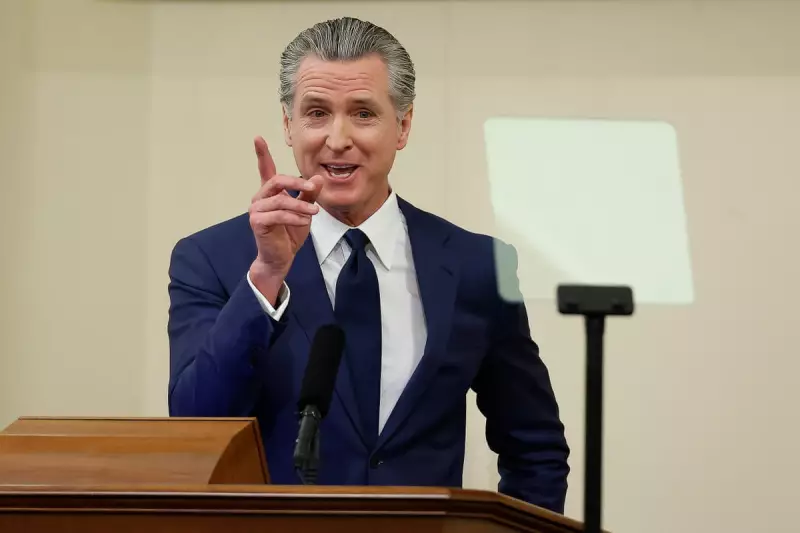
California Governor Gavin Newsom has put forward a contentious new fiscal proposal aimed squarely at the state's wealthiest residents. The plan, revealed on Tuesday, seeks to impose an annual 1.5% tax on the fortunes of billionaires, specifically targeting wealth exceeding $50 million.
The Mechanics of the Proposed Levy
The core of Governor Newsom's strategy is a 1.5% annual wealth tax on individuals whose net worth surpasses the $50 million threshold. This is not an income tax, but a direct levy on total assets, including stocks, bonds, real estate, and other holdings. The proposal is designed to be a permanent feature of California's tax code, moving beyond temporary measures to address a structural budget shortfall.
This move comes as California grapples with a significant budget deficit projected at $56 billion over the next two fiscal years. Newsom's administration argues that the tax is a matter of fairness, ensuring the ultra-wealthy contribute more substantially to the state that has been the bedrock of many of their fortunes, particularly in the technology and venture capital sectors.

Rationale and Political Context
In announcing the plan, Governor Newsom framed it as a necessary step to protect vital public services from severe cuts. "When we ask the most fortunate among us to pay their fair share, we can avoid devastating cuts to schools, public safety, and programmes that serve millions of Californians," he stated. The governor's office estimates the tax could generate up to $22 billion in annual revenue, a figure that would make a substantial dent in the deficit.
The proposal is expected to face fierce opposition. Critics, including prominent business groups and anti-tax advocates, have already labelled it a "job-killing" measure that could drive investment and talent out of the state. They argue that California's tax burden is already among the highest in the United States and that further levies will harm economic competitiveness.
Potential Impacts and Next Steps
If enacted, the tax would place California at the forefront of a growing national debate on wealth inequality and tax fairness. The funds are earmarked not only for bridging the budget gap but also for bolstering long-term investments in education, homelessness initiatives, and climate resilience projects.
However, the path to implementation is steep. The proposal must navigate the state legislature, where it will require a two-thirds majority vote in both houses—a significant hurdle given the political divisions. Furthermore, legal challenges are almost certain, with debates anticipated over the constitutionality of a state-level wealth tax.
Governor Newsom's bold gambit sets the stage for a major political battle in Sacramento. Its success or failure will likely influence tax policy debates far beyond California's borders, testing the public appetite for direct taxation of extreme wealth to fund government operations in an era of widening inequality.