Business leaders across Scotland have expressed profound disappointment with the Scottish Government's latest budget, describing it as a missed golden opportunity to stimulate growth and support employers. Finance Secretary Shona Robison delivered the statement, which critics argue offers no meaningful measures to counteract the challenges facing the nation's firms.
A Missed Opportunity for Growth
The budget was presented against a backdrop where the SNP government had significant financial leeway. An additional £820 million in Barnett consequentials from the last Westminster budget was available, with at least £300 million arriving in a single tranche in 2026-27. This came on top of a record increase in funding the previous year.
Furthermore, the Scottish Government has saved between £120 million and £155 million since it no longer needs to mitigate the UK's two-child cap, which was scrapped by Chancellor Rachel Reeves. Holyrood is also holding £170 million taken from Scotland's £900 million Apprenticeship Levy Scheme.

Despite this fiscal space, the budget contained no significant strategy for economic growth. Sir Tom Hunter, one of Scotland's most prominent entrepreneurs, stated bluntly: "There are no incentives in this budget for businesses to grow and create more jobs, or for workers to strive." His sentiment was echoed by major business organisations.
Business Rates Relief 'Tinkering at the Edges'
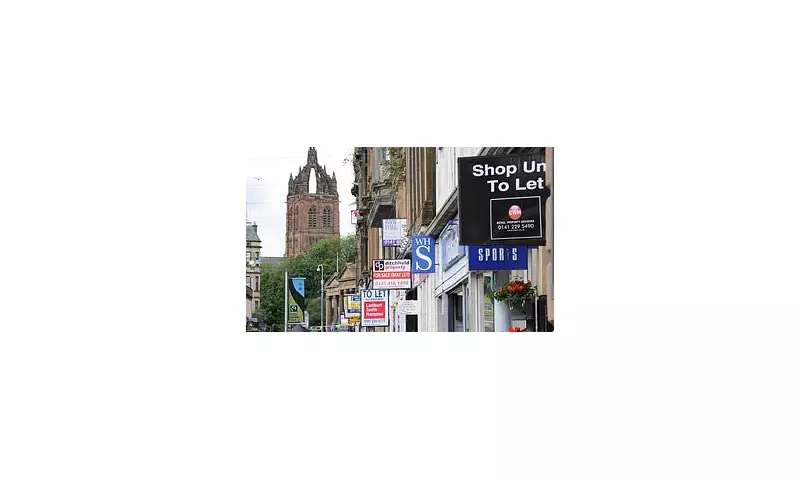
A central pillar of the budget's business support was a commitment to reduce business rates, providing relief worth up to £184 million over three years. This was swiftly criticised as insufficient. Michelle Ferguson, Director of CBI Scotland, labelled the move as "tinkering around the edges," noting it would have a limited overall effect.
David Lonsdale, Director of the Scottish Retail Consortium, warned that the relief fell "well short" of the permanent discount offered to retailers in England. He said the failure to match the English regime would impact investment, undermining the shared goal of making Scotland the best place in the UK to grow a retail business.
Tax Disparity and New Levies
The budget also maintains a competitive disadvantage for Scottish employers trying to attract skilled workers. Taxpayers earning between the Scottish and UK higher rate thresholds face a marginal tax rate of 50%, compared to 28% elsewhere in the UK. This forces businesses to pay higher salaries to attract talent north of the border.
Ellen Milner of the Chartered Institute of Taxation summarised the situation: "Today’s limited tax changes retain a system that is more generous to those on lower incomes and increasingly less so for those higher up the income scale."
Adding to concerns is the proposed new tax on properties valued over £1 million, dubbed the 'MacMansion Tax'. With over 11,300 such homes in Scotland, mostly in Edinburgh, a flat annual charge could raise around £17 million. Critics fear it will add to the cost-of-living crisis and may later be extended to less expensive properties.
Infrastructure Promises Met with Scepticism
Announcements on infrastructure, including the perennial pledge to dual the A9, were met with scepticism from business audiences. Sandy Begbie, Chief Executive of Scottish Financial Enterprise, argued for greater private sector collaboration, stating: "It is not realistic for the Scottish government to fund all the investment that is necessary... we can accelerate the investment this country badly requires."
Ultimately, the budget has been characterised as another in a long line of SNP financial plans that prioritise spending over wealth generation. With Westminster's Labour government implementing policies seen as anti-business, the SNP had a clear chance to differentiate itself and back Scotland's job creators. The consensus from boardrooms across the country is that this chance has been squandered.