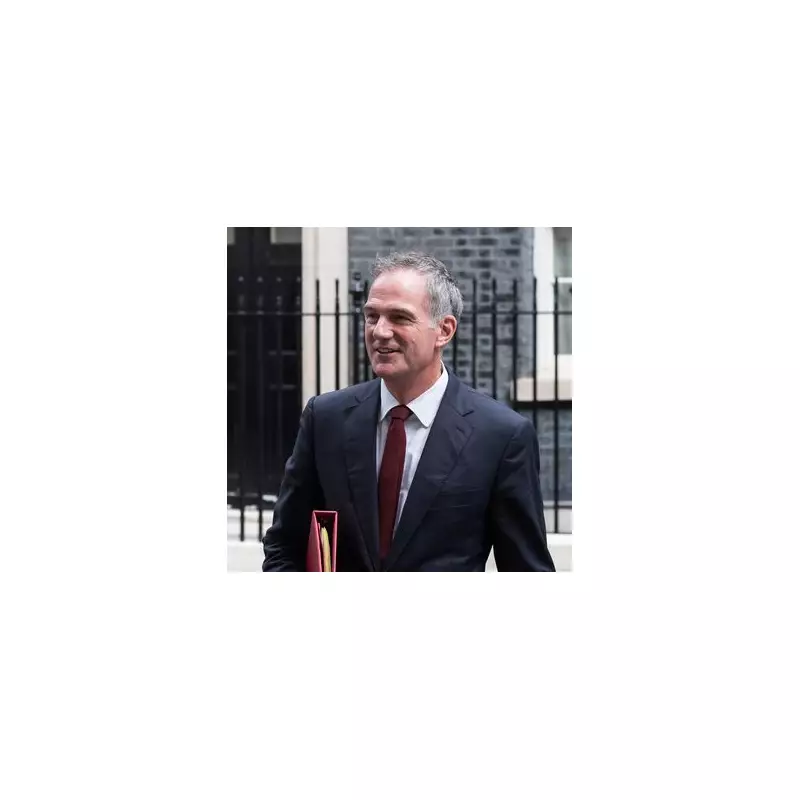
New Business Secretary Peter Kyle has made a firm commitment to push through the government's ambitious and contentious shake-up of workers' rights, vowing to "do what it takes" to implement the reforms.
Key Pledge at CBI Conference
In a keynote speech at the Confederation of British Industry's (CBI) annual conference in London, Kyle addressed the business community directly on the Employment Rights Bill. He positioned the legislation as central to Labour's manifesto promise, describing it as being both "pro-business and pro the people who work in business."
The Bill represents one of the most significant policy changes announced by the Labour government. It includes a wide-ranging package of measures aimed at reforming:

- Parental and bereavement leave
- Sick pay entitlements
- The use of zero hours contracts
- Rules on unfair dismissal
Kyle told delegates: "I will do what it takes to get it through because I need to get on with the real job which is implementing it."
Business Backlash and Consultation Promise
The Business Secretary's strong stance comes in the face of significant opposition from business groups. CBI Chief Executive Rain Newton-Smith presented a stark warning at the same conference, revealing that eight in ten firms believe the Bill, in its current form, will make it harder for them to hire new staff.
Newton-Smith urged the government to "change course on the Employment Rights Bill," criticising what she described as a lack of meaningful consultation. She called for a return to a model where "business and unions forge consensus through compromise."
However, Kyle pushed back against what he called "worst fears" being projected onto the legislation. He emphasised that nothing is set in stone and assured businesses that their voices would be heard during the consultation process, particularly on sensitive issues like zero hours contracts and day one employment rights.
Broader Economic Context
The debate over workers' rights is taking place against a challenging economic backdrop. Kyle described the situation inherited by the government as a "growth emergency," characterised by what he called a "vice-like grip of high taxes and low growth."
In strong language, the Business Secretary suggested the government might need to "shock our economy into growth" to break this cycle. He indicated that promised planning reforms and other measures could provide the necessary stimulus, stating that in an "emergency environment situation you have licence to do things you don't do at other times."
Addressing concerns about the upcoming Budget, Kyle sought to reassure financial markets by explicitly ruling out any repeat of Liz Truss's "disastrous experiment" with the economy, which he said had "wreaked havoc on every working person in the country."
The Employment Rights Bill has already faced challenges in both the Commons and the Lords during its parliamentary passage, with the Conservatives claiming it will pile billions of pounds in extra costs onto businesses. Meanwhile, trade unions have largely welcomed the proposed reforms and are urging the government to stand firm against opposition.