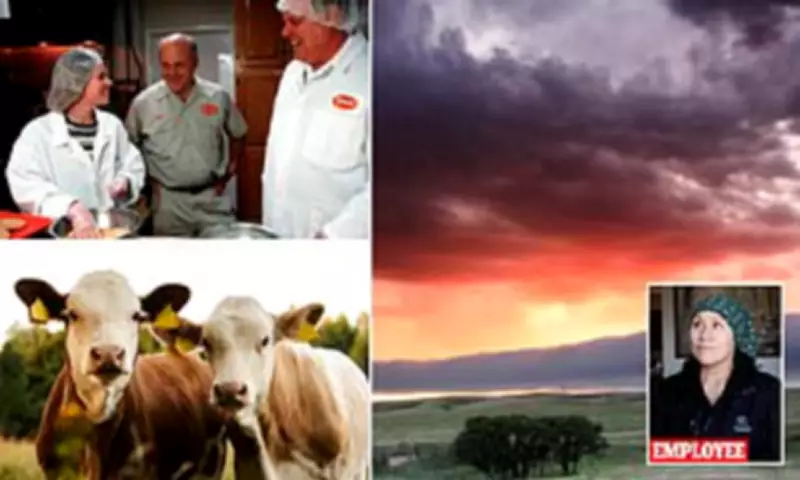
Tyson Foods Closure Threatens Economic Future of Small Nebraska Town
The announcement that Tyson Foods will shutter its massive beef processing facility in Lexington, Nebraska, has sent shockwaves through this small Midwestern community. With the closure scheduled for early 2026, the town of approximately 10,000 residents faces an economic catastrophe that could reshape its character for generations to come.
Seismic Job Losses for Tiny Community
The impending closure will result in the loss of 3,200 positions, representing nearly one-third of Lexington's entire workforce. For a town of this size, such a massive employment reduction represents an existential threat to local stability and prosperity.
Angie Diaz-Bran, whose mother Blanca worked at Tyson Foods for nearly two decades, described the devastating impact to the Daily Mail. 'This closure will truly have a ripple effect on the town. Many families rely on Tyson not just for a job but for stable, long-term employment with benefits,' she explained.

'When that disappears, people aren't just losing paychecks - they're losing health insurance, stability, and, in many cases, the ability to stay in their homes.'
National Implications for Beef Industry
Tyson Foods cited dwindling cattle numbers across the United States and falling profits on beef as reasons for the closure. The decision comes at a time when the national cattle herd stands at its smallest level in more than seventy years.
The economic consequences extend far beyond Lexington's city limits:
- Ranchers and feedlot operators across Nebraska will face reduced market options for selling finished cattle
- Producers will need to transport livestock greater distances to remaining processing facilities
- Increased competition among producers for limited processing capacity
- Potential widening of the gap between what ranchers earn and what consumers pay
Following the announcement, cattle futures and cash cattle prices experienced immediate declines, reflecting market anxieties about reduced processing capacity nationwide.
Human Impact on Lexington Families
The closure represents more than just economic statistics for Lexington residents. For many families, the Tyson plant provided not just employment but essential stability and benefits that supported entire households.
Blanca's story illustrates the profound human cost. Having immigrated from a small village in Michoacan, Mexico, where she grew up without electricity, running water, or formal schooling, she came to the United States seeking opportunity and safety.
'That job is how she raised six children as a single mother,' Diaz-Bran explained. 'It's how she paid the bills, put food on the table, and kept a roof over our heads. It was never easy or glamorous, but it was honest work, and she gave it everything she had. Now, stability has disappeared.'
For Blanca's family, the loss extends beyond income to critical health insurance coverage. Her college-aged daughter, born with a heart defect, and recently graduated son now face uncertainty about medical coverage.
Community Exodus and Response
The announcement has already triggered an exodus from Lexington, with Diaz-Bran noting that people were fleeing even before the official closure date. One local resident reported that approximately two hundred students had already moved away following the news, leaving schools increasingly empty.
'I'm from Lexington born and raised,' another resident shared. 'Growing up I never thought this would happen. Since the news came out 200 students have already moved away and my school is getting emptier and emptier. It's sad watching this. This will impact EVERYONE in my town because it's so small.'
Diaz-Bran emphasized that immigrant and refugee communities would be particularly vulnerable, noting that 'finding new work isn't always safe or straightforward' for these populations.
Local Support and Alternative Employment
In response to the impending crisis, the Lexington community has begun rallying support for affected workers. Mission Avenue Thrift Store has announced plans to offer non-perishable goods to those impacted by the closure.

Meanwhile, Wholestone Prestage, a pork manufacturing company, has expressed interest in hiring displaced Tyson workers. Grant Prenzlow, the company's director of human resources, noted that their operations are adjacent to the meat-processing industry and they are actively seeking to welcome former Tyson employees.
Despite these efforts, residents like Diaz-Bran are calling for more comprehensive support. 'We want support, transparency, and real plans for what comes next, not just a shutdown notice and silence,' she stated.
As Lexington braces for the economic impact of Tyson's departure, the town faces fundamental questions about its future viability and the wellbeing of its residents in the years ahead.