Aramco CEO Issues Stark Warning Over Iran Conflict Consequences
Saudi Arabia's state oil company, Aramco, has delivered a grave warning about the potential catastrophic consequences for global oil markets if the ongoing conflict in the Middle East continues to escalate. Chief Executive Amin Nasser described the situation as the region's most significant crisis for the oil and gas industry in recent memory, highlighting the severe risks to global energy stability.
Attacks in Strait of Hormuz Trigger Market Concerns
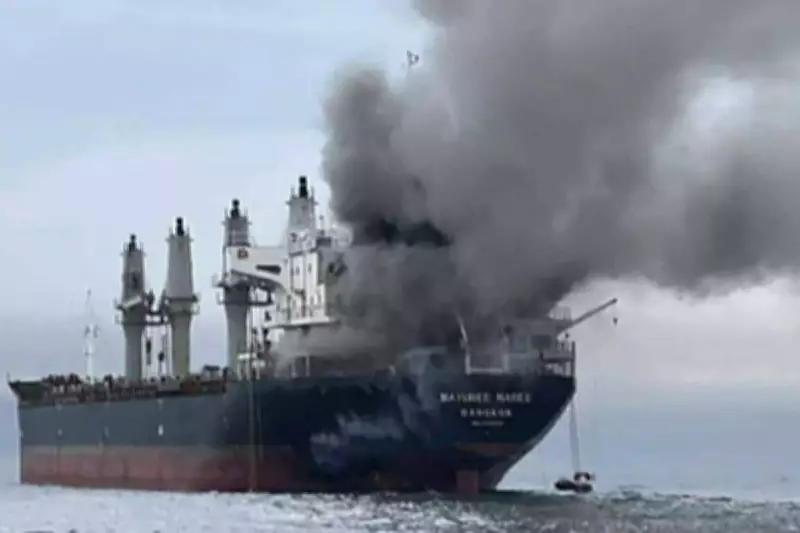
The warning follows a series of dangerous incidents in the strategically vital Strait of Hormuz, where multiple commercial vessels were attacked on Wednesday. Iran's feared Revolutionary Guards claimed responsibility for striking a Thai-flagged vessel, while several other ships sustained varying degrees of damage in what appears to be a coordinated assault on maritime traffic through this crucial oil transit corridor.
In response to these developments, Iran's military command issued a direct threat that global oil prices could potentially soar to an unprecedented $200 per barrel if the conflict intensifies further. This statement signals Tehran's apparent readiness to escalate hostilities with renewed strikes across the Middle East region, creating additional uncertainty for energy markets worldwide.

Aramco's Emergency Measures and Market Response
To maintain supply continuity amid the growing tensions, Aramco has already begun drawing upon its substantial storage reserves located off the Gulf coast to fulfil customer commitments. However, CEO Nasser cautioned that these emergency reserves represent only a temporary solution rather than an indefinite fix for the mounting supply chain disruptions.
Oil markets experienced significant volatility following the attacks, with prices initially surging to approximately $120 per barrel on Monday before stabilizing around the $90 mark in subsequent trading sessions. This partial stabilization has been attributed in part to decisive action by the United States military, which reportedly eliminated 16 Iranian mine-laying ships operating in the Strait of Hormuz overnight, temporarily easing immediate supply concerns.
Broader Implications for Global Energy Security
The escalating conflict represents more than just a regional disturbance, with potential ramifications extending across the entire global energy landscape. The Strait of Hormuz serves as a critical maritime chokepoint through which approximately one-fifth of the world's oil supply passes daily, making any sustained disruption particularly damaging to international markets.
Industry analysts are closely monitoring the situation, noting that prolonged instability could trigger widespread economic consequences beyond just elevated fuel prices. The combination of military actions, supply chain vulnerabilities, and geopolitical tensions creates a perfect storm scenario that threatens to undermine years of relative stability in global energy markets.
As diplomatic efforts continue behind the scenes, energy companies worldwide are implementing contingency plans to mitigate potential supply disruptions, though many acknowledge that the fundamental solution requires de-escalation of the underlying conflict between regional powers.