Australian Fuel Crisis Deepens as 8% of Service Stations Report Supply Issues
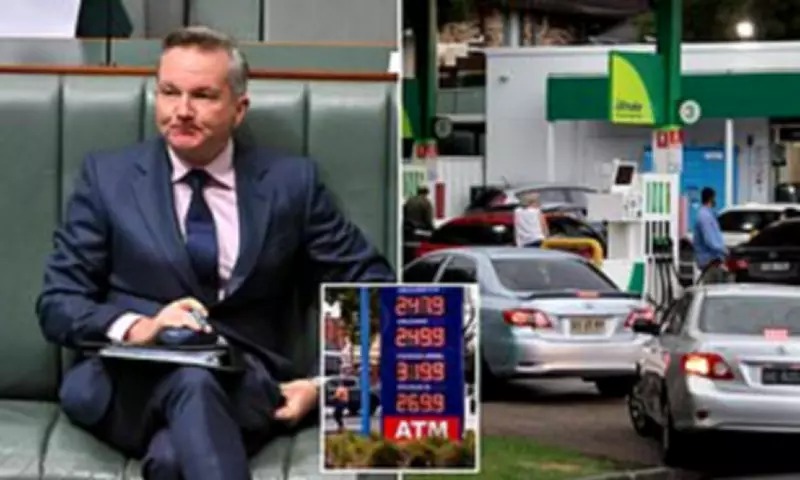
Energy Minister Chris Bowen has revealed that nearly 8 per cent of all service stations across Australia are now grappling with the ongoing fuel crisis, struggling to secure adequate supplies. During Parliament question time on Thursday, Bowen provided an update confirming that 608 petrol stations are experiencing shortages of at least one type of fuel, highlighting the severity of the situation.
Global Supply Disruptions and Domestic Impact
The crisis stems from global oil supply slowdowns this month, triggered by Iran blocking the Strait of Hormuz—a critical maritime passage through which 20 per cent of the world's oil travels. This action followed recent attacks by the United States and Israel, exacerbating international tensions. Australia, which imports 90 per cent of its refined fuel from overseas, primarily from Asian nations, is heavily reliant on these countries that source much of their crude oil from the Middle East. This dependency has left the nation vulnerable to supply chain disruptions.
Government Response and National Cabinet Meetings
Prime Minister Anthony Albanese has already convened a national cabinet meeting with state and territory premiers to address fuel supply concerns and has scheduled another for next week. It is understood that emergency measures may be considered during these discussions. Despite these meetings, hundreds of service stations continue to report low supplies, and petrol and diesel prices have soared to record highs. Over the past fortnight, the government has maintained that there is no overall fuel shortage in the country, attributing the issues to distribution challenges and panic buying.

Bowen emphasised that the same volume of oil and refined fuel shipments is arriving as before the Middle East conflict, but distribution problems have been intensified by consumer panic purchasing. Figures released by his office on Thursday, collected by state and territory authorities, detailed the extent of the shortages across regions.
State-by-State Breakdown of Fuel Shortages
The data paints a concerning picture of the fuel crisis nationwide:
- New South Wales: 314 service stations are out of one type of fuel, with 178 lacking diesel and 48 completely dry.
- Victoria: 72 stations have run out of diesel, and 45 are without unleaded petrol.
- Queensland: 55 stations are without diesel, and 33 have no unleaded fuel available.
- South Australia: Nine service stations are out of diesel, 10 lack unleaded, and 43 do not have one or more grades of fuel in stock.
- Western Australia: In this fuel-dependent state, 40 stations are without diesel and 14 without unleaded.
- Tasmania: Five stations are without diesel, and nine lack a particular grade of fuel.
- Australian Capital Territory: Two stations are without diesel, one without unleaded, and three without one or more fuel types.
- Northern Territory: The only state or territory to report no outages, indicating regional variations in supply.
Potential Solutions and Future Measures
Bowen confirmed this week that he is considering increasing the ethanol content in fuel as a measure to alleviate pressure on supply chains by stretching reserves. "Obviously there's suggestions around ethanol, which we're looking at, but I'm not in a position to announce them," he stated. "Could it play some potential role? Many things could." E10 fuel, which contains about 10 per cent ethanol, is already sold nationwide, and higher blends like E15 or E25 are used in other countries, offering a potential model for Australia.
Commonwealth, state, and territory leaders will meet next week for another national cabinet meeting on the shortages, where they will be briefed by Australia's new fuel chief. Bowen announced on Sunday that six oil tankers had their voyages cancelled or delayed due to the Middle East war, but he confirmed in Parliament this week that all six have been replaced, with an additional three vessels en route.

Despite the escalating crisis, Bowen has ruled out implementing a plan to limit the amount drivers can spend at the bowser as a rationing measure. A 2019 policy document had proposed allowing drivers to take only $40 of fuel per visit during a fuel crisis, but this approach has been dismissed in favour of other strategies.
As queues at service stations become customary across the country in recent weeks, the government continues to navigate the complex interplay of global supply disruptions, domestic distribution challenges, and public anxiety, striving to stabilise fuel availability and prices for Australian motorists.