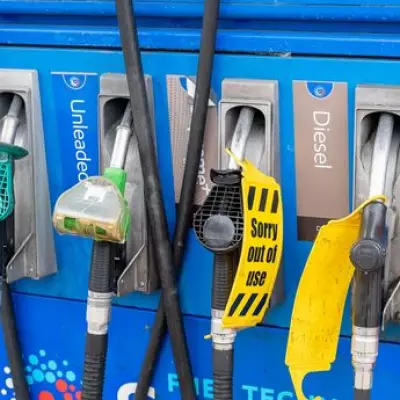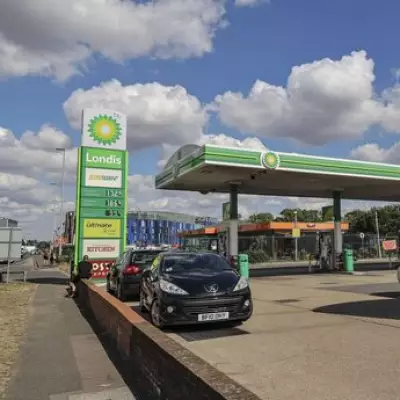
While Australian motorists confront severe fuel shortages and widespread service station closures, Chinese drivers remain largely insulated from global oil market turmoil thanks to the nation's highly developed electric vehicle ecosystem. This stark contrast highlights how differing approaches to automotive technology adoption can dramatically impact national energy resilience during international crises.
China's EV Infrastructure Advantage
American journalist Jason Smith recently showcased China's advanced charging infrastructure through social media posts, highlighting "fast charging stations" that can reportedly fully charge electric vehicles in just nine minutes while providing approximately 600 kilometers of range. Many of these stations feature on-site solar panels for direct power generation, representing a significant technological leap in sustainable transportation infrastructure.
James Voortman, CEO of the Australian Automotive Dealer Association, acknowledged China's global leadership in electric vehicle production and adoption. "The electric vehicle market in China is a lot better developed than most other countries in the world," Mr Voortman stated. "They lead the world in the production of them, and nothing focuses people more than financial motivation. At the moment, the operating costs of petrol and diesel vehicles are very expensive."

Australia's Lagging EV Adoption
Australia's slow embrace of electric vehicle incentives and charging infrastructure has left the nation particularly vulnerable to fuel market disruptions. According to Voortman, "Australia is really late to the party in terms of incentivising EV uptake. They've only been doing it for the last three or four years through the fringe benefit tax discount and some state incentives."
The statistics reveal a dramatic disparity between the two nations' electric vehicle markets. In 2024, China sold more than 11 million electric vehicles, while Australia managed just 157,000 sales in 2025. Globally, more than 17 million electric cars were sold in 2024, representing 20 percent of all vehicle sales worldwide according to International Energy Agency data.
Fuel Crisis Impacts and International Responses
Australia's fuel shortage crisis has reached critical levels, with Energy Minister Chris Bowen confirming that at least 600 service stations had exhausted supplies of at least one fuel type. More detailed data from New South Wales and Victoria revealed approximately 500 service stations had run dry in those two states alone.
The situation has become so severe that Japan, which maintains 250 days of fuel supply in reserve, has offered potential assistance if Australia's shortages worsen further. Japanese Ambassador Kazuhiro Suzuki indicated possible collaboration, stating, "Maybe we could collaborate and then do something together. That's the only answer that I can give to you now," while emphasizing the need to assess market conditions first.
China's Strategic Advantages
China's resilience stems from multiple factors beyond simply having more electric vehicles on the road. The nation produces more than 70 percent of the world's electric vehicles, and fierce market competition has made these vehicles remarkably affordable. Remarkably, two-thirds of electric vehicles sold in China are cheaper than their petrol-powered equivalents.
Chinese manufacturer BYD recently announced its Flash Charger technology can charge some electric vehicle batteries from 10 percent to 70 percent in just five minutes, with full charges achievable within nine minutes providing approximately 1,000 kilometers of range. This contrasts sharply with Australia's "fast" chargers, which typically offer about 350 kilometers of range after 15 minutes of charging.
Energy Security and Domestic Refining Capacity
China has taken additional protective measures by closing refined oil exports since March 13, a ban expected to continue through month's end. This move protects domestic supplies while Australia faces challenges due to limited refining capacity. According to Geoscience Australia data from 2024, Australia possesses an estimated six years' worth of crude oil production remaining but maintains only two domestic refineries, necessitating overseas processing of most crude oil.

Energy Minister Chris Bowen has repeatedly attributed Australia's fuel shortages to panic buying rather than systemic supply failures. "We have as much fuel in Australia today as we had on the day Iran was attacked," Bowen stated. "We've seen very big spikes in demand. Some of that has been panic buying. Some people are trying to get ahead of expected price rises."
The current crisis has prompted renewed discussions about energy security, with Prime Minister Anthony Albanese recently signing a joint statement with Singaporean counterpart Lawrence Wong affirming both nations' commitment to this critical issue. As global oil markets remain volatile due to geopolitical tensions including Iran's closure of the Strait of Hormuz—through which 20 percent of the world's oil travels—the contrast between China's electric vehicle insulation and Australia's fuel vulnerability becomes increasingly significant for future energy policy planning.